
























OpenAI Says GPT-6 Designed Proteins That Bound in Lab Tests but Specialist Tools Did Key Steps
OpenAI says in a new preprint that GPT-6 designed protein shapes from reasoning and code alone, and that 35 of 322 minibinders built from them bound their targets in lab tests with Onava. Specialist tools still did key steps.
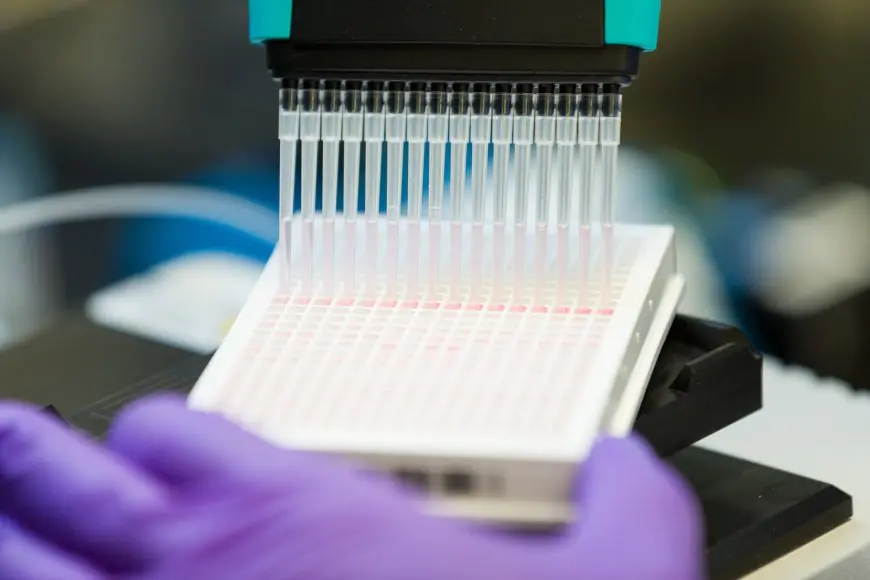
OpenAI said Tuesday that its GPT-6 models can design new protein shapes and the amino acid sequences behind them using only reasoning and general-purpose coding tools, with no specialized biology model generating the designs. The headline evidence is a lab result: working with research partner Onava, the company says it tested 322 small proteins called minibinders against five targets, and 35 of them, or 10.9%, showed binding to the target they were aimed at.


That is roughly one in nine. OpenAI describes the work in a preprint, GPT-6 as a Universal Foundation Model for Protein Biology: Beyond Specialized Models, which has not been peer reviewed, and the lab numbers come from the company and its partner rather than an independent replication. OpenAI calls the results early evidence and a proof of principle, and it does not claim more.
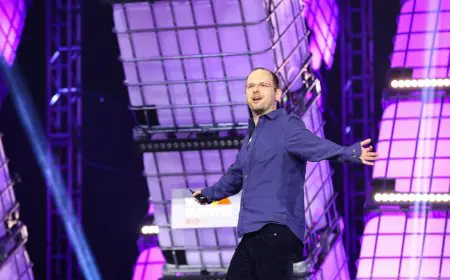
"We want to see a world where a scientist can just describe in natural language what they want a ChatGPT model to do, and the model can just be infinitely flexible and design exactly what the person wants." Joy Jiao, who leads life-sciences research at OpenAI
The split of labour matters here. In the company post, OpenAI says GPT-6.2 was given the three-dimensional structures of five targets and a marked attachment point, then wrote code to produce candidate shapes. A specialized model called SolubleMPNN proposed amino acid sequences for those shapes, other specialized models filtered which candidates were worth making, and Onava built and tested the survivors in the lab. OpenAI states plainly that the results do not yet establish that its models can generate new minibinders end to end without that help.
The per-target breakdown is lopsided. OpenAI reports 18 hits for IL-17A, 8 for VEGF-A, 5 for PD-L1, 3 for IL-7R-alpha and a single hit for TrkA. The company notes that the original study behind RFdiffusion, the specialized design model it compared against, reported higher hit rates, and that such rates swing with how strictly designs are filtered before lab testing and how binding is defined. Other experiments went better: asked to write fresh sequences for the gripping loops of six small antibodies aimed at IL-4R-alpha, GPT-6.2 produced 182 tested designs of which 128, or 70%, showed signs of binding.
Not an AlphaFold moment
Structure prediction, the task AlphaFold made famous, is where the models fall down. OpenAI says predicting a complete protein structure from its sequence remains substantially harder for its models than the design tasks, and that even its best internal models stayed well behind specialized structure predictors such as ESMFold2. The company also warns that unusually high scores on inferring sequences from structures may partly reflect memorization, and do not on their own show reliable performance on unfamiliar proteins.
Nature, reporting the announcement, rounded the lab result to around 11% of designs binding their target and said the model was far off on three-dimensional structure prediction. It also carried the main independent note of caution so far.
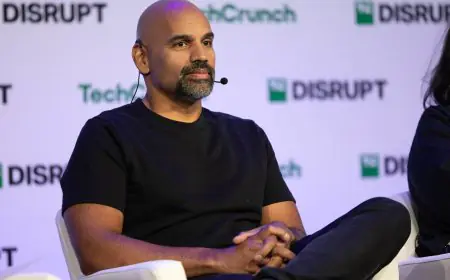
"In most cases, a specialist will always perform better than a generalist for a given task." Martin Pacesa, structural biologist at the University of Zurich
None of this is a medicine. Binding means a designed protein stuck to its intended target in a screen, which is the first gate, not the finish line. OpenAI says further work would have to establish specificity, stability and biological activity, plus safety and efficacy for any therapeutic use, and its own list of next steps includes harder targets and testing whether designs produce a biological effect at all. It is the same gap that sat under Claude designing scorpion-toxin binders in October, a different lab and a different model.
What the result does change is the argument about who builds biology tools. A general model that can take a prompt and hand back a shape is easier to redirect than a stack of narrow tools that each need their own inputs, and OpenAI researcher Masatoshi Uehara told Nature he believes language models will eventually beat specialized models at every capability. The 35 hits are a long way from proving that. They are enough to make the question serious.