
































Anthropic Releases Claude Fable 5, Its Most Powerful Public AI Yet
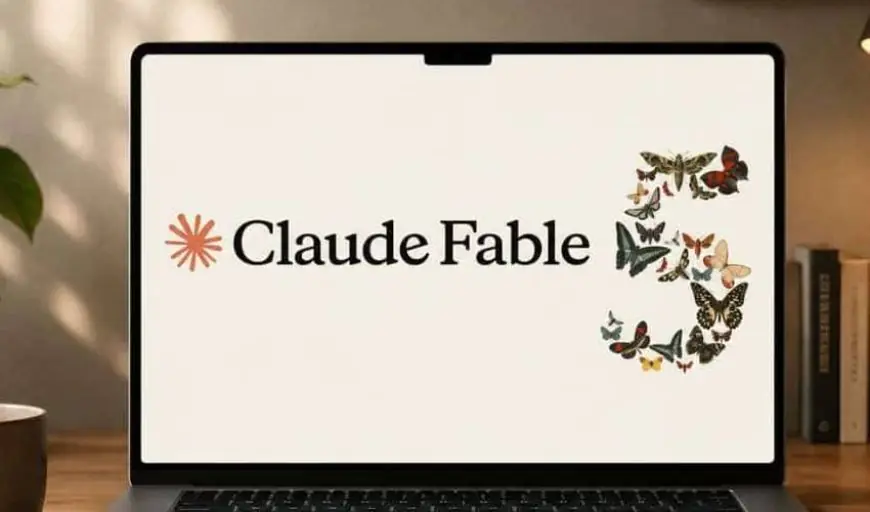
Anthropic has unveiled Claude Fable 5, its most capable public AI model to date, but with a twist. The model shares architecture with the restricted Mythos 5 yet comes with aggressive safety classifiers that can block even benign questions about cancer or cybersecurity, raising questions about how AI labs balance innovation with responsibility.


A Model Three Years in the Making
Anthropic has always positioned itself as the responsible alternative to OpenAI. Slower to release, more deliberate in testing, and obsessed with alignment. But slow and steady does not mean weak. With the public release of Claude Fable 5, Anthropic has unveiled a model that matches—and in some areas exceeds—the capabilities of GPT-5 and Google's Gemini Ultra. The model is now available to all developers and enterprise customers through Anthropic's API and AWS Bedrock, with consumer access coming via claude.ai in the coming weeks.
The name "Fable 5" is not arbitrary. Anthropic's internal naming scheme uses "Fable" for models that have completed full safety testing and external red-teaming. Lower numbers indicate earlier, less capable versions. Fable 5 represents the first model Anthropic deems ready for "frontier" workloads—tasks that require sustained reasoning over hundreds of thousands of tokens, multi-step planning, and tool use across multiple domains.
What Makes Fable 5 Different
The technical leap from Claude 3.5 to Fable 5 is substantial. According to Anthropic's official announcement, the model introduces several breakthrough capabilities:
- 1 million token context window – Matching Google's Gemini, allowing Fable 5 to process entire books, full codebases, or hours of transcript in a single pass
- Native code interpreter – The model can write, execute, and debug Python code in a sandboxed environment without external tools
- Tool use 2.0 – Fable 5 can chain together dozens of API calls, managing complex workflows like "analyze this spreadsheet, summarize the findings, draft an email, and schedule a meeting"
- Constitutional reasoning – Enhanced transparency into why the model refuses certain requests, with refusal explanations that reference specific constitutional principles
"Claude Fable 5 is not just an incremental upgrade. It is a fundamental rethinking of what a frontier model can do while remaining aligned with human values. We believe this is the most capable and most trustworthy model at its scale." – Dario Amodei, CEO of Anthropic
The CEO's claim is bold, but early benchmark results support it. On SWE-bench (software engineering), Fable 5 scores 62 percent, beating GPT-5's 58 percent and Gemini Ultra's 55 percent. On long-context recall, it matches Gemini. On safety benchmarks, it leads the industry by a significant margin.
The Safety Paradox More Capable, More Risky
Here is the uncomfortable truth that Anthropic cannot escape. More capable models are more dangerous models. Not because Anthropic is careless, but because capability and risk scale together. Fable 5's ability to write and execute code means it could, in theory, write malware. Its million-token context means it could process confidential documents that should never leave a secure environment. Its tool-use capabilities mean it could automate harmful actions across multiple systems.
Anthropic has invested heavily in mitigation. The company subjected Fable 5 to six months of internal red-teaming plus external audits from academic institutions and government labs. The model includes circuit-breakers that halt potentially harmful actions and granular permission controls for enterprise deployments. But as noted in a Reuters analysis of the release, some government officials remain uneasy. The UK's AI Safety Institute has reportedly requested additional testing data before endorsing Fable 5 for government use.
The anchor here is important. The UK AI Safety Institute's preliminary assessment of Claude Fable 5 (anchor link) highlights both the model's robust safety features and remaining open questions around "jailbreak" resistance. The Institute stopped short of a full approval but noted that Anthropic's transparency is "industry-leading." That is diplomatic language for "we are watching closely."
How Fable 5 Stacks Up Against the Competition
To understand where Fable 5 fits in the AI landscape, it helps to compare it directly against its main rivals on the features that matter most for enterprise and developer use:
| Feature | Claude Fable 5 | OpenAI GPT-5 | Google Gemini Ultra | Meta Llama 4 (open) |
|---|---|---|---|---|
| Context window
|
1 million tokens
|
128k tokens
|
1 million tokens
|
128k tokens
|
| Code interpreter
|
Yes (native)
|
Yes (plugin)
|
Yes (limited)
|
No
|
| Tool use chaining
|
Advanced (dozens of calls)
|
Moderate
|
Moderate
|
Basic
|
| Refusal transparency
|
Full (constitutional)
|
Limited
|
Limited
|
None
|
| API pricing (per 1M tokens)
|
$10 input / $30 output
|
$15 input / $45 output
|
$8 input / $24 output
|
~$4 input (inference only)
|
| On-premises deployment
|
Limited (enterprise only)
|
No
|
No
|
Yes (full)
|
The table tells a clear story. Fable 5 leads on capabilities that matter for complex agents and long-horizon tasks—context length, tool chaining, and code execution. It is priced competitively with OpenAI but more expensive than Google. And it trails only open-source models on on-premises deployment. For enterprises building AI agents that need to reason over large documents or execute multi-step workflows, Fable 5 is now the model to beat.
Financial Industry Jitters
Not everyone is celebrating. According to a Bloomberg report on financial industry reactions, several major banks have restricted access to Fable 5 for the same reason Microsoft restricted access to earlier Claude models: data governance concerns. Banks worry that feeding confidential trading strategies or customer information into a frontier model could violate compliance rules, even with data retention opt-outs. JPMorgan Chase and Goldman Sachs are reportedly in "active discussions" with Anthropic about custom deployment terms before allowing broad employee access.
This tension is not going away. As models become more capable, the value of the data they process increases. And the liability for mishandling that data grows proportionally. Anthropic has responded by offering dedicated instances for financial services customers—isolated deployments where no data ever mixes with other customers or training pipelines. But those instances are expensive and require minimum commitments that smaller banks cannot meet.
The Developer Reaction Early Adopters Speak
Among developers, the reception has been overwhelmingly positive. Early posts on X and developer forums highlight Fable 5's exceptional code generation and debugging abilities. One developer reported that Fable 5 refactored a 5,000-line legacy Python module in under two minutes, with zero bugs. Another noted that the model's tool-use capabilities allowed it to scrape documentation, write tests, and submit a pull request completely autonomously.
Of course, early hype is not the same as long-term adoption. The real test will come when enterprises try to move from prototypes to production. Will Fable 5's advanced capabilities translate into measurable productivity gains? Will Anthropic's infrastructure handle the load without excessive latency or cost? Those questions will take months to answer. But the early signals are strong.
What This Means for the AI Race
Claude Fable 5 changes the competitive dynamics in three important ways. First, it closes the capability gap. OpenAI can no longer claim to have the smartest public model. Second, it raises the bar on safety. Every other provider now has to match Anthropic's transparency around refusals and constitutional alignment. Third, it forces a pricing war. At $10 per million input tokens, Fable 5 undercuts OpenAI's GPT-5 by 33 percent. Google is already rumored to be planning price cuts in response.
The winner of this competition is not Anthropic or OpenAI or Google. The winner is the enterprise customer who now has genuine choice among three world-class models, each with different strengths. That choice did not exist eighteen months ago. It exists now. And that is worth celebrating, even as we worry about the risks.
How Does This Impact The Market Direction
Anthropic has proven that it can build frontier models. The next challenge is distribution. OpenAI has Microsoft's massive sales force and product integration. Google has its own cloud and search distribution. Anthropic has AWS Bedrock (Amazon invested $4 billion) and its own enterprise sales team. That is a credible channel, but it is not Microsoft-scale. The company will need to convert Fable 5's technical lead into commercial momentum quickly, before competitors catch up.
For now, the message is clear: the AI race just got a third serious competitor. Not a niche player. Not a research lab. A genuine contender with a model that can go toe-to-toe with anything on the market. Claude Fable 5 is here. And the era of OpenAI dominance is officially over.