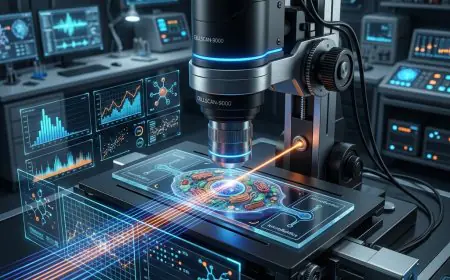
Technion Ranks as the Top AI Research Hub in Europe
The Technion – Israel Institute of Technology has officially claimed the #1 spot in Europe for artificial intelligence research according to the 2026 CSRankings. With 150 dedicated researchers and a dominant lead in machine learning, the Haifa-based institution is outperforming global peers and fueling a massive surge in deep-tech spinoffs.


In a milestone for the "Start-Up Nation," the Technion – Israel Institute of Technology has been named the top institution in Europe for artificial intelligence research. The latest 2026 data from CSRankings, the leading metrics-based index for computer science, places the Technion first in Israel and Europe, and 21st globally. This ranking underscores a decade-long strategic pivot that has transformed the Haifa campus into a global powerhouse for machine learning and autonomous systems.
The CSRankings index is uniquely rigorous, as it is based entirely on peer-reviewed publications at the world’s most selective AI conferences. While many rankings rely on surveys or reputation, this metric tracks raw scientific output. Notably, in the specific subfield of Machine Learning, the Technion has climbed even higher, securing the 10th spot worldwide—surpassing nearly every major technical university in the European Union and the United Kingdom.
A Multi-Disciplinary AI Community
The secret to the Technion’s ascent isn't found in a single department. Instead, the institute has fostered a massive, cross-functional AI community comprising approximately 150 core researchers spanning faculties from electrical engineering to medicine and biology. This interdisciplinary approach has allowed the university to apply AI to "hard science" problems that traditional software labs might overlook.
According to official statements from the Technion, this success is the result of a deliberate, long-term strategy involving the recruitment of top-tier global talent and the creation of dedicated centers like the Zimin Institute for Artificial Intelligence in Medicine. These hubs don't just write papers; they build systems that diagnose diseases, optimize sustainable energy grids, and power autonomous vehicles.
From Research Papers to Market Realities
One of the most impressive aspects of the Technion’s AI dominance is its ability to translate academic excellence into commercial success. The university’s technology transfer arm, T3, is currently managing a portfolio of AI-based spinoffs that are reshaping the global tech landscape.
The impact of this "lab-to-market" pipeline is significant:
- Deep-Tech Spinoffs: The Technion currently supports the establishment of roughly 12 new spin-off companies annually, many of which focus on AI-driven hardware and software.
- Patent Powerhouse: For five consecutive years, the Technion has ranked among the top 100 universities globally for U.S. patents, ranking second in Europe in the latest 2025-2026 cycle.
- Industrial Leadership: Roughly 10% of the companies on global "AI Disruptor" lists were founded by Technion alumni, proving that the institute's influence extends far beyond the classroom.
As noted by The Times of Israel, the university’s graduates now hold key positions across the global high-tech ecosystem, from Silicon Valley giants to the defense sectors. Prof. Danny Raz, Senior Executive Vice President, noted that the ranking reflects the university’s "overall effort to remain at the forefront of global Computer Science" despite increasing global competition.
The Future of European AI Innovation
As the European Union moves toward stricter AI regulation, the Technion’s position as a regional leader provides a critical bridge between academic freedom and industrial application. While other institutions grapple with the transition to the "AI-first" era, the Technion’s established infrastructure—such as the Machine Learning and Intelligent Systems (MLIS) research center—provides a ready-made template for success.
For researchers, investors, and policymakers, the message from 2026 is clear: the epicenter of European AI innovation is no longer in London or Berlin, but in the hills of Haifa. With a research engine that continues to outpace expectations, the Technion is not just participating in the AI race—it is setting the pace.