





































Chinese Academy of Sciences Unveils "Aeye-1", the World's First Fully Autonomous AI Microscope
Researchers at the Chinese Academy of Sciences have introduced Aeye-1, the world’s first fully autonomous AI-powered transmission electron microscope. The breakthrough system automates sample handling, imaging, and atomic-level analysis while reportedly operating hundreds of times faster than traditional human-led workflows.


Aeye One Marks A Major Leap In Autonomous Scientific Research
The race to integrate artificial intelligence into advanced scientific research has reached a new milestone after researchers at the Chinese Academy of Sciences unveiled what is being described as the world’s first fully autonomous AI-powered transmission electron microscope system. Known as Aeye-1, the platform was developed by a research team at the Dalian Institute of Chemical Physics and could significantly reshape how laboratories conduct high-precision microscopic analysis.
Unlike conventional electron microscopes that require extensive manual handling and continuous supervision from trained specialists, Aeye-1 automates nearly the entire research workflow. The system reportedly manages sample transfer, microscopic imaging, image optimization, and atomic-level structural analysis without direct human intervention. According to evaluators involved in the project, the platform’s automated analysis capabilities are more than 300 times faster than traditional human-operated processes.
Why Autonomous Microscopy Matters
Transmission electron microscopes are among the most powerful scientific tools used in materials science, chemistry, nanotechnology, and semiconductor research. These systems allow scientists to study structures at near-atomic resolution, making them essential for developing advanced batteries, microchips, pharmaceuticals, and next-generation industrial materials.
However, operating these instruments has historically required years of technical training. Researchers often spend long hours manually preparing samples, adjusting imaging parameters, and interpreting highly complex datasets. That intensive process slows scientific discovery and limits how quickly laboratories can analyze large numbers of experiments.
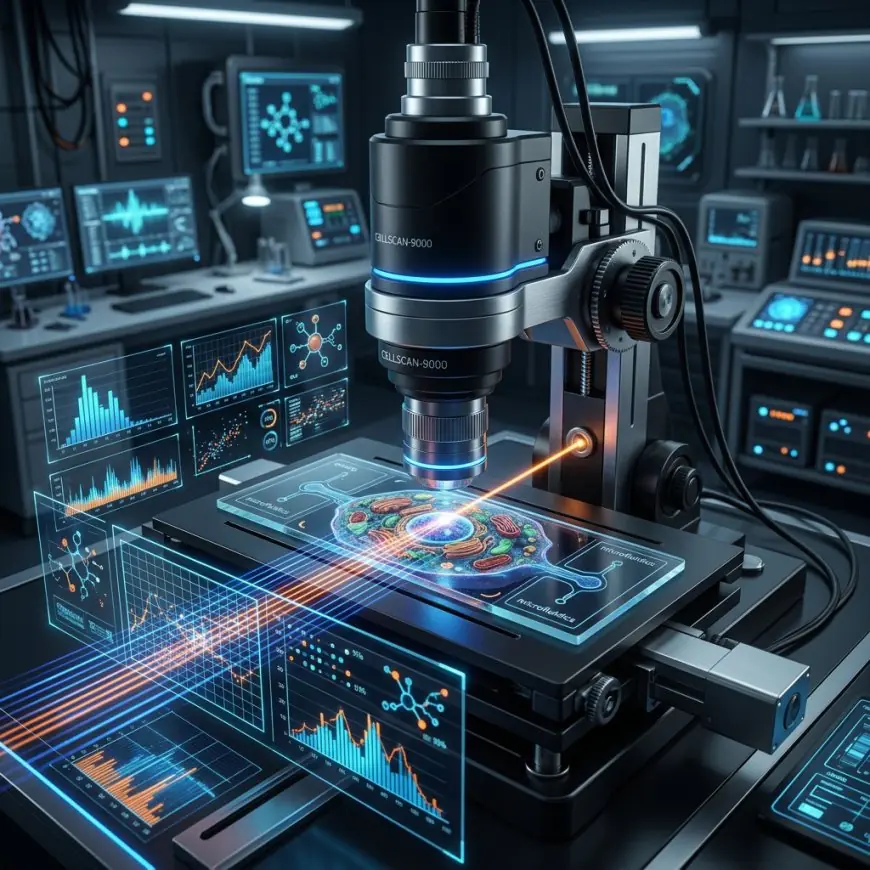
Aeye-1 aims to remove many of those limitations by combining robotics, machine vision, and artificial intelligence into a unified autonomous research platform. Instead of waiting for manual adjustments between imaging sessions, the AI system continuously optimizes imaging conditions and performs quantitative structural analysis in real time. Institutions such as Nature Research have increasingly highlighted AI-assisted microscopy as one of the most promising developments in scientific instrumentation.
AI Is Becoming A Core Scientific Tool
The launch of Aeye-1 reflects a broader shift happening across global research laboratories. Artificial intelligence is rapidly evolving from a supportive software tool into an active scientific collaborator capable of accelerating experimentation, identifying patterns, and automating complex workflows.
Researchers believe autonomous laboratory systems could dramatically reduce the time required for scientific breakthroughs in areas ranging from renewable energy and semiconductor manufacturing to biomedical discovery. AI-powered instruments are also becoming increasingly valuable as laboratories face growing pressure to process larger datasets while maintaining accuracy and efficiency.
China has invested heavily in AI-driven scientific infrastructure over the past several years as part of broader efforts to strengthen domestic innovation capabilities. Organizations including the Chinese Academy of Sciences continue expanding research into autonomous systems, advanced computing, robotics, and intelligent laboratory technologies.
What This Could Mean For The Future Of Laboratories
The potential implications of fully autonomous microscopy extend far beyond academic research. Faster analysis and automated workflows could help industries shorten development cycles for new materials, improve semiconductor fabrication processes, and accelerate pharmaceutical research.
For example, battery manufacturers could use AI-powered microscopes to rapidly analyze material degradation at atomic levels, while chipmakers might deploy autonomous systems to inspect nanoscale defects with far greater efficiency than current manual methods. The ability to continuously run high-precision analysis with minimal human intervention could also help laboratories operate around the clock.
While challenges around system reliability, validation standards, and oversight remain important, Aeye-1 signals how rapidly artificial intelligence is transforming scientific infrastructure itself. As laboratories worldwide push toward greater automation, autonomous AI systems may soon become as essential to research environments as cloud computing and high-performance processors are to the broader AI economy today.