











































How AI-Generated Fake Legal Citations Led India's Supreme Court to Overturn Lower Court Orders
India's Supreme Court has quashed lower tribunal rulings that relied on fabricated legal citations generated by artificial intelligence. The landmark decision declares zero tolerance for AI-generated hallucinated precedents and warns that such practices constitute misconduct that undermines the rule of law.
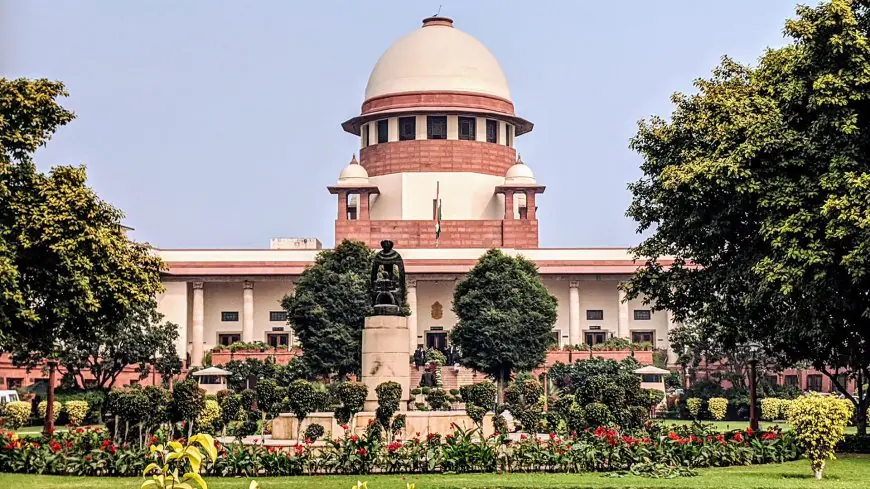
India's Supreme Court has delivered a landmark ruling that could reshape how courts worldwide approach artificial intelligence in legal proceedings.


The Court quashed orders from the National Company Law Tribunal (NCLT) and the National Company Law Appellate Tribunal (NCLAT) after discovering they had relied on "non-existent, fake, and hallucinated" AI-generated judgment precedents.
The case arose from an insolvency dispute involving Essel Infraprojects, where the tribunals cited fabricated case names including ICICI Bank Ltd vs Urban Infrastructure Real Estate Ltd (2019) 16 SCC 528 and Sarbjit Singh vs Union Bank of India (2022) 7 SCC 464 — both entirely non-existent.
"The production of fake, non-existent, and hallucinated material and its utilisation as precedents in law, is like the release of methyl isocyanate in the province of law and justice: invisible, insidious, and catastrophic by the time anyone notices." – Bench of Justices PS Narasimha and Alok Aradhe.
The Court declared that citing AI-generated precedents without verification constitutes misconduct on the part of advocates, and judicial reliance on such material amounts to a "serious lapse".
Any decision tainted even by an iota of fake or hallucinated material is "no decision in the eyes of the law" and must be set aside.
The Bench directed the Bar Council of India to constitute a committee to deliberate on the issue and prescribe disciplinary action for violations.
The landmark AI legal citation ruling comes as courts worldwide grapple with similar challenges. The UK High Court of England and Wales issued stern warnings in June 2025 against lawyers relying on AI-generated case material.
The ruling draws a clear distinction between using AI as an assistive tool and allowing it to supplant human judgment, declaring that "meaningful human oversight must remain integral to every stage of the adjudicatory process".
As the Court noted, while increased workloads have compelled lawyers and judges to adapt to AI, the capacity for reasoning is shaped through "deliberate, disciplined, and systematic training of the mind" — a uniquely human attribute that must not be relinquished.