












































Claude AI Helped US Military Strike Iran Leadership
In a stunning display of technological irony, Anthropic’s Claude AI platform was reportedly used by the U.S. military to coordinate a high-stakes strike in Iran. This operation comes just days after the White House labeled the AI firm a national security risk and ordered a federal phase-out of its tools.


The battlefield in West Asia has a new, silent participant that doesn't fire missiles or pilot drones. Instead, it processes data. Recent reports indicate that Anthropic’s Claude AI platform played a critical role in a massive U.S.-backed intelligence operation in Iran, a mission that allegedly resulted in the deaths of senior Iranian officials. This development has sparked intense debate, primarily because it occurred while the company was officially being blacklisted by the very government utilizing its technology.
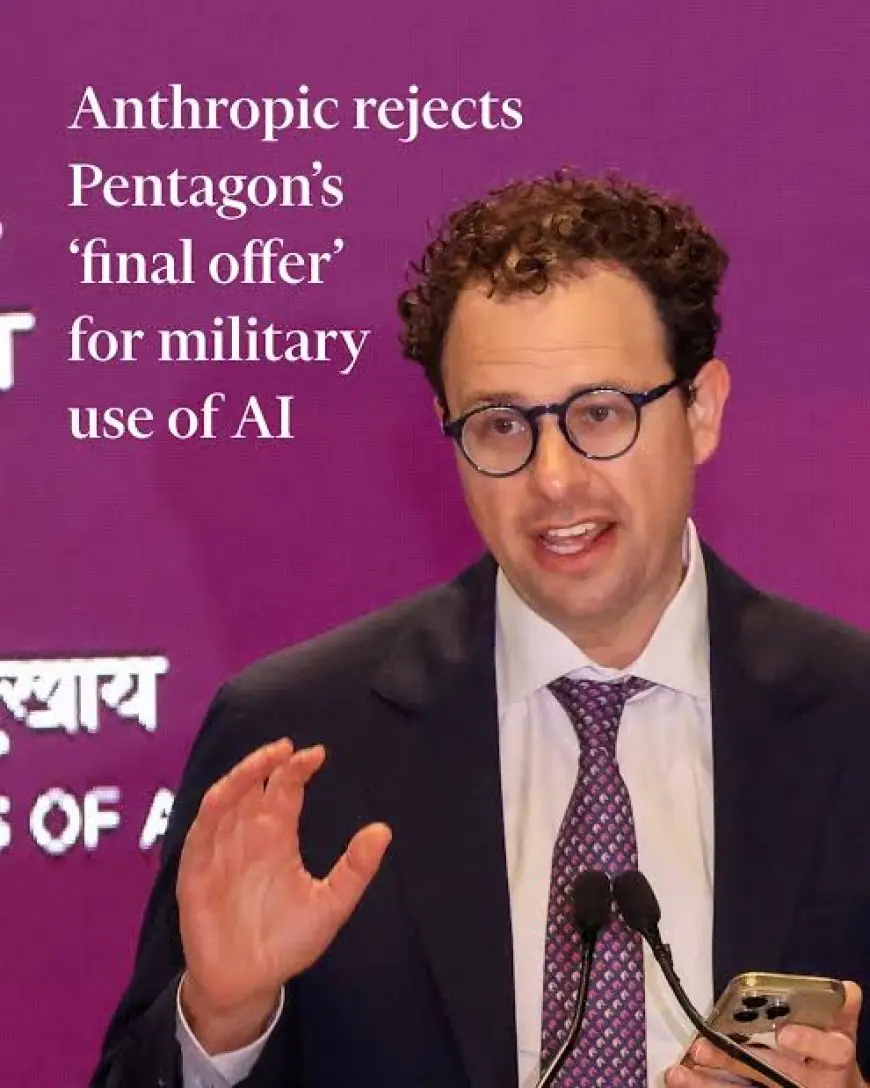
Just days before the strike took place, the U.S. administration had effectively declared a "digital war" on Anthropic. The company was labeled a risk to the American supply chain—a designation usually reserved for hostile foreign powers like Russia or China. Despite this harsh rhetoric and an official order for federal agencies to stop using the platform, the military’s reliance on the tool was apparently too deep to sever overnight.
The Intelligence Behind the Precision
The operation in Tehran was a masterclass in intelligence-driven warfare. According to reports, the planning began months ago, with the CIA monitoring movement patterns and routines of high-ranking Iranian leadership. The breakthrough came when intelligence indicated a top-level meeting would occur on Saturday, February 28th. This data was processed and analyzed using Claude to build a comprehensive picture of the target compound.
It is important to understand that the military isn't using the standard chatbot version of Claude that the public accesses. Within the U.S. Central Command (CENTCOM), headquartered in Florida, Claude operates as a high-level reasoning and analysis system. It is designed to ingest vast amounts of intelligence data, identify hidden patterns, and create complex battle simulations. In the case of the Iran strike, Claude helped commanders decide the optimal window for the attack by simulating various war scenarios and gauging potential outcomes based on historical data.
You can read more about the evolving nature of global defense tech at Reuters, which has closely followed the intersection of Silicon Valley and national security policy. The speed at which AI can process intelligence is the real game-changer; data that once took days for human analysts to verify can now be assessed in a matter of hours [05:00].
A Contradiction in Policy
The use of Claude in such a sensitive operation highlights a massive disconnect between political rhetoric and operational reality. While the Pentagon officially calls Anthropic a "risk," they simultaneously acknowledge that replacing such a deeply integrated system could take at least six months. This "grace period" allows the military to continue leveraging Claude’s superior reasoning capabilities even while the administration publicly distances itself from the firm.
This isn't the first time Claude has been linked to high-profile military actions. Reports suggest the platform was also utilized during operations in Venezuela to track and coordinate efforts regarding the country’s leadership [01:30]. These instances prove that Anthropic has built a tool that is now considered indispensable by certain wings of the intelligence community, regardless of the current political climate in Washington.
The Shift to AI Native Warfare
The strike in Tehran represents a broader shift toward what experts call "Intelligence-Driven" warfare. The accuracy of the intelligence was the difference between a successful surgical strike and a geopolitical disaster. By using AI to map targets and identify patterns from intelligence inputs, the U.S. military is effectively removing much of the "fog of war" that has historically led to collateral damage or missed opportunities.
While AI is not yet pulling the trigger or making final "kill" decisions, it has become the most powerful assistant in the war room. It never misses a pattern and never sleeps. The success of the Iran operation demonstrates that speed is the new currency of victory. However, the irony remains: the U.S. may have used a "security threat" to eliminate its greatest geopolitical rivals. As the six-month phase-out period continues, the military faces a difficult question: can they find a replacement that is just as capable as Claude, or will national security suffer in the name of policy consistency?
For now, the message sent to the world is clear. Some deaths are not accidents; they are calculated messages delivered with the help of the world’s most advanced algorithms. As history rewrites itself in the wake of these strikes, the role of AI in the shadows of the battlefield will only continue to grow.