

























OpenAI Vice President Resigned Over Pentagon AI Deal
A high-ranking OpenAI executive has jumped ship to rival Anthropic following a controversial military partnership between OpenAI and the Department of Defense. The move reignites the fierce debate over AI ethics in warfare and highlights the deepening talent war between Silicon Valley's most powerful labs.
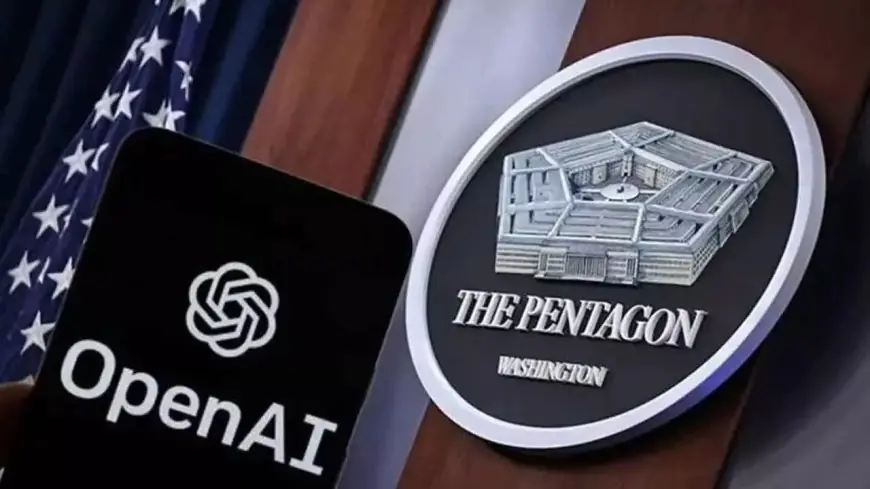


The hallways of OpenAI are rarely quiet, but the latest departure has left a particularly loud echo throughout Silicon Valley. In a move that has stunned industry insiders, a key Vice President has officially resigned from the ChatGPT creator to join its primary rival, Anthropic. The timing of the exit is no coincidence, coming just days after OpenAI finalized a landmark agreement to provide artificial intelligence capabilities to the U.S. Department of Defense.
This high-profile defection is more than just a typical corporate game of musical chairs. It represents a fundamental ideological rift within the world’s leading AI lab. While OpenAI has pivoted toward a more aggressive, pro-government stance under the leadership of Sam Altman, the outgoing executive reportedly cited "irreconcilable differences" regarding the ethical guardrails—or lack thereof—surrounding the use of large language models in kinetic military operations.
The Military Pivot and Internal Friction
For years, OpenAI maintained a strict policy against using its technology for "high-risk" military and warfare applications. However, those lines have blurred significantly in 2026. The new Pentagon deal focuses on utilizing OpenAI’s reasoning models for logistics, cybersecurity, and data analysis within the military's core infrastructure. While OpenAI argues these are "defensive" and "administrative" tools, critics within the company fear they are the first steps toward fully autonomous lethal systems.
The executive’s move to Anthropic is deeply symbolic. Anthropic was originally founded by former OpenAI employees who left the company precisely because they were concerned about its shift toward commercialization and away from its original safety-first mission. By joining the rival firm, the former Vice President is sending a clear signal: the "safety" camp within OpenAI is losing ground to the "scale" camp.
According to reports from Bloomberg, this resignation may be the first of many. Internal Slack channels at OpenAI have reportedly seen a surge in debates regarding the moral implications of the Pentagon contract, with many researchers expressing concern that their work is being weaponized without sufficient oversight.
A Deepening Talent War
While the ethical debate rages, the practical reality of the AI industry is a brutal war for talent. Every time a high-level executive moves from OpenAI to Anthropic, they carry with them more than just their expertise—they carry a deep understanding of the competitor’s roadmap, internal bottlenecks, and strategic vulnerabilities. This latest hire gives Anthropic a significant edge in understanding how to position its own "Constitutional AI" against OpenAI’s increasingly government-centric offerings.
The competition between these two firms has become the defining rivalry of the decade. As noted by Reuters, the struggle to retain top-tier researchers is becoming as expensive as the chips required to train the models. Sign-on bonuses and equity packages for senior AI talent have reached unprecedented levels, with some firms offering eight-figure compensation packages to lure away key personnel who have "safety expertise."
The Future of Ethics in Autonomous Systems
The resignation highlights a critical question for the entire industry: can an AI company serve two masters? On one hand, OpenAI is striving to build a profitable, globally dominant business that supports national security interests. On the other, its employees joined with the promise of building "AI that benefits all of humanity."
As the Pentagon continues to integrate these models into its decision-making loop, the pressure on researchers will only increase. We are entering an era where the most important "product" an AI company offers might not be the intelligence itself, but the ethical framework that keeps that intelligence in check. For the executive who just left for Anthropic, it seems that framework was no longer visible at OpenAI.
This leadership shake-up is a reminder that even in an industry dominated by algorithms and silicon, the most volatile element remains human conviction. Whether this exit leads to a broader "brain drain" at OpenAI remains to be seen, but for now, the moral battle lines of the AI era have been clearly drawn.