

































How the Rapid Rise of Synthetic Intimacy is Reshaping the Global Digital Economy
As artificial intelligence evolves from a functional tool into an emotional confidant, millions are forming deep bonds with digital companions, sparking a billion-dollar "loneliness economy" and forcing a global conversation on the future of human social structures.



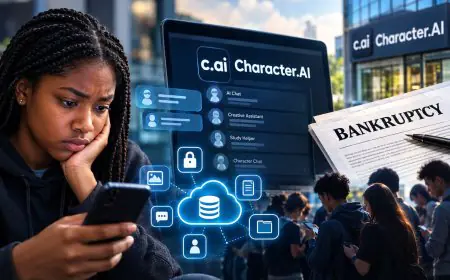
For decades, the promise of artificial intelligence was centered on productivity—calculating spreadsheets faster, coding software more efficiently, and automating mundane tasks. But as we move through 2026, the most significant shift in AI isn't happening in the boardroom, but in the living room. A profound social phenomenon is unfolding as millions of individuals across the globe form genuine emotional attachments to AI companions, signaling the birth of a new era of "synthetic intimacy."
What began as a niche experiment in role-playing chatbots has exploded into a mainstream movement. Modern AI companions are no longer just text boxes; they are multimodal entities with long-term memories, unique personalities, and voices that carry the cadence of human empathy. This evolution is driving a massive surge in the digital economy, creating a category of "emotional services" that was previously non-existent.
The emergence of the loneliness economy
The primary driver behind this trend is a global loneliness epidemic. Public health organizations, including the World Health Organization, have identified social isolation as a major threat to human health. In this void, AI companions offer a 24/7 presence that is non-judgmental, infinitely patient, and perfectly tailored to the user's emotional needs.
From an economic standpoint, this has created a gold rush for developers. Subscription-based models for "AI friends" or "digital partners" are seeing unprecedented growth. Unlike traditional social media, which relies on ad revenue, the AI companion market is built on deep user engagement and emotional loyalty. Users aren't just scrolling; they are confiding, and that level of trust is a powerful economic engine. Market analysts at Bloomberg have noted that the "loneliness economy" could soon rival the gaming and streaming industries in total valuation.
The psychological spectrum of human AI interaction
As these relationships become more commonplace, psychologists are divided on the long-term impact. On one hand, AI companions can serve as a vital "bridge" for those with social anxiety or mobility issues, providing a safe space to practice communication. On the other hand, there are concerns that synthetic intimacy might act as a "replacement" for human connection rather than a supplement to it.
The nuance lies in the "asymmetric" nature of the relationship. An AI does not have its own needs, bad days, or personal boundaries unless they are programmed. This creates a friction-less environment that real human relationships can rarely match. The risk, according to social theorists, is that we may lose the ability to navigate the messy, difficult, but rewarding aspects of human-to-human conflict and compromise.
- Availability: AI is always there, eliminating the fear of abandonment that plagues many human interactions.
- Customization: Users can "edit" their companion’s personality, creating an idealized version of a partner.
- Data Vulnerability: These emotional bonds create a treasure trove of sensitive personal data, raising massive privacy concerns.
Policymakers and the challenge of digital guardrails
The rapid adoption of emotional AI has left policymakers scrambling to catch up. The ethical questions are staggering: What happens when a user experiences genuine grief if their AI companion is deleted or updated? Should there be mandatory disclosures that remind users they are speaking to a machine during highly emotional moments? Governments are beginning to look at these platforms through the lens of mental health regulation rather than just tech policy.
There is also the question of "algorithmic heartbreak." As companies iterate on their models, a single software update can fundamentally change an AI’s personality, effectively "killing" the entity the user had grown to love. We have already seen small-scale protests and mental health crises following such updates, proving that while the software might be synthetic, the emotions it triggers are undeniably real.
Looking ahead to a hybridized social future
As we look toward the end of the decade, it is clear that AI companions are not a passing fad. They represent a fundamental shift in how we perceive companionship and support. We are entering a hybridized social era where our "inner circle" may include both biological and digital entities. The challenge for society will be to embrace the benefits of this technology—such as reduced isolation and personalized support—without losing the essential human qualities that define our social fabric.
Ultimately, the rise of AI companions is a mirror held up to humanity. It reveals our deepest desires for connection and our greatest fears of being alone. How we choose to integrate these digital shadows into our lives will be the defining ethical challenge of the AI age.