

















Microsoft AI Chief Predicts Total White Collar Automation Within Eighteen Months
Mustafa Suleyman, the CEO of Microsoft AI, has sent shockwaves through the global workforce by predicting that most white-collar tasks will be fully automated within the next 12 to 18 months. In a landmark warning, the tech leader identified lawyers, accountants, and project managers as the roles most vulnerable to the rapid arrival of what he calls professional grade AGI.

The Eighteen Month Deadline for the Global Office
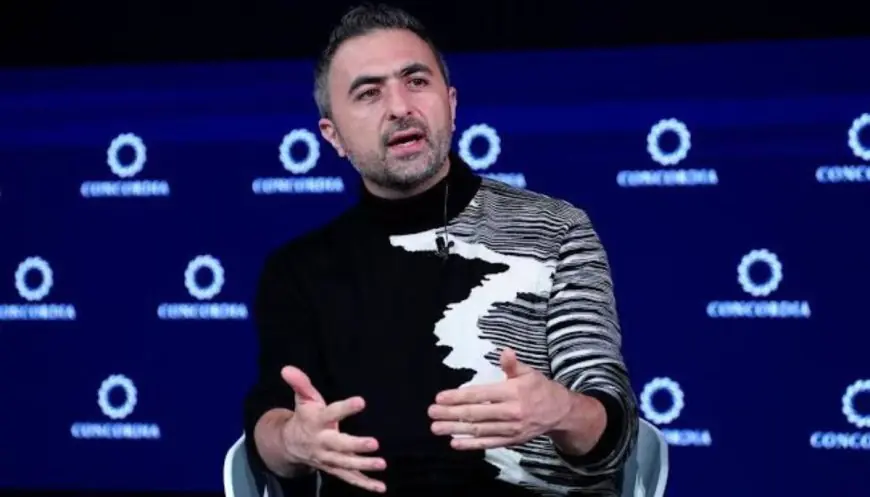
The timeline for the future of work has just been radically accelerated. Mustafa Suleyman, the CEO of Microsoft AI, has issued one of the most significant warnings in the history of the digital age, claiming that the vast majority of white-collar tasks are on the verge of full automation. Speaking in an interview with the Financial Times in February 2026, Suleyman noted that the industry is no longer looking at a distant horizon but rather a window of just 12 to 18 months before AI achieves human-level performance across core professional sectors.
According to Suleyman, anyone whose job primarily involves sitting in front of a computer screen—including lawyers, accountants, marketers, and project managers—will see their daily workflows transformed or entirely absorbed by AI systems. This is not merely about a "copilot" assisting a human; it is about the arrival of "professional-grade AGI" (Artificial General Intelligence) capable of executing complex, multi-step institutional tasks with minimal human intervention.
From Assistant to Autonomy: The Arrival of AGI
For years, the tech industry has debated when AI would transition from a creative tool to a fully autonomous professional. Suleyman’s latest forecast suggests that moment is now. Microsoft is currently pivoting its strategy toward what it terms "true AI self-sufficiency," developing in-house models that aim to match or exceed the capabilities of the current market leaders. These "frontier models" are being designed to handle the specific, high-stakes tasks of the knowledge economy, such as drafting legal contracts, auditing complex financial statements, and managing global supply chains.
The shift is already visible in the world of software development. Suleyman pointed out that in just the last six months, the relationship between engineers and code has undergone a fundamental shift. Developers are now using AI-assisted coding for the vast majority of their output, moving the human role into a "meta-function" of debugging, architecting, and strategic oversight. The Microsoft AI chief expects this pattern to repeat across every white-collar discipline by the end of 2027.
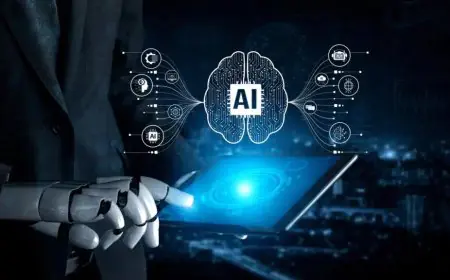
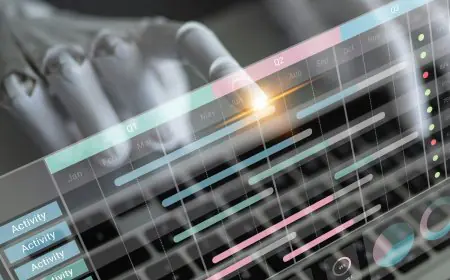
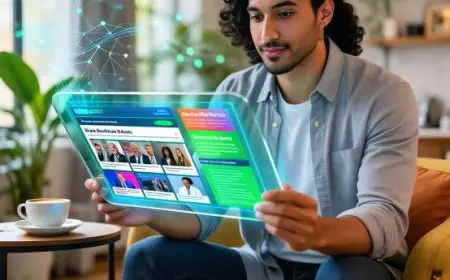
[Image: A high-tech office visualization showing AI agents managing digital workflows while human workers focus on strategy]
An Economic Earthquake: Political and Industry Reactions
The 18-month prediction has not gone unnoticed by policymakers or competitors. Senator Bernie Sanders described the prospect as an "economic earthquake," calling for immediate discussions on how to ensure AI works for the labor force rather than just corporate bottom lines. Meanwhile, other tech leaders have echoed Suleyman’s urgency. Anthropic CEO Dario Amodei recently suggested that software engineering as we know it could be obsolete within a year, while specialized AI agents begin to take over the roles of entry-level analysts and researchers.
A report by the Financial Times highlights that this transition is being fueled by a massive surge in "agentic" AI—software that can not only think but act across different applications to complete a goal. Unlike earlier chatbots, these agents can navigate internal company databases, communicate with other bots, and make decisions based on real-time data, effectively mirroring the role of a middle manager or high-level administrator.
The Post-Task Economy and the Reskilling Challenge
If Suleyman’s timeline holds true, the global economy is entering a "post-task" era where the value of a worker will no longer be measured by their ability to process information, but by their ability to provide high-level judgment and emotional intelligence. According to the World Economic Forum, the displacement of traditional office roles could lead to a significant structural shift in the labor market, requiring millions of workers to "unlearn" old habits and master the art of AI orchestration.
For Microsoft, the goal is to turn its Copilot platform into a deeply personalized, long-memory companion that knows a user’s professional history and preferences. However, as these systems become more capable, the line between "support tool" and "replacement" becomes increasingly thin. As 2026 progresses, the "18-month clock" is ticking for every professional whose office is a laptop and a high-speed connection.