































Silicon vs. Steel: The Great American Schism Over AI Data Center Expansion
The United States has entered a high-stakes legislative and public opinion deadlock over the rapid expansion of AI infrastructure. While the White House leverages emergency powers to fast-track a projected $500 billion "Project Stargate" data center surge, a growing alliance of state lawmakers and local communities are hitting the brakes, citing a looming "national energy emergency" and irreversible environmental strain.


The Federal Fast-Track: Project Stargate and the Energy Emergency
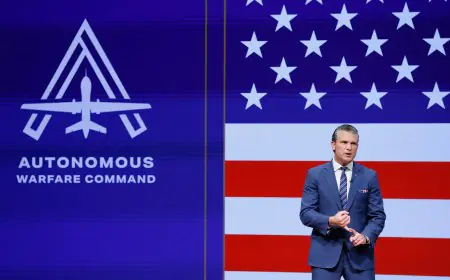
As of February 2026, the U.S. federal government has shifted into a "war footing" regarding artificial intelligence. In a bid to secure global dominance against China, the administration has unveiled Project Stargate, a massive $500 billion joint venture with industry titans like OpenAI, SoftBank, and Oracle. The goal is clear: to build the most advanced AI infrastructure in human history.
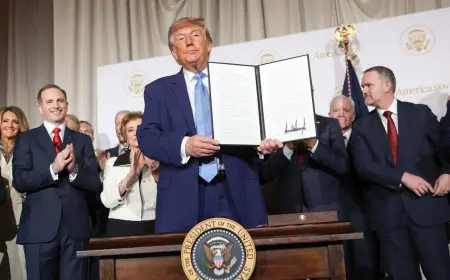
To bypass the "red tape" traditionally associated with such massive builds, the President recently signed an unprecedented executive order declaring a “national energy emergency.” This proclamation allows federal agencies to waive certain environmental permitting reviews under the National Environmental Policy Act (NEPA), effectively allowing data center campuses—some spanning over 50,000 acres—to break ground in record time.
The Grid at a Breaking Point
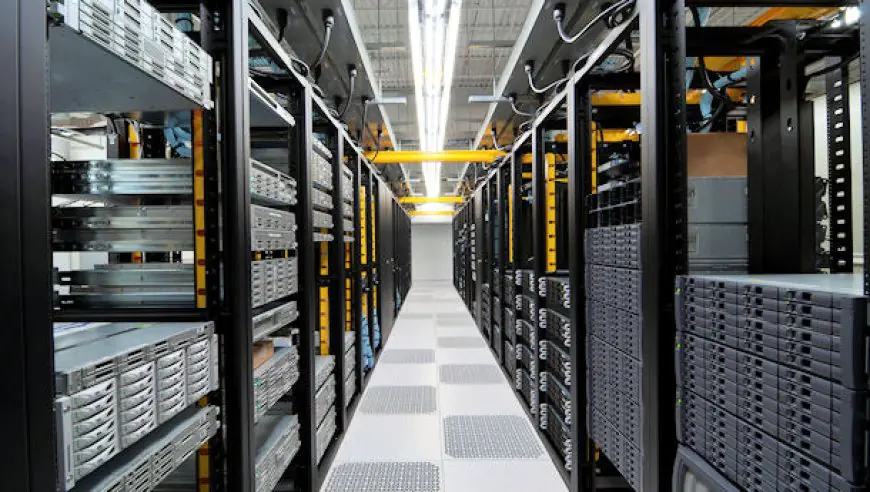
The scale of this expansion is pushing the American electrical grid to its theoretical limits. Data centers, which once accounted for a negligible fraction of U.S. power use, are projected to consume up to 12% of the nation’s total electricity by 2028. In regions like Northern Virginia’s “Data Center Alley,” the demand is so high that new facilities are drawing the equivalent power of entire nuclear reactors.
The infrastructure debate is no longer just about silicon; it is about steel and water. Beyond the 90 gigawatts of new power required by 2030, these facilities are expected to consume over 32 billion gallons of water annually for cooling—a figure that has sent shockwaves through drought-prone western states and agricultural hubs alike.
The Grassroots Rebellion: State-Level Moratoriums
While Washington pushes for acceleration, the "Silicon Heartland" is pushing back. In Pennsylvania, lawmakers have introduced a landmark bill for a three-year statewide moratorium on hyperscale data center development. Similar pauses are being enacted at the township level across Michigan and Ohio, where residents have complained of industrial noise levels reaching 100 decibels—comparable to a permanent jackhammer in their backyards.
“We are being asked to sacrifice our local environment and energy stability for a 'gold rush' that primarily benefits a handful of tech giants,” stated one Pennsylvania official during a legislative debrief this month. This grassroots friction has created a "patchwork" regulatory environment where federal mandates clash directly with local zoning laws.
Public Sentiment: The 73% Mandate for Caution
Public opinion is increasingly siding with the skeptics. A February 2026 poll conducted by the Future of Life Institute found that 73% of U.S. adults want robust regulation on AI development, with a majority favoring a "slow, heavily regulated" approach akin to the pharmaceutical industry. Only 5% of Americans believe the technology should be developed "as quickly as possible," directly contradicting the "race to AGI" narrative currently dominating Silicon Valley.
This "AI anxiety" is rooted in more than just environmental fears. Many Americans view data centers as physical monuments to a future that threatens their jobs and privacy. For these voters, the data center is a "vessel for antipathy toward Big Tech."
Conclusion: A Decisive 18 Months
The next 18 months will likely decide the structural future of American AI. If the federal government successfully uses emergency powers to override local opposition, the U.S. may secure its lead in the global AI race. However, doing so risks a significant political backlash and a potential "energy crunch" that could drive up utility bills for millions of households. As the debate heats up, the question remains: Can America build the future of AI without breaking its own foundations?