
















Eli Lilly and Insilico Medicine Partnership Changes Everything for AI drug Development
Eli Lilly has finalized a massive $2.75 billion agreement with Insilico Medicine to leverage generative AI for drug discovery. This landmark deal, including $115 million in upfront payments, signals a major shift in how the pharmaceutical industry intends to bypass traditional, slow-moving R&D processes in favor of AI-driven precision medicine.
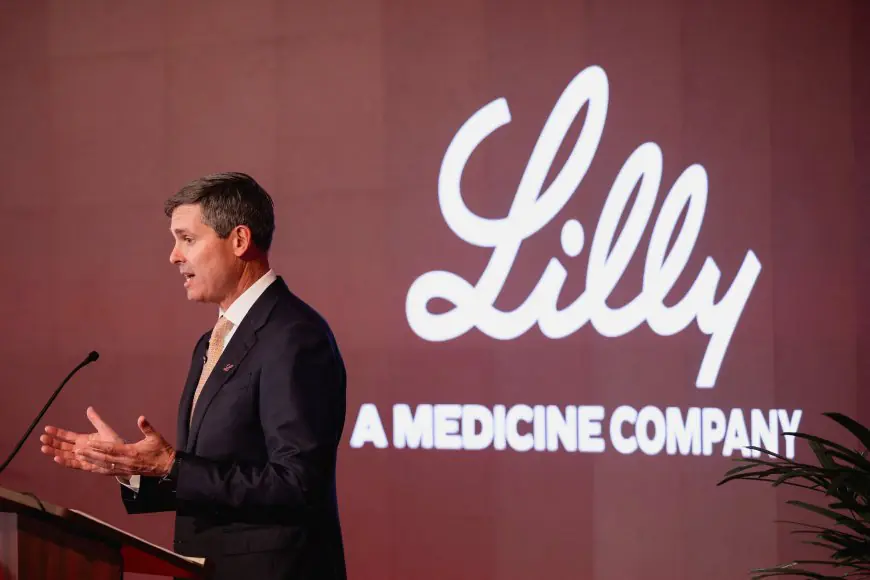

The pharmaceutical industry is currently witnessing a tectonic shift as legacy giants race to integrate cutting-edge technology into their core research pipelines. In one of the most significant moves of 2026, Eli Lilly has officially inked a multi-year, multi-billion dollar collaboration with Insilico Medicine. This partnership is not just another corporate contract; it is a $2.75 billion bet on the future of how human medicine is conceived, tested, and delivered to patients worldwide.
Under the terms of the agreement, Eli Lilly will provide an initial upfront payment of $115 million, with the remaining $2.6 billion tied to rigorous research, development, and commercial milestones. For Insilico Medicine, a pioneer in the generative AI space, this validates years of work spent perfecting their proprietary AI platforms. For Eli Lilly, it represents a strategic maneuver to maintain dominance in an increasingly competitive market where speed to market is everything.
The End of the Guesswork Era
Traditionally, drug discovery has been a notoriously slow and expensive "trial and error" process. It often takes over a decade and billions of dollars to bring a single drug from the lab to the pharmacy shelf, with a high percentage of candidates failing during clinical trials. The partnership with Insilico Medicine aims to flip this script by utilizing generative biology and chemistry to predict which molecules will be most effective before they are even synthesized in a lab.
Insilico’s platform, often cited in major scientific journals for its efficiency, uses deep learning to identify new drug targets and design "de novo" molecular structures. This means the AI isn't just searching through a library of existing chemicals; it is literally imagining and designing new ones that have the specific properties needed to fight complex diseases. By narrowing down the field of potential candidates with surgical precision, Eli Lilly expects to significantly slash the "valley of death" period that claims so many promising medical breakthroughs.
Why Big Pharma is Moving Toward AI Integration
The timing of this deal is no coincidence. As patent cliffs loom for several blockbuster drugs, pharmaceutical companies are under immense pressure to replenish their pipelines. AI offers a way to do more with less. By integrating Insilico’s end-to-end AI platform—which covers everything from target identification to clinical trial outcome prediction—Eli Lilly is positioning itself to lead the next generation of precision medicine.
Industry analysts suggest that this deal is a signal to the entire biotech sector. We are moving away from general treatments and toward hyper-targeted therapies. This approach is particularly vital in areas like oncology, immunology, and neurodegenerative diseases, where the biological pathways are incredibly intricate. According to market data from Reuters, investment in AI-driven biotech has seen a 40% year-over-year increase, as investors look for companies that can prove their R&D efficiency.
What This Means for the Future of Healthcare
The implications of the Eli Lilly and Insilico deal extend far beyond the boardroom. For patients, this could mean that treatments for rare diseases—which were previously considered too expensive or difficult to research—might finally become viable. If AI can reduce the cost of discovery, the economic barrier to treating smaller patient populations begins to crumble.
Furthermore, the collaboration highlights the growing importance of "tech-bio"—the intersection of deep tech and biology. The core components of this massive deal include:
- Target Discovery: Using AI to find hidden biological drivers of disease.
- Molecular Design: Creating custom molecules that fit like a key into a lock.
- Clinical Optimization: Using data to ensure the right patients are selected for the right trials.
If Eli Lilly can successfully move AI-designed candidates into successful Phase II and III trials, the "traditional" way of doing drug research may become a relic of the past. For now, the message is clear: the AI revolution in medicine isn't coming; it is already here, and it is worth billions.