


































Industry Fallout: OpenAI and Sam Altman Defeat Elon Musk’s $150 Billion Lawsuit
OpenAI CEO Sam Altman and President Greg Brockman secured a major courtroom victory after a federal jury dismissed Elon Musk’s high-profile lawsuit against the company. The ruling could have significant implications for the future governance, commercialization, and competitive direction of the artificial intelligence industry.


The AI Industry Just Witnessed A Defining Legal Moment
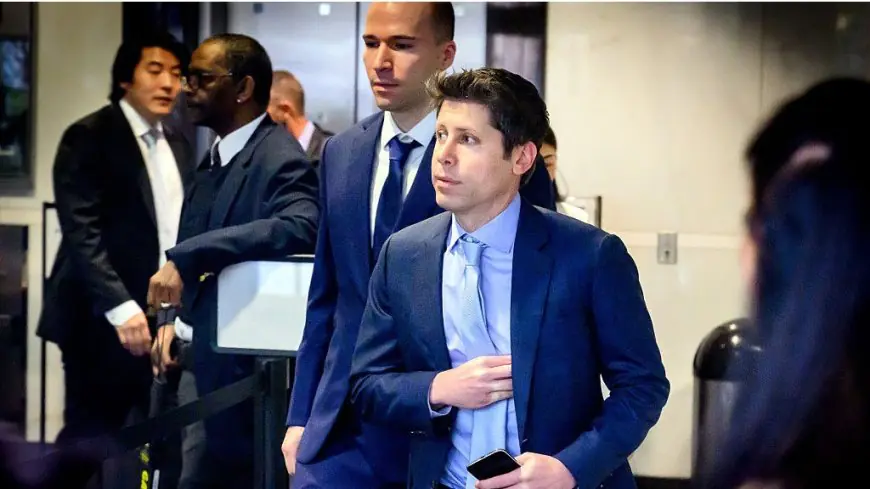
The battle for control, influence, and direction within the artificial intelligence industry took another dramatic turn after OpenAI secured a major legal victory against Elon Musk. In a closely watched California courtroom case, a federal jury unanimously found OpenAI CEO Sam Altman and President Greg Brockman not liable in Musk’s sweeping civil lawsuit, effectively ending one of the most high-profile legal confrontations in modern AI history.
The lawsuit centered on Musk’s claims that OpenAI had abandoned its original non-profit mission in pursuit of commercial dominance. Musk argued that the organization’s transformation into a highly influential AI company conflicted with the principles under which it was originally founded. However, the jury ruled that Musk failed to bring the claims within California’s three-year statute of limitations, resulting in a decisive legal victory for OpenAI leadership.
Why The Case Drew Global Attention
The legal dispute attracted enormous attention because it represented far more than a disagreement between technology executives. At its core, the case highlighted growing tensions inside the AI industry over profit, governance, safety, and market power. OpenAI’s rapid rise from a research-focused nonprofit initiative into one of the world’s most valuable artificial intelligence companies has become a symbol of how quickly the AI economy has evolved.
Sam Altman, who has emerged as one of the most influential figures in artificial intelligence, has consistently defended OpenAI’s commercial strategy as necessary for funding advanced AI research and infrastructure development. Supporters of the company argue that building frontier AI systems requires enormous computational resources, talent acquisition, and global-scale investment that nonprofit models alone may struggle to sustain.
Critics, however, continue raising concerns about whether concentrated corporate control over powerful AI technologies could create long-term ethical and competitive risks. The Musk lawsuit amplified those debates by placing OpenAI’s evolution under intense public scrutiny during a period when governments and regulators worldwide are already examining how AI companies should be governed.
What The Verdict Means For The AI Industry
The outcome is widely being viewed as a major strategic win for OpenAI at a critical moment in the global AI race. The company remains deeply involved in expanding enterprise AI products, infrastructure partnerships, and next-generation model development while competing against rivals including Google, Anthropic, Meta, and Elon Musk’s own AI company, xAI.
Industry analysts believe the ruling could strengthen OpenAI’s position with investors and enterprise partners by removing a major legal uncertainty hanging over the company. It also reinforces the growing reality that the AI sector is becoming increasingly shaped by aggressive competition, legal disputes, and high-stakes governance battles alongside technological innovation.
More information about responsible AI governance and policy frameworks can be explored through the official OpenAI safety and governance resource center.
The Bigger Fight Over The Future Of Artificial Intelligence
Beyond the courtroom outcome, the case reflects a much larger struggle over who will control the future of artificial intelligence and how those systems should be developed. As AI models become more capable and commercially valuable, tensions between open research principles, corporate monetization, and public accountability are expected to intensify across the industry.
Many experts believe future disputes may increasingly focus on issues such as AI transparency, infrastructure access, competitive fairness, and global regulatory oversight. Governments around the world are already considering new frameworks aimed at balancing innovation with safety and market accountability.
For OpenAI, the verdict represents more than just a legal victory. It solidifies the company’s momentum during one of the most competitive periods in AI history while reinforcing Sam Altman’s role as one of the dominant figures shaping the direction of the global artificial intelligence economy.