






































Alibaba Strikes Back in Chip War with New "Zhenwu M890" AI Silicon
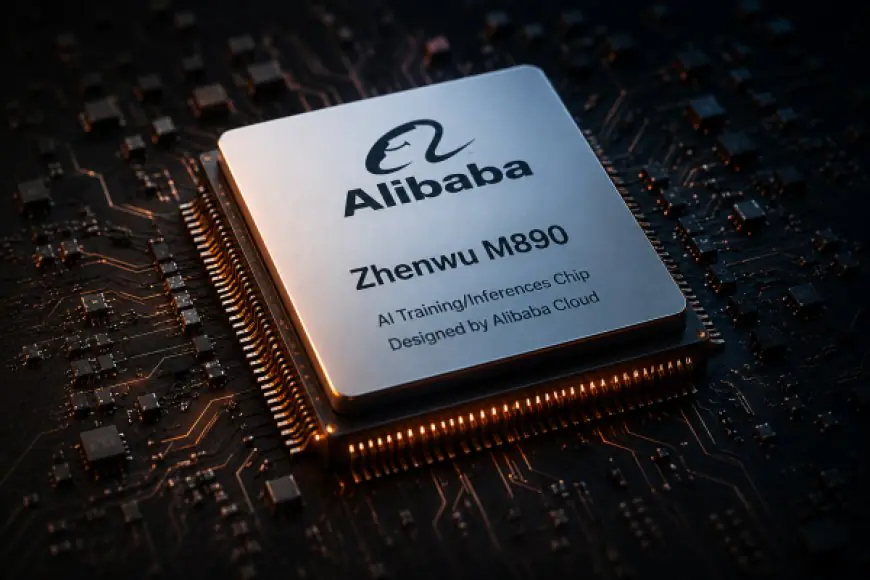
Alibaba has launched its new Zhenwu M890 AI processor as China intensifies efforts to reduce dependence on foreign semiconductor technology. The chip reportedly delivers three times the performance of its predecessor and signals a major escalation in the global AI and semiconductor competition.


The Global AI Chip War Is Entering A More Aggressive Phase
The battle for dominance in artificial intelligence infrastructure is intensifying as major technology powers race to secure control over advanced semiconductor technology. In one of the most significant developments yet, Alibaba has officially introduced its new Zhenwu M890 AI processor, a move that could dramatically strengthen China’s push toward semiconductor independence amid escalating U.S. export restrictions.
The launch comes at a critical moment for China’s technology sector, which has faced increasing pressure from Western trade controls limiting access to high-performance AI chips produced by companies such as Nvidia. Those restrictions have forced Chinese firms to accelerate domestic chip innovation in an effort to reduce reliance on foreign suppliers for advanced computing infrastructure.
Why The Zhenwu M890 Matters
Alibaba claims the Zhenwu M890 delivers roughly three times the performance of its previous-generation 810E processor. The earlier 810E chip had already drawn attention inside the Chinese market for achieving performance levels comparable to Nvidia’s China-compliant H20 processor, making the latest upgrade a potentially major breakthrough for domestic AI computing capabilities.
The new processor is expected to support large-scale AI model training, cloud computing operations, enterprise AI deployment, and high-performance inference workloads. Analysts say the release demonstrates how quickly Chinese companies are advancing their semiconductor engineering capabilities despite facing restrictions on access to some of the world’s most advanced chip manufacturing technologies.
The broader significance goes far beyond Alibaba itself. China has been aggressively investing in semiconductor self-sufficiency as artificial intelligence becomes increasingly tied to economic competitiveness, national security, and geopolitical influence. Advanced AI chips are now viewed as strategic assets capable of determining leadership in industries ranging from autonomous systems and robotics to cloud infrastructure and military technology.
How Export Restrictions Accelerated China AI Push
U.S. export controls targeting advanced semiconductor technologies have reshaped the global AI market over the past several years. Restrictions placed on high-end AI processors limited Chinese access to Nvidia’s most powerful GPUs, pushing domestic firms to invest heavily in proprietary hardware alternatives.
Instead of slowing development entirely, many analysts believe the restrictions accelerated China’s long-term commitment to building independent semiconductor ecosystems. Companies including Alibaba, Huawei, Baidu, and Tencent have all expanded internal chip development initiatives aimed at supporting local AI infrastructure without relying heavily on foreign suppliers.
Additional information about global AI semiconductor trends can be explored through the official Nvidia data center platform.
The Bigger Battle Over AI Infrastructure
The release of the Zhenwu M890 also highlights how artificial intelligence is increasingly becoming an infrastructure competition rather than purely a software race. Advanced AI systems require enormous computing power, and the companies controlling next-generation processors may ultimately shape the future balance of power across the technology industry.
For Alibaba, the chip launch strengthens its position inside China’s cloud and AI ecosystem while supporting broader national efforts to develop self-sufficient technology supply chains. For the global market, it signals that the semiconductor competition between China and the West is entering a new stage where domestic innovation is rapidly accelerating on both sides.
Industry experts expect AI chip development to remain one of the most strategically important sectors over the next decade as governments and corporations invest billions into computing infrastructure capable of supporting increasingly advanced artificial intelligence systems.
More insights into AI infrastructure and semiconductor innovation are available through the official IBM artificial intelligence resource center.