




















Nvidia and Meta Ignite Year-End M&A Frenzy as "Agentic AI" Drives Market Volatility
Nvidia and Meta are capping off 2025 with massive strategic plays. While Nvidia eyes a multi-billion dollar talent grab with Israel’s AI21 Labs, Meta’s stock climbs following its acquisition of autonomous agent pioneer Manus, signaling a shift from infrastructure to actionable AI.

The Great AI Consolidation: Why Big Tech is Buying Up the Bench
As the curtains close on 2025, the artificial intelligence sector is undergoing a profound transformation. The era of "wait and see" has officially ended, replaced by a high-stakes game of musical chairs where the world’s most valuable companies are aggressively vacuuming up remaining top-tier startups. This week, all eyes are on Nvidia and Meta Platforms, two giants moving in seemingly different directions but fueled by the same urgency: the need for specialized human talent and "agentic" capabilities.
Nvidia, which became the first company to ever touch a $5 trillion market capitalization earlier this year, is currently navigating a period of strategic recalibration. After its massive $20 billion cash deal for inferencing startup Groq, reports have surfaced that Jensen Huang is now setting his sights on AI21 Labs. The Israeli startup, a long-time rival to OpenAI, is reportedly in advanced talks to be acquired for a figure between $2 billion and $3 billion. For Nvidia, this isn't just about another large language model; it’s a "talent grab" of 200 of the world’s most elite neural network architects.
Meta’s "Manus" Moment: From Chatbots to Digital Workers
While Nvidia focuses on the plumbing of AI, Mark Zuckerberg is doubling down on the "brains." Meta’s recent acquisition of Manus, a Singapore-based startup known for its viral autonomous agents, sent a clear signal to Wall Street. Unlike traditional chatbots that simply summarize text, Manus’s technology allows AI to execute complex, multi-step tasks across the web—effectively acting as a digital employee. The market responded with cautious optimism, pushing Meta’s stock up over 1% on a day when broader tech indices were struggling with volatility.
The Manus deal, valued at approximately $2.5 billion, highlights Meta's pivot toward "agentic AI." This technology is expected to be integrated directly into WhatsApp and Instagram, allowing users to book travel, manage calendars, and conduct deep-market research without leaving their chat threads. According to a detailed report from Reuters, Manus had already reached a $100 million annual revenue run rate before the acquisition, making it one of the most commercially successful agentic startups of the year.
Volatility: The Price of Unprecedented Growth
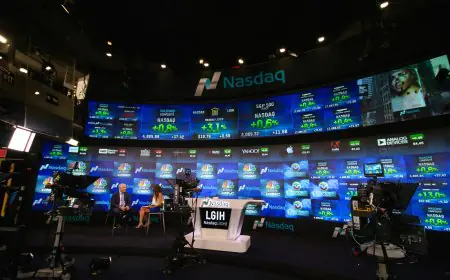
Despite these high-profile moves, the broader AI market remains a rollercoaster. Nvidia’s stock has seen intraday swings of up to 4%, as investors weigh the potential of the AI21 acquisition against "AI fatigue" and the massive capital expenditures required to sustain growth. Analysts are currently divided: some see the $3 billion AI21 deal as a necessary defense against Google’s internal chip development, while others worry that the "talent war" is reaching unsustainable price points.
This volatility is a reflection of a market in transition. We are moving away from the "infrastructure phase," where everyone was just buying GPUs, and into the "application phase," where companies must prove that their AI can actually do work. The Bloomberg tech index shows that while infrastructure plays like Nvidia remain the foundation, the real momentum is shifting toward companies that can deliver tangible productivity gains through agents.
What’s Next for 2026?
The move by Nvidia to buy AI21 Labs and Meta’s grab of Manus suggests that 2026 will be defined by "Sovereign AI" and integrated agents. Companies are no longer satisfied with licensing third-party models; they want to own the researchers, the weights, and the workflows. For the average investor, this means the "Magnificent Seven" will likely continue to grow, but the barrier to entry for new AI startups is becoming almost insurmountable. If you aren't one of the giants, you are either a target or a casualty.
As we look toward the first quarter of 2026, the success of these acquisitions will be measured not in headlines, but in integration. Can Meta turn Manus into a revenue-generating powerhouse for WhatsApp Business? Can Nvidia turn AI21’s "Jurassic" models into a standard for enterprise inferencing? The answers to these questions will determine whether the current volatility is a sign of a bubble or the growing pains of a new industrial revolution.