










































The New Google Quantum AI Study is Sounding The Alarm for Bitcoin Security
A groundbreaking paper from Google Quantum AI has revealed that the quantum resources needed to break the encryption protecting Bitcoin and Ethereum are twenty times smaller than previously estimated. By demonstrating a nine-minute attack window, researchers have effectively shortened the timeline for when cryptocurrencies must transition to post-quantum security standards
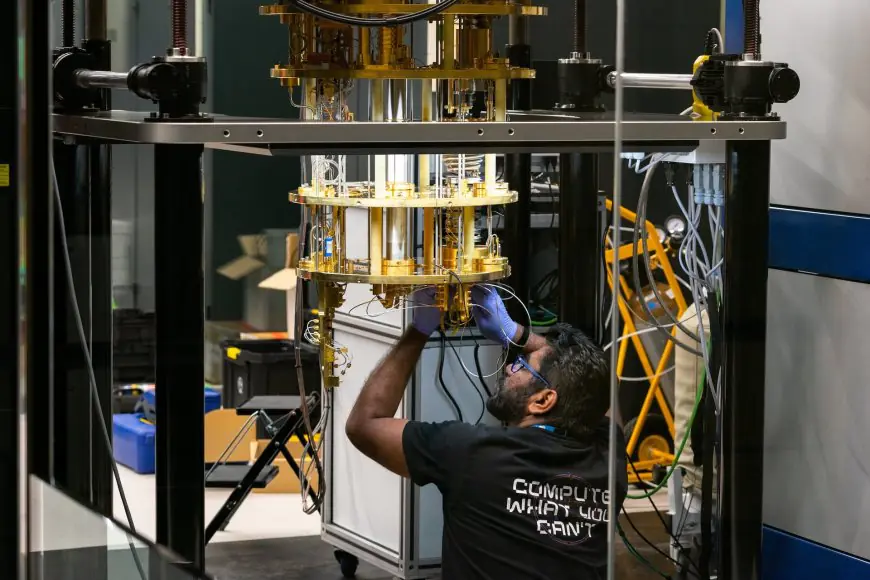


For years, the cryptocurrency community has treated the "quantum threat" as a distant, theoretical boogeyman—a problem for the 2040s. That comfort zone evaporated this morning. Google Quantum AI has published a startling new whitepaper that effectively slashes the estimated hardware requirements to crack elliptic-curve cryptography (ECC) by a factor of twenty. This isn't just a marginal improvement; it is a fundamental recalibration of the cybersecurity landscape for 2026.
The Nine Minute Warning
The most chilling revelation in the Google report is the speed at which a future quantum system could operate. Using optimized quantum circuits, the researchers demonstrated that a superconducting quantum computer could potentially derive a private key from a public key in as little as nine minutes. For the uninitiated, this is a critical threshold: Bitcoin’s average block time is ten minutes.
This means a "live" attack is now theoretically possible. In an "on-spend" attack, a malicious actor could intercept a transaction as it is broadcast to the network, crack the sender's private key using a quantum system, and broadcast a fraudulent transaction with a higher fee to ensure it is processed first. If the math holds, the attacker could drain the wallet before the original, legitimate transaction ever hits the blockchain. According to the Google Research team, this discovery moves the goalposts for developers who previously thought they had decades to prepare.
Why Elliptic Curve Cryptography is the New Target
While much of the historical focus has been on breaking RSA encryption used by banks and governments, Google’s latest findings suggest that ECC—the math securing virtually all modern blockchains—is actually a much softer target for quantum machines. The paper, co-authored with researchers from the Ethereum Foundation and Stanford University, estimates that breaking a 256-bit ECC key would require fewer than 500,000 physical qubits.
This is a massive drop from prior estimates that suggested tens of millions of qubits would be necessary. By focusing on "logical qubits" and optimizing the number of Toffoli gates—essentially the heavy-duty engines of quantum math—Google has mapped out a much shorter path to what cryptographers call "Q-Day." While a machine with 500,000 physical qubits does not exist today, the engineering target is now visible on the horizon, leading Google to accelerate its own migration to post-quantum standards by 2029.
The Zero Knowledge Shield
In a move that highlights the sensitivity of this research, Google did not actually publish the full attack circuits. Instead, they utilized a cutting-edge cryptographic technique known as a Zero-Knowledge Proof (ZKP). This allows independent scientists to verify that Google’s claims are mathematically sound without actually giving them the "keys to the castle."
This "responsible disclosure" model was developed in coordination with the U.S. government to ensure the findings motivate defensive upgrades without providing a roadmap for bad actors. It is a clear signal that the intelligence community is taking the findings with the utmost seriousness. The message to the crypto world is clear: start the migration now or risk becoming a legacy footnote.
The Race to Post Quantum Protection
So, is your Bitcoin wallet safe today? The short answer is yes—for now. No hardware currently exists that can execute these circuits. However, the "harvest now, decrypt later" threat remains very real. Adversaries can record encrypted data today and simply wait for the hardware to catch up. For long-term holders of Bitcoin and Ethereum, the pressure is now on core developers to implement NIST-approved post-quantum standards.
The Ethereum Foundation has already begun drafting a series of hard forks to address this vulnerability, but Bitcoin’s decentralized nature makes rapid changes notoriously difficult.