
































AI-Generated Art Sparks Backlash At Germany’s Richard Wagner Festival
An AI-assisted production of Wagner's Götterdämmerung at the Bayreuth Festival was met with boos and whistles from the audience, reigniting the debate over AI's role in creative culture. The experiment used dynamically generated imagery, but the disjointed visuals left many spectators confused and frustrated.
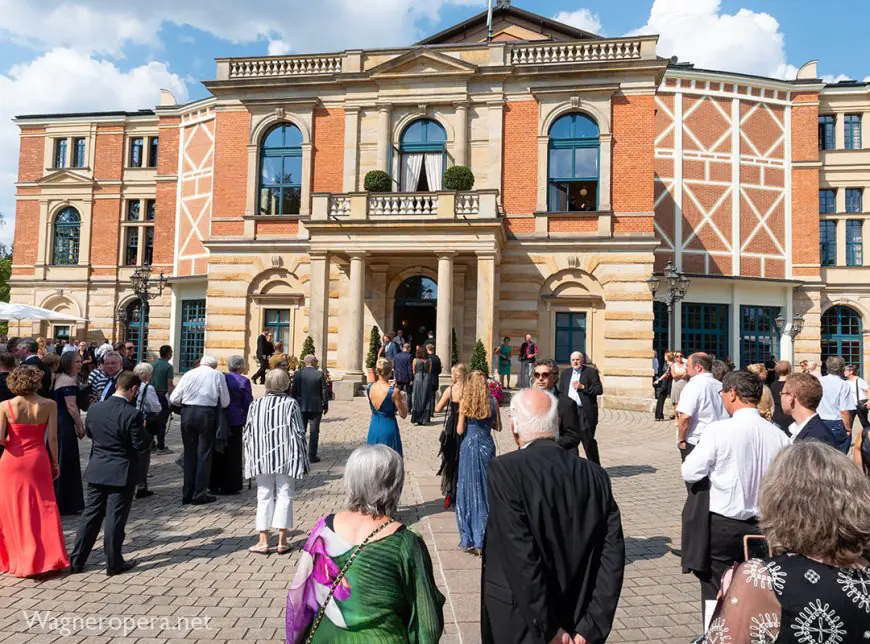
For the first time in its 150-year history, the Bayreuth Festival in Germany incorporated artificial intelligence directly into one of its productions. The festival, which is dedicated to the works of Richard Wagner, used AI as an "image-generating force" during a performance of Götterdämmerung (Twilight of the Gods), the final opera of the epic Ring cycle.

Organizers had promised that AI would create a "visually seething cosmos of light, texture, history, and association" around the human singers, with projections that would "erupt, constantly shift, and merge into one another." However, the experiment did not go as planned.
The performance on Saturday evening left many audience members bewildered. The AI-generated projections, which drew from a database of images pre-selected by curator Marcus Lobbes and his team, included scenes from previous Wagner productions, historical themes, and archival footage.
However, the collage of images projected on stage appeared disjointed and confusing. Among the images displayed were former German Chancellor Helmut Kohl, the World Trade Center towers after the September 11 attacks, and a commemorative stamp marking German reunification in 1990 .
The seemingly random and jarring juxtaposition of these historical images with the opera's mythical narrative left spectators puzzled and frustrated.
"The experiment with artificial intelligence at the annual Richard Wagner festival in the German town of Bayreuth has drawn boos from the audience after producing a staging that appeared to leave some spectators confused." – Associated Press report on the Bayreuth AI backlash
As the production team took their bows at the end of the performance, curator Marcus Lobbes and his team were met with boos and whistles from a section of the audience. However, the singers, musicians, and conductor Christian Thielemann received warm and enthusiastic applause.
This stark contrast in audience reception highlighted that the backlash was not directed at the performers or the music itself, but specifically at the AI-driven visual staging.The incident at the Bayreuth Festival has reignited a broader debate about the role of artificial intelligence in creative and cultural spaces.
Proponents of AI in the arts argue that it can open up new possibilities for expression and interpretation, while critics contend that it often lacks the human touch and emotional depth that audiences crave. The Bayreuth experiment serves as a cautionary tale for other cultural institutions considering similar AI integrations .
As the Bayreuth Festival continues to push the boundaries of tradition, the question remains: can technology and art coexist harmoniously, or will such experiments always risk alienating the very audiences they seek to impress?
With two more performances of the AI-assisted production scheduled, it remains to be seen whether the festival will adjust its approach or double down on its vision.