


































Uber Just Gave All 30,000 Employees an AI Agent and It Is Watching How They Use It
Uber is rolling out OpenAI's ChatGPT Work agent to its entire global workforce after a pilot where 80% of users were not engineers. It won't say what it costs, but it will track how staff use it to decide how far AI goes.

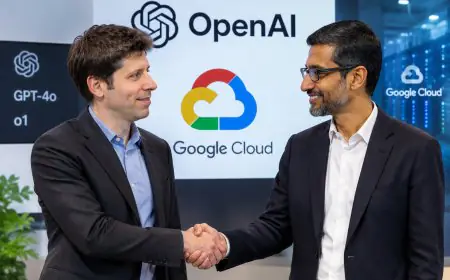
Uber just handed every one of its roughly 30,000 employees an AI agent. It is OpenAI's ChatGPT Work, an enterprise agent built to hand back finished slides, spreadsheets and briefs. And Uber is being unusually frank about the next part: it will be watching how people use it.


The company and OpenAI announced the expansion on Thursday, October 22. According to TechCrunch, the global rollout follows a pilot with 1,000 staff earlier this year that pulled in people from finance, operations and product. The telling number is who showed up. About 80% of those early adopters were not engineers, Uber VP of engineering Sumanth Sukumar told the outlet.
"They used it for a wide range of tasks: analyzing complex data from our operations to identify trends and develop recommendations; localizing training materials for different markets and languages; and building personalized interactive dashboards to manage their daily work." Sumanth Sukumar, VP of Engineering, Uber
That list is the real story. Data analysis, translation and dashboard building used to mean filing a ticket and waiting for an analyst or an engineer. Now a product manager can ask an agent. Uber's engineers, meanwhile, keep using OpenAI's Codex for code.
OpenAI launched ChatGPT Work in July. It plugs into Gmail, Google Drive, Google Calendar and Slack, so it can prepare meeting briefs, build presentations and run workflows across apps, according to OpenAI's release as reported by PYMNTS. That reach into inboxes and shared drives is exactly what makes these agents useful, and exactly what makes security teams nervous, a tension we covered when 1Password argued AI agents should never see your passwords.
The money question Uber will not answer
Uber did not disclose what the rollout costs, TechCrunch reported. That silence is interesting given the backdrop. The Next Web reports that in August, Uber CTO Praveen Neppalli Naga said the era of "tokenmaxxing," or spending freely on AI, was ending, and that Uber had reportedly burned through its entire 2026 budget for Anthropic's Claude Code by April. ChatGPT Work will run by default on GPT-6.1 Sol, a model OpenAI released last month at about a fifth of the price of its top model, per The Next Web. It looks like a company that learned how fast AI bills add up and now wants AI for everyone at a cheaper rate per head.
"As AI transforms how we work, we want to give everyone the tools to innovate, solve problems and help shape Uber's future." Praveen Neppalli Naga, CTO, Uber
Neppalli Naga's official line is upbeat, and OpenAI president Greg Brockman said in the release that teams across Uber can now "tap into our portfolio of frontier models and agents to take on more complex work." For OpenAI, a 30,000 seat customer is a trophy in its enterprise fight with Anthropic.
What Uber has not done is say what success looks like. Sukumar described the plan as giving teams "room to experiment." He pointed to an exercise earlier this year in which Uber paired 30 AI engineers with teams across the company and gave them two weeks to automate key parts of their jobs.
"We'll look at how employees are using the technology, the kinds of workflows they develop and how it helps them work more effectively. We'll evaluate those outcomes and use what we learn to guide how we deploy AI across the business." Sumanth Sukumar, VP of Engineering, Uber
Uber has announced no job cuts tied to this rollout. Sukumar has framed the tracking as a way to learn where AI helps, and Uber has not said the data will be used for anything beyond guiding where it deploys AI next.
OpenAI and Uber say they will share how staff use the agent and what results it brings as the rollout continues. Those numbers will matter more than any press quote. Until Uber publishes them, 30,000 people are running the experiment, and the scorecard stays private.