















AI Generated Cultural Videos Of Public Figures Are Breaking The Internet
A hyper-realistic AI-generated video trend featuring global leaders and public figures reimagined through the lens of different world cultures has gone viral, amassing millions of views and sparking a global conversation on digital identity and AI ethics.


The Viral Surge of Cultural AI Reimagination
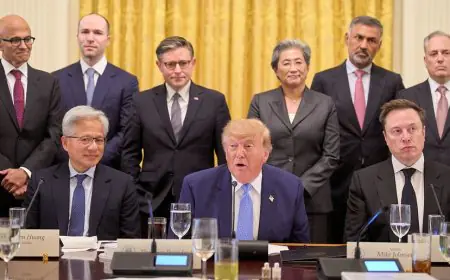
If you have scrolled through social media in the last 48 hours, you have likely encountered a version of President Donald Trump that you never expected to see. In one clip, he is "Dhanal Trumper," adorned in a vibrant Indian Jodhpuri coat; in the next, he is "Donal Okorompa," appearing in traditional Nigerian attire. This short-form video trend, which uses high-fidelity generative AI to reimagine public figures as if they were born in different cultures, has exploded across TikTok, Instagram, and YouTube, amassing over 9 million views within hours of its release.
The trend represents a significant shift in how audiences engage with artificial intelligence. While 2025 was dominated by static "AI portraits," 2026 has introduced a new era of temporal consistency and fluid motion. These aren't just face-swaps; they are full-scale digital recreations where the lighting, fabric textures, and environmental cues perfectly match the cultural aesthetic being portrayed. As the "uncanny valley" continues to narrow, the line between digital caricature and believable reality is becoming increasingly blurred.
High Fidelity Tools Powering The Viral Surge
Behind these viral moments are next-generation AI video models that have moved beyond the glitchy, surrealist outputs of previous years. Industry-leading tools like Runway Gen-4.5 and Google's Veo-3 are now capable of maintaining "character persistence," a technical milestone that allows an AI to keep a specific face recognizable across wildly different costumes and settings. This level of control is what makes the current cultural trend so captivating; the subject remains undeniably themselves, even as their world is entirely rewritten.
The technical process often involves "latent memory injection," where the AI references a massive database of cultural patterns—from the specific embroidery of a Kenyan Shuka to the architecture of a bustling market in Tokyo—and weaves them into a high-definition video stream. This democratization of high-end visual effects means that a single creator with a clever prompt can now produce content that once required a Hollywood-sized VFX budget.
Balancing Creativity With Cultural Sensitivity
While the internet finds humor in these cultural remixes, the trend has also caught the attention of global observers concerned with digital ethics. According to the UNESCO Recommendation on the Ethics of Artificial Intelligence, the potential for biased representations remains a significant hurdle. Critics argue that while many of these videos are meant as "playful satire," they can occasionally border on digital stereotypes, simplifying rich cultural heritages into algorithmically generated aesthetics.
Furthermore, the use of public figures raises questions of consent and truth. As these hyper-realistic videos become easier to generate, the risk of "epistemic trust" erosion grows. If we can so easily imagine a world leader in any culture, any location, or any situation, our collective ability to distinguish authentic footage from synthetic media is put to the ultimate test. Experts from Georgia Tech suggest that Gen Z users are already judging content by "emotional resonance" rather than factual accuracy, a shift that could redefine political and social communication forever.
The Future Of Global Persona Engineering
As we move further into 2026, the "cultural reimagining" trend is likely just the beginning. We are seeing the birth of what technologists call Sovereign AI Identities, where brands and public figures may soon release official AI-generated variations of themselves to better connect with local audiences globally. Imagine a world where a global brand's spokesperson "adapts" their appearance and language in real-time based on the viewer's location.
For now, the trend remains a testament to the sheer creative potential of generative AI. Whether it's world leaders in drag or presidents singing global anthems, the internet's appetite for reimagined reality shows no signs of slowing down. The real challenge for 2026 will be ensuring that as we use AI to explore the world’s cultures, we do so with the nuance and respect they deserve.