














Apple AI Strategy Will Change the iPhone Forever After 50 Years
As Apple marks its historic 50th anniversary, the tech giant is shifting its focus from hardware legacy to an AI-first future, preparing a massive Siri overhaul and OS-level intelligence features for the upcoming WWDC.
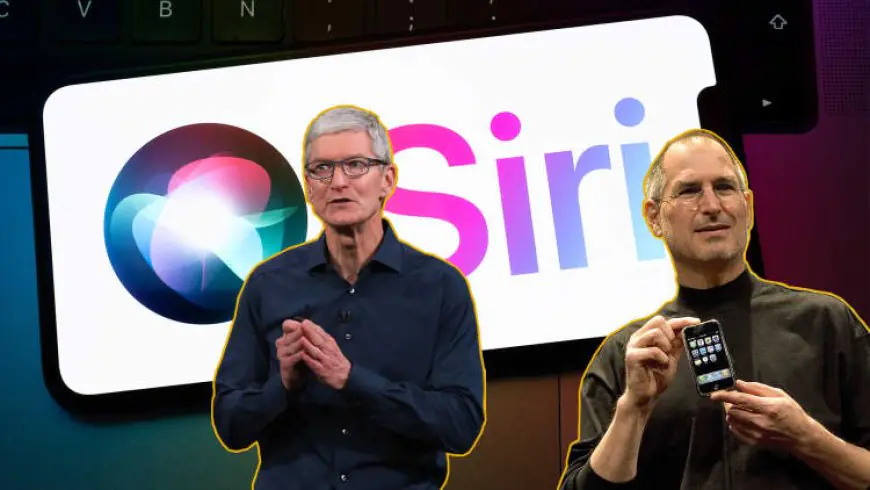

On April 1, 1976, Steve Jobs and Steve Wozniak founded a company that would eventually redefine how humanity interacts with technology. Fast forward exactly five decades to April 2026, and Apple is standing at perhaps its most critical crossroads since the launch of the original iPhone. While the 50th-anniversary celebrations across Apple Park were filled with nostalgia and "Think Different" tributes, the internal atmosphere is reportedly one of intense focus on a single objective: winning the generative AI race.
For months, the industry has buzzed with rumors that Apple’s "cautious" approach to artificial intelligence was about to end. Now, as the dust settles on its golden anniversary, the roadmap for what insiders call the "Siri 2.0" era has finally come into sharper focus. This isn't just another incremental update; it is a fundamental re-engineering of the Apple ecosystem to place personal intelligence at the very core of every device.
The Evolution of Siri into a True Digital Partner
The centerpiece of the upcoming software cycle, expected to debut at WWDC this June, is the long-awaited transformation of Siri. Reports suggest that Apple is testing an entirely new version of its assistant, internally codenamed "Campos." Unlike the Siri we’ve known for years, which often struggled with multi-turn conversations and complex intent, this new iteration is designed to function as a full-blown chatbot with deep on-screen awareness.
Imagine a Siri that doesn’t just set timers but understands the context of the email you are currently reading or the video you are editing in iMovie. This shift is being supported by a landmark partnership with Google to utilize Gemini models for "World Knowledge" queries, while Apple’s own on-device models handle sensitive personal data. It is a hybrid approach that aims to offer the power of a modern LLM without sacrificing the privacy-first ethos that Apple has spent decades building.
Infrastructure and the Baltra Chip Revolution
While software gets the headlines, the real story might be the silicon. To support these massive AI workloads, Apple is reportedly moving toward mass production of its own dedicated AI server chips, codenamed "Baltra." According to supply chain analysts, these chips are designed specifically for high-efficiency AI inference, allowing Apple to process complex requests in its Private Cloud Compute (PCC) environment with unprecedented speed.
This hardware push is backed by a staggering multi-year investment plan in U.S.-based AI data centers. By building its own server-side silicon, Apple is attempting to decouple itself from the supply chain bottlenecks that have plagued competitors. The goal is clear: to create a seamless "intelligence fabric" where the handoff between your iPhone’s local processor and Apple’s private servers is so fast that the user never notices where the computation is happening.
What iOS 27 and macOS 27 Mean for Users
The upcoming operating systems, iOS 27 and macOS 27, are expected to be the most "AI-saturated" releases in the company’s history. Beyond the Siri overhaul, we are looking at system-wide tools for generative writing, automated photo reconstruction, and a new framework rumored to be called "CoreAI." This framework will likely replace legacy machine learning tools, providing developers with the keys to build apps that can "see" and "hear" with the same nuance as Apple’s first-party software.
According to reports from MacRumors, this transition will also mark a definitive end to the Intel era, as macOS 27 is expected to drop support for the last remaining Intel-based Macs. This move ensures that every active Mac in the ecosystem has the Neural Engine required to run the next generation of features. It is a bold, "rip-the-band-aid-off" strategy that signals Apple is no longer looking back.
A Vision for the Next Fifty Years
In his 50th-anniversary letter to employees, Tim Cook noted that Apple has always been more focused on building tomorrow than remembering yesterday. As we look toward the June keynote, it is evident that "tomorrow" is defined by a more proactive, intuitive, and helpful version of technology. The company isn't just trying to catch up to ChatGPT or Gemini; it is trying to integrate those capabilities into a hardware-software-services stack that no one else can replicate.
The investment package for this AI push includes:
- Strategic expansion of Private Cloud Compute nodes across the globe.
- Deep integration of generative video and audio tools within the Pro Apps suite.
- Advanced health monitoring features that use AI to predict wellness trends before they become issues.
As the tech world prepares for the annual trek to Cupertino for WWDC, the stakes have never been higher. Apple’s 50th year may be remembered not for its past triumphs, but as the moment the company finally taught the world what "Personal Intelligence" really looks like.