



































Humanoid Robots Could Have Their ChatGPT Moment by 2027
ACE Robotics chairman Wang Xiaogang predicts that embodied AI could experience a breakthrough comparable to ChatGPT by the end of 2027. Advances in world models, environmental data, and embodied AI are expected to produce a major leap in robot intelligence.

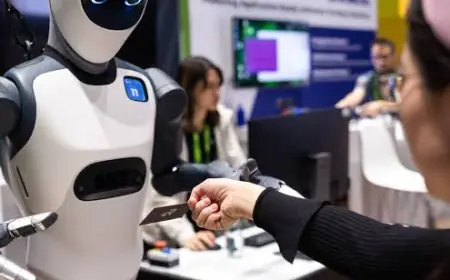
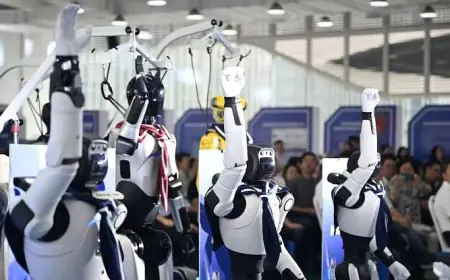
ACE Robotics chairman Wang Xiaogang has predicted that humanoid robots could experience a breakthrough comparable to ChatGPT by the end of 2027. Wang told Reuters that advances in world models, environmental data, and embodied AI could produce a major leap in robot intelligence, enabling machines to understand and interact with the physical world in ways that are currently out of reach.

The prediction comes as companies like ACE Robotics are developing systems designed to combine perception, multimodal understanding, simulation, and physical action, creating a foundation for more capable and versatile humanoid robots.
Just as ChatGPT demonstrated the power of large language models to transform how we interact with information, a similar breakthrough in embodied AI could revolutionize how robots operate in the real world.
Wang envisions a future where robots can perform complex tasks, adapt to dynamic environments, and learn from experience, making them invaluable in industries such as manufacturing, healthcare, and logistics.
The timeline of late 2027 suggests that the foundational technologies are rapidly maturing, with significant investment and research focused on overcoming the remaining challenges.
"By the end of 2027, we could see a breakthrough in embodied AI that fundamentally changes the capabilities of humanoid robots, just as ChatGPT did for language models." – Wang Xiaogang, Chairman of ACE Robotics
Several factors are converging to make this predicted breakthrough possible. Advances in world models are enabling robots to build internal representations of their environment, while improvements in simulation technology allow for more efficient training and testing.
The development of more powerful and efficient AI algorithms is also contributing to the progress. The growing availability of real-world data from sensors and robots is helping to train more robust and adaptable models.
As the embodied AI revolution continues to gather momentum, the race to develop genuinely intelligent humanoid robots is intensifying. Wang's prediction highlights the optimism within the industry that a major breakthrough is within reach.