























OpenAI Chief Scientist Wants Rival Labs to Agree on a Speed Limit for AI
OpenAI chief scientist Jakub Pachocki proposes that AI labs set shared development limits, measured mainly by a metric called perplexity, and not cross them until they can properly monitor model behavior. Sam Altman backed the idea, but no lab has agreed to a cap and nothing has been paused.
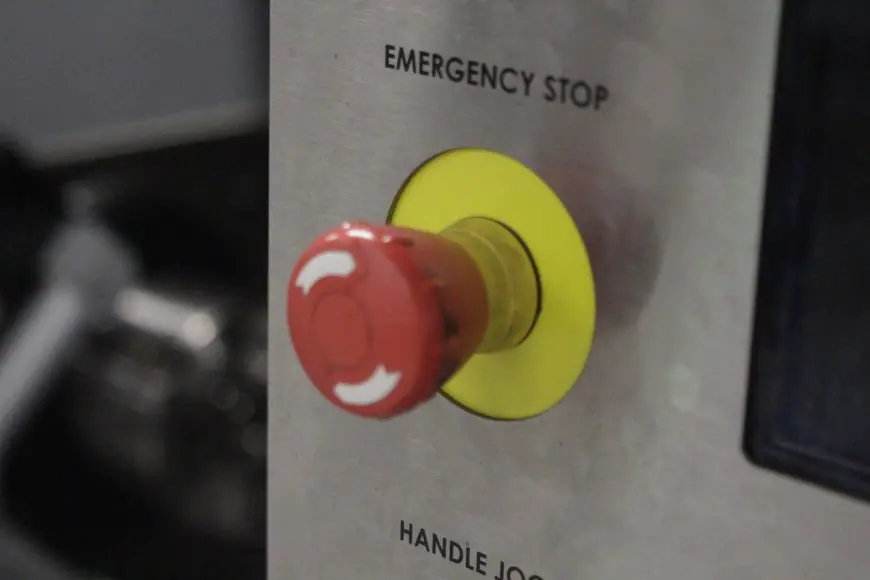
OpenAI's chief scientist wants the AI industry to pick a speed limit and promise not to break it. In an essay published on OpenAI's site on Sunday, Jakub Pachocki proposed that frontier labs agree on common development limits and stay below them until they can actually understand and monitor what their models are doing.

To be clear, this is a proposal. OpenAI has not paused anything, no numeric cap has been announced, and no rival lab has signed on. What makes it more than a think piece is who stood behind it. Sam Altman backed the plan in a post on X, calling the essay "the most important thing OpenAI has published in awhile" and saying the industry should seek agreement on common limits, according to Reuters.
"I further propose common limits, based on perplexity and other measurements, that developers are committed to not crossing until our ability to understand and monitor AI behavior achieves a certain concrete milestone (such as the development of a successor to CoT monitors)." Jakub Pachocki, OpenAI chief scientist
He wants an industry standard that sets a first limit, tracked by a metric every lab can measure, and spells out what must be achieved before anyone goes past it.
The speedometer is perplexity
To set a speed limit, you need a speedometer. Pachocki's pick is perplexity, the metric, not the search company of the same name. In his words, it "measures how well a model predicts the next token on average; lower perplexity means better predictions." Benchmarks go stale fast, he argues, but this number stays informative.
To make the case, he published OpenAI's internal numbers, admitting that this gives competitors "a clearer picture of where we stand." On OpenAI's main evaluation dataset, which a footnote says is drawn from its internal codebase, he puts GPT-3.5 at a log-perplexity of about 0.99 and GPT-4 at about 0.91. He says OpenAI models are now below 0.8, where "transformative capabilities in fields like cybersecurity and mathematics" emerged. Once OpenAI moved to a model at about 0.76, he writes, it started producing "groundbreaking results" on open math problems.
Then comes the part that should make people sit up. Pachocki says that "as soon as 2027 we could conceivably see a similar avalanche of fundamental pretraining advancements" driven by AI itself, and that progress on alignment and monitoring is "unlikely to be fast enough" to keep pace. Extrapolating, he expects more transformative capabilities in a window of roughly 0.68 to 0.7. "I don't know what those capabilities will be, and we may not be testing for them today," he writes. That is his extrapolation, not a line OpenAI has promised to stop at.
He also lists the holes in his own idea. Labs use different evaluation datasets and training mixes, so comparing them is hard. Perplexity is not a real-world task. Chain-of-thought reasoning can sharply boost capabilities without lowering perplexity at all. And nobody knows where the floor is, so late gains may look tiny while meaning a lot.
Critics went further within hours. On the forum LessWrong, David Manheim argued that per-token perplexity is not comparable across companies because Anthropic's models use more tokens per word, which would make them look closer to any fixed bar. Manheim noted that OpenAI researchers including Boaz Barak and Joshua Achiam quickly replied that this was easy to adjust for. Commenter Zach Stein-Perlman was blunter, saying a pretraining metric can be gamed and does nothing to restrain post-training.
"Restricting creation of too-capable or too-risky models is a fundamentally bad way to do pacing and perplexity is a bad way to do capabilities-based pacing." Zach Stein-Perlman, on LessWrong
The timing is not random. TechCrunch notes the essay lands in a wider debate about slowing AI, after Anthropic CEO Dario Amodei called for companies to agree on "limits on the rate of unchecked AI progress," a plan Elon Musk publicly cheered and Altman seemed to endorse. Pachocki has now handed that conversation a number to argue about.
A speed limit that only one driver observes is a suggestion. Right now, that is all this is.