





































Math Groups Say Levent Alpöge Proved the Riemann Hypothesis With Help From Claude
Two Lean mathematics groups say they have full confidence in Anthropic mathematician Levent Alpöge's machine-checked proof of the Riemann hypothesis, built over six weeks with a non-public version of Claude. Nobody has been handed the $1 million Clay prize yet.
A mathematician at Anthropic says he has proved the Riemann hypothesis, the 1859 puzzle about prime numbers that has humbled mathematicians for nearly 170 years. The part that matters is what happened next. By Saturday afternoon, two groups that live and breathe formal proofs said they believed him.


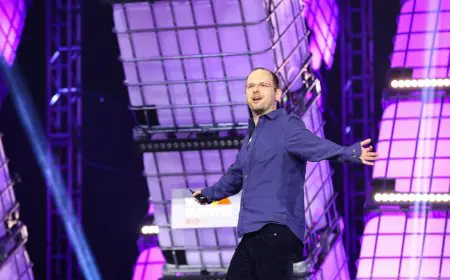
Levent Alpöge posted the claim on his personal website on Friday, November 20, saying Claude had helped him develop the proof over about six weeks. The BBC reports the work used a non-public version of Anthropic's model, not the chatbot sitting on your phone. Alpöge is the author. Claude was, in his telling, an unusually energetic collaborator.
"Claude and I have had a great time together with such breadth in recent months, but this time Claude far outpaced me near the finish line." Levent Alpöge
He did not stop at a PDF. Alpöge released the proof in Lean, a programming language built so that a computer can check every logical step. According to the Guardian's updated report, the Lean Focused Research Organization and the Mathlib Initiative announced on Saturday that they had independently verified the claim after reviewing the code.
"We have full confidence that Alpöge's proof of the Riemann hypothesis is correct, and we congratulate him on this achievement." Lean Focused Research Organization and Mathlib Initiative
Scientific American quotes the same joint statement going further: "We hereby certify that both the statement and the proof of the Riemann Hypothesis are correct." That word "statement" is doing heavy lifting. As Imperial College London mathematician Kevin Buzzard pointed out, a Lean file that compiles cleanly can still prove something subtly different from the famous theorem, or quietly redefine the symbols in it. Scientific American reports that a "comparator run" checking for exactly those tricks has now been completed.
Seventeen million lines, checked by machines
University of Waterloo mathematician Michael Rubinstein describes the Lean development as 175,187 files and about 17 million lines. On his verification page, he reports that a check dated November 21, starting from the archive Alpöge published, finished with no errors. Every module compiled. The five theorems depend only on Lean's three standard axioms. A second, independently written kernel called nanoda checked the 1,484,729 declarations the theorems rely on and found no typechecker errors.
Rubinstein's page also lists other independent checks, including one by MIT's Andrew Sutherland, who barely hedged when speaking to Scientific American.
"Honestly the chance that anything is fishy here is approximately zero." Andrew Sutherland, MIT
What the machines have blessed is the formal proof. The human story is still being written. Rubinstein has posted a 265 page working guide that tries to explain the argument in classical terms, and he calls it a work in progress. On Friday, before the Saturday checks landed, Terence Tao said, according to the BBC, that digesting the proof would "take some time," adding that "at least we have a human author to communicate with." That is a pointed contrast with some of this year's AI math announcements, including a separate claim about an unreleased Anthropic model and a quantum conjecture.
Nobody is cashing a check yet. The Riemann hypothesis is one of the seven Millennium Prize Problems, and the Clay Mathematics Institute offers $1 million for each one solved. Clay's published rules say it will only consider a solution after it appears in a qualifying outlet, at least two years have passed, and it has won general acceptance in the global mathematics community. Two days in, the two year clock alone rules that out.
Then there is the calendar. Alpöge posted one day after Anthropic's Nasdaq debut, and he knows how that looks. "The precise timing is horrible," he wrote. "If I could have, I'd have finished this all much earlier." According to the BBC, he also said there is "an obvious cynical view" of the timing, "but it is false."
Cynics can argue about the press cycle. They will have a harder time arguing with 17 million lines that independent checkers say compile clean. If the verdict from Lean and Mathlib holds, the most famous open problem in mathematics fell to one human working with a machine he could not keep up with.