








































Why ByteDance, Alibaba and Tencent Want 3 Million Nvidia Cards They May Never Receive
China's three biggest tech platforms have reportedly ordered more than $35 billion worth of Nvidia's export-compliant RTX PRO 5500 cards, according to Reuters sources. Nvidia says it may only fill a sliver of that demand, and the bottleneck is not Washington.
Washington spent four years cutting China off from Nvidia's best AI hardware. Chinese tech giants answered by lining up for the best hardware they can still buy, in quantities Nvidia says it cannot make.


ByteDance, Alibaba and Tencent have ordered more than 3 million of Nvidia's new RTX PRO 5500 graphics cards with a combined sticker price above $35 billion, according to Reuters, citing two people familiar with the matter. The figures remain unconfirmed. Nvidia's statement did not address the order numbers, and ByteDance, Alibaba and Tencent did not respond to Reuters' requests for comment.
If the numbers hold, the export controls did not kill Chinese demand for American silicon. They pushed it sideways, into whatever product still fits through the gap.
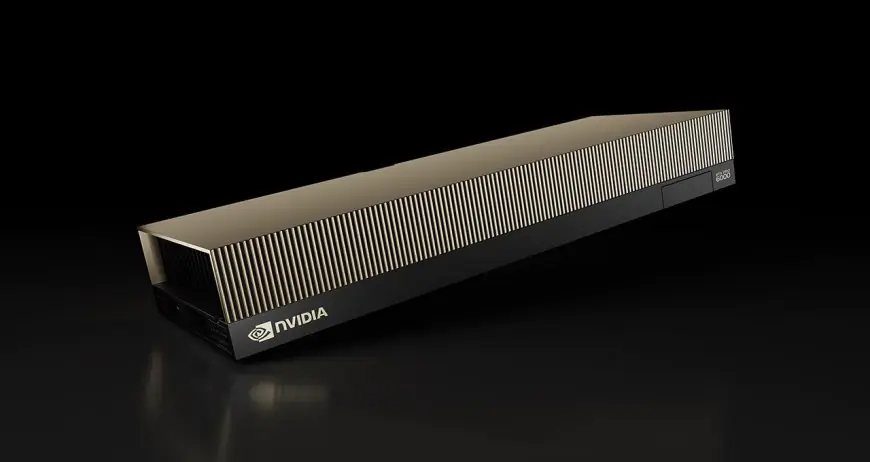
A workstation card doing data center work
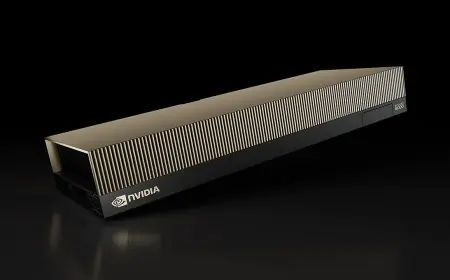
The RTX PRO 5500 is not a data center chip. It is a workstation card built for professional desktops, not the giant clusters that train frontier models, which is exactly why China can still buy it. Nvidia's Blackwell based B300 is barred from Chinese buyers under US export controls, and its Hopper based H200 goes through case by case review with licensing conditions attached.
So the buyers are adapting. According to Reuters' three sources, the Chinese companies plan to use the cards mainly for inference, the work of running already trained models to answer chatbot queries. Inference needs less raw compute than training, so a pile of workstation cards becomes a plausible substitute.
The cards cost about $11,400 each, two sources told Reuters. Specifications seen by the news agency put the RTX PRO 5500 roughly level with the RTX 6000D, a cut down part Nvidia launched last year to meet the rules. Chinese giants largely shrugged at the 6000D back then, viewing it as overpriced and hoping Washington would loosen up. That hope has faded. The 6000D has since been discontinued, and one source said its market price in China has doubled.
The real limit is the fab
Here is where the story turns. Total orders from customers in China have passed 6 million cards, two of Reuters' sources said. Another source said Nvidia has indicated it can produce no more than 3 million RTX PRO 5500 cards worldwide in 2027. Chinese demand alone, in other words, is double what Nvidia expects to build for the entire planet.
One source said Nvidia told partners they might receive only 5% to 10% of what they requested. Applied to the three giants' reported 3 million cards, that would mean something like 150,000 to 300,000 units, a rough illustration only.
The reason is priorities. Starting in 2027, Nvidia is expected to devote much of its capacity at TSMC to Rubin, its next generation data center platform, two sources said. TSMC declined to comment. Nvidia has told customers to expect early samples in December and commercial deliveries starting in the first quarter of 2027, according to the sources.
That makes supply, not regulation, the more immediate cap on how much US silicon actually lands in Chinese server rooms. Shenzhen listed Tansun Technology disclosed in an October 13 filing that it agreed to buy 20,000 RTX PRO 5500 cards from an unidentified counterparty, and warned that supply shortages and overseas technology controls could delay deliveries or cut volumes.
Nvidia's complaint
An Nvidia spokesperson pointed to Chinese producers of workstation chips and cards, saying they have seen "unprecedented growth since 2022," when the curbs began.
"US firms continue to be restricted by a combination of outdated US export controls, which cover gaming products released nearly a half a decade ago, and China's own limit on US imports." Nvidia spokesperson, via Reuters
The US Commerce Department's Bureau of Industry and Security and China's Ministry of Industry and Information Technology did not respond to Reuters' requests for comment.
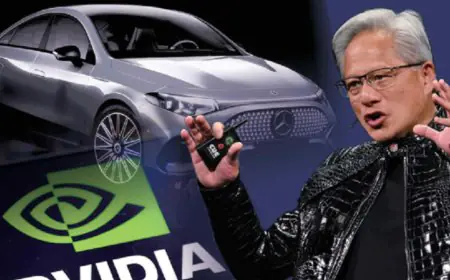
Jensen Huang has said the restrictions took Nvidia's share of China's AI data center chip market from near monopoly to effectively nothing, while Huawei gained ground, a shift we covered in Nvidia's slide against Huawei in China. Chinese buyers clearly still want Nvidia hardware. Whether they get much of it may depend less on policymakers in Washington than on how many wafers TSMC has left after Rubin.