







































Why Walmart Is Opening Its Doors to AI Shopping Agents While Amazon Locks Them Out
Walmart unveiled Agent Profiles, spending caps and an MCP gateway that let ChatGPT, Gemini and Muse shop on your behalf. The catch is that most of it has not shipped yet, and Walmart keeps your data.
Amazon built a wall. Walmart just published a rulebook and a door. On Wednesday, Walmart CEO John Furner used the Masters of Scale Summit in San Francisco to unveil a set of tools that let AI agents shop Walmart and Sam's Club on a customer's behalf, according to TechCrunch. The timing is pointed. Amazon has spent the past weeks shutting third-party shopping agents out of its store, Meta's Muse among them.


Read the fine print, though, and the "launch" is more staged than the headlines suggest. The rules for agents arrive now. The plumbing and the customer controls come later.
What actually exists today
Walmart's own announcement breaks the package into three pieces, and they sit at very different stages:
- Agent Gateway. An MCP server that lets approved agents search inventory and buy directly instead of clicking through a website built for humans. Walmart says it "will begin with a beta for companies and developers." Reuters described it as a platform for ChatGPT, Gemini and Muse to connect to Walmart and Sam's Club systems.
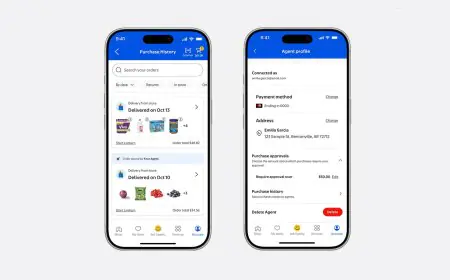
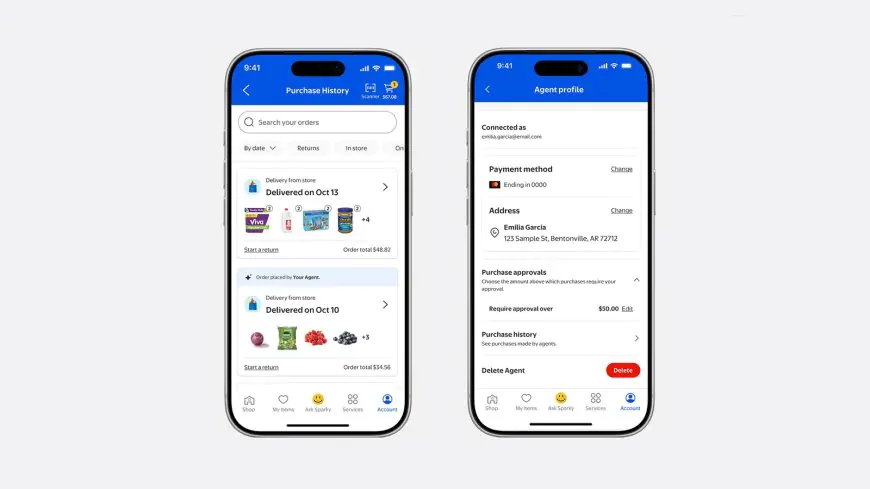
- Agent Profiles. A separate profile for each agent inside a customer's account, so its orders show up apart from the shopper's own. Walmart says these launch "in the next month."
- Terms for AI agents. The behavioral rules agents must follow, effective as published.
Walmart already sells through conversational integrations with Muse, ChatGPT and Gemini. What changes is the access model. Right now, the company concedes, an agent typically signs in with the customer's own credentials, so every purchase lands in one undifferentiated pile. Profiles split that pile apart.
How checkout is supposed to work
The first time a shopper uses an agent through the gateway, Walmart automatically creates a profile for it. The customer signs into Walmart to link it, then picks the controls. Purchases need approval by default. Shoppers can instead allow buying up to a spending cap, with Walmart offering $50, $100 or $200 as examples, and can delete a profile at any time. Walmart compares it to adding an authorized user to a credit card.
The agent never sees card details and cannot add or change payment methods. Walmart's returns process applies "including if an agent doesn't act as intended," a quietly significant line, because it puts the retailer on the hook for software it did not build. TechCrunch reports that no Walmart+ membership is needed.
"We price products, not people, so the prices that an AI agent sees are the same prices that a human would see on Walmart.com." Walmart
Privacy as a selling point, and a moat
The cleverest piece may be the "usuals" feature. If a customer always buys a certain sourdough or brand of milk, Walmart says the gateway can steer the agent to those items without handing over broader purchase history. It is pitched as privacy. It also means Walmart, not OpenAI or Meta, keeps the shopper's data.
The enforcement clause is blunt:
"Agents that do not follow these terms will be blocked from Walmart's site." Walmart
So Walmart is not that different from Amazon on the question of control. Both reserve the right to block. The difference is that Walmart has written down what an agent must do to stay in.
From protocol to product
Two weeks ago Walmart signed on to the Personal Agent Protocol alongside Meta, Stripe and Shopify, an industry effort to let agents prove who they represent, which we covered in how Meta, Walmart and Stripe wrote the rulebook for shopping bots. That was a standard on paper. This is Walmart's own house rules.
Wall Street is warming up. Mizuho analyst David Bellinger wrote that the tools add confidence to an "experimental" way of shopping, adding that "the momentum and buy-in from top management teams seems to be making this into a real thing," according to Reuters.
Walmart itself is more hedged. "Shopping with an agent won't be for everyone, and it doesn't have to be," the company wrote. The real test comes when Profiles go live and shoppers decide whether a $100 allowance for a chatbot feels like convenience or risk.