












































A Single Selfie Could Help AI Predict Cancer Patients Survival
Mass General Brigham researchers have built FAHR-Face, an AI model trained on more than 40 million facial images that estimates biological age and predicts survival risk in cancer patients from a face photo. The study, published in The Lancet Digital Health, is promising but still needs validation before clinical use.
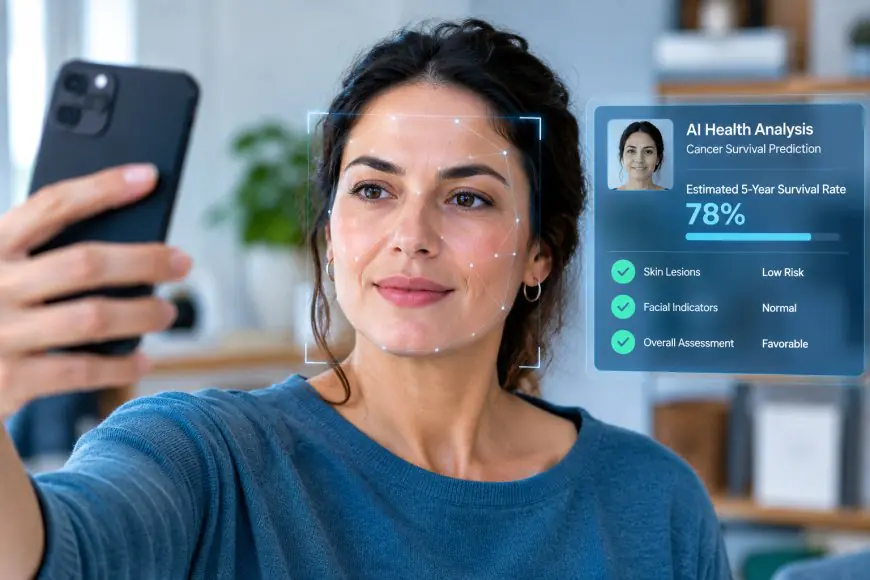
A face photo may carry health information that doctors can't easily see. Researchers at Mass General Brigham have built FAHR-Face, a foundation AI model trained on more than 40 million facial images,


Which used it to create two tools: one that estimates a person's biological age and one that directly predicts survival in patients with cancer. The work is published in The Lancet Digital Health.
The two tools are FAHR-FaceAge, which estimates biological age, and FAHR-FaceSurvival, which predicts survival from a photograph. Co-senior author Hugo Aerts said that, to the team's knowledge, it is "the first demonstration that an AI model can directly predict cancer survival from a simple photograph." The reported findings include:
- The gap between a patient's FAHR-FaceAge and actual age was independently linked to survival, and among US radiotherapy patients, those who looked five or more years older had a 21% higher risk of dying over an average four-year follow-up, per a report drawing on The Guardian
- FAHR-FaceSurvival was fine-tuned on about 34,000 photographs of patients with cancer and kept its predictive value after adjusting for age, sex and cancer site, according to the Lancet paper
- The tools stayed consistent across pose, lighting, expression and makeup, and heavy drinking, drug use and smoking were associated with looking biologically older, per the team's release
The limits are as important as the headline. This is not a tool that can tell an individual their fate from a selfie. The researchers say the aim is to support personalized treatment decisions, not replace physician judgment, and the study did not identify a biological mechanism linking particular facial features to aging or survival.
The results come from patient datasets in a research setting, so they need independent validation in other populations and in routine care before anyone should rely on them. The team is also expanding the work through an online FaceAge Research Study open to the public.
The next questions to watch are whether the tool improves real treatment decisions, and how photos of patients' faces would be consented to, stored and protected if it moved toward clinical use.