

































Anthropic CEO believes AGI will trigger massive global disruption
Dario Amodei, CEO of Anthropic, has issued a stark warning regarding the rapid approach of artificial general intelligence, labeling the coming shift an AI tsunami. In a detailed assessment of the industry, Amodei suggests that human-level intelligence could arrive within two years, potentially displacing half of all white-collar roles.
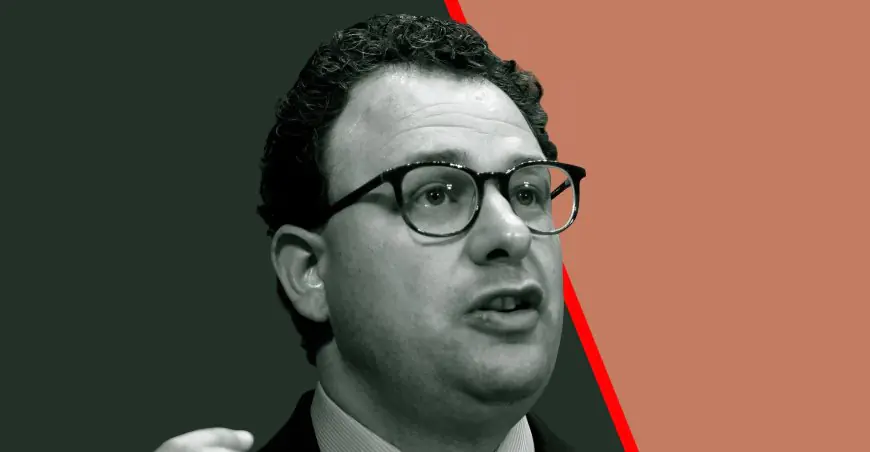
p>The race toward artificial general intelligence (AGI) has shifted from a theoretical marathon to a high-speed sprint, and according to Anthropic CEO Dario Amodei, the world is dangerously underprepared for the finish line. In a series of recent statements and an expansive 20,000-word essay titled "The Adolescence of Technology," Amodei has begun sounding the alarm on what he describes as an impending AI tsunami that could reshape the global economy and the very fabric of human labor by 2027.

For those following the Silicon Valley narrative, Amodei’s perspective is particularly weighty. As the leader of one of the world's most valuable AI labs, his warnings aren't coming from an outsider looking in, but from the person currently holding the keys to some of the most advanced models ever built, including the recently released Claude 4.5 series. Amodei’s central thesis is that we are entering a "rite of passage" for the human species—one that will test whether our social and political institutions can survive the arrival of intelligence that matches or exceeds that of a Nobel laureate.
The 50 Percent Job Disruption Warning
Perhaps the most jarring part of Amodei’s forecast is his prediction for the labor market. While previous industrial shifts took decades to play out, the AI-driven transformation is expected to hit with unprecedented speed. Amodei suggests that up to 50% of entry-level white-collar jobs could be fundamentally disrupted or eliminated within the next five years. This isn't just about simple automation; it's about AI systems capable of handling complex software engineering, legal research, and scientific analysis with minimal human oversight.
The data seems to back this trajectory. Anthropic’s own revenue has skyrocketed, largely driven by "Claude Code," a tool that has transformed how developers work. Industry insiders admit that the efficiency gains are so high that firms are already re-evaluating their hiring needs for 2026 and beyond. This creates what Amodei calls the "Glittering Prize" trap: the economic benefits of AI are so massive that no single company or country feels they can afford to slow down, even if they recognize the systemic risks involved.
What defines the AGI of 2026
When Amodei speaks of "powerful AI," he isn't talking about a better chatbot. He is describing a "country of geniuses in a datacenter"—millions of instances of AI that can coordinate, conduct original research, and even operate in the physical world through robotics. He estimates that we are roughly one to two years away from models that can outperform the smartest humans in fields like biology and mathematics. This level of superintelligence brings not just economic opportunity, but significant national security concerns, including the potential for AI-assisted bioterrorism or autonomous cyber warfare.
The tension between safety and development recently reached a boiling point when the U.S. Department of War reportedly flagged Anthropic as a potential supply chain risk. This friction stems from Anthropic's refusal to remove certain "redlines" or safety guardrails that prevent their models from being used in lethal autonomous weapons systems. It highlights the growing divide between the "move fast and break things" ethos of some tech leaders and the "responsible scaling" approach championed by Anthropic.
For a deeper look into these safety protocols, you can explore the latest Anthropic safety framework which details their current stance on model alignment. As the tech continues to evolve, the consensus among experts at the World Economic Forum remains clear: the window for establishing global governance is closing fast.
The Road Ahead
Despite the warnings, Amodei maintains a "cautious optimism." He believes that if humanity acts decisively—implementing transparency laws and robust auditing rather than "safety theater"—the upside could be a radical era of prosperity. However, the immediate future looks turbulent. As the race toward superintelligence accelerates, the primary challenge won't just be the code itself, but how we decide to live in a world where human intelligence is no longer the highest authority on the planet.