























Why Apple Is Delaying the Highly Anticipated Siri AI Overhaul Until Late 2026
Apple’s ambitious plan to give Siri a “brain transplant” via its new Apple Intelligence framework is reportedly hitting major roadblocks. Internal testing for the next-gen Siri has uncovered significant performance issues, including sluggish response times and accuracy errors, forcing the tech giant to shift its rollout schedule from the spring of 2026 to later in the year.


A Roadblock for Apple’s AI Ambitions
For nearly two years, Apple fans have been promised a revolutionary version of Siri—one that finally sheds its reputation for being "barely competent" and embraces the power of large language models (LLMs). However, the road to a smarter assistant is proving far bumpier than Cupertino anticipated. Internal reports from late February 2026 suggest that the massive Siri overhaul, originally targeted for a March release with iOS 26.4, is now facing a fragmented rollout due to persistent stability and performance snags.
According to leaked internal benchmarks, the revamped assistant is struggling to meet the high-fidelity standards Apple usually demands for public releases. Testers have reported that the "Super Siri" is not only slower than rival assistants like Google’s Gemini and OpenAI’s GPT-4o but also suffers from a peculiar bug that causes it to cut off users mid-sentence if they speak too quickly. For a company that prides itself on "it just works," these glitches are deal-breakers that have pushed the timeline back by several months.
What is Holding Siri Back?
The complexity of the new Siri stems from its hybrid architecture, codenamed "Linwood." This system is designed to weave together Apple's on-device Foundation Models with Google’s Gemini technology for more complex cloud-based tasks. Integrating these two distinct AI worlds while maintaining Apple’s strict privacy protocols has created a "regulatory and technical nightmare," according to industry insiders.
Key features currently on the chopping block for the initial spring release include:
- Personal Context Awareness: The ability for Siri to search through your messages and emails to find specific data (like a flight number or a song link) and act on it.
- Advanced App Intents: Multi-step commands, such as asking Siri to "Find the photo of the dog from last Saturday, edit the brightness, and send it to Mom," are currently failing to execute reliably.
- On-Screen Awareness: The assistant's ability to "see" what you are looking at and provide context-aware help is proving too resource-heavy for older hardware.
As Bloomberg recently detailed, Apple engineers have been instructed to shift their focus toward iOS 26.5 (expected in May) and even iOS 27 for the full "chatbot-style" experience. This suggests a phased rollout where users might only get the new UI and basic conversational improvements this spring, while the truly "intelligent" features remain in beta.
The Privacy vs. Performance Trade-off
One of the primary reasons Apple is lagging behind competitors is its refusal to compromise on user privacy. While other AI assistants process vast amounts of data in the cloud with minimal friction, Apple is building its AI on "Private Cloud Compute." This ensures that even when data leaves your iPhone, it stays encrypted and invisible to the company.
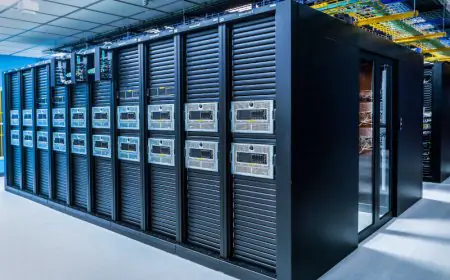
However, this layer of security adds significant latency. In a world where users expect instant answers, a three-second delay for Siri to "think" while it secures a connection is considered a failure. Apple is reportedly developing its own AI-focused data center chips to bridge this performance gap, but that hardware is still scaling up.
What Users Can Still Expect in iOS 26.4
Despite the delays to the core Siri "brain," Apple is still expected to ship some AI-adjacent tools this spring. Internal builds of iOS 26.4 still feature the new "Web Search" tool, which functions similarly to Perplexity by synthesizing information from across the internet into a single, cited answer. We are also likely to see the "Image Playground" expansion, allowing for custom image generation directly within the Messages app.
For the full vision of a Siri that knows you and manages your digital life, the wait continues. As MacRumors notes, the situation remains fluid, and Apple executives are still pushing to have at least a "preview" version of the full assistant ready for the public by June's WWDC 2026.
The Bottom Line
Apple’s cautious, "privacy-first" approach to AI is currently clashing with the technical realities of LLM deployment. While frustrating for users, these delays may be a blessing in disguise; a buggy, slow, or invasive Siri could do more harm to the brand than a late one. For now, the 2026 AI revolution at Apple is shaping up to be a marathon, not a sprint.