


































G7 Leaders Summon AI CEOs as Global Regulation Takes Center Stage
Executives from frontier AI firms are participating in discussions with G7 leaders focused on AI safety, transparency, and online security. The gathering signals that AI policy is rapidly becoming a geopolitical priority alongside trade and national security.
The World Leaders Call Up Tech's Power Players
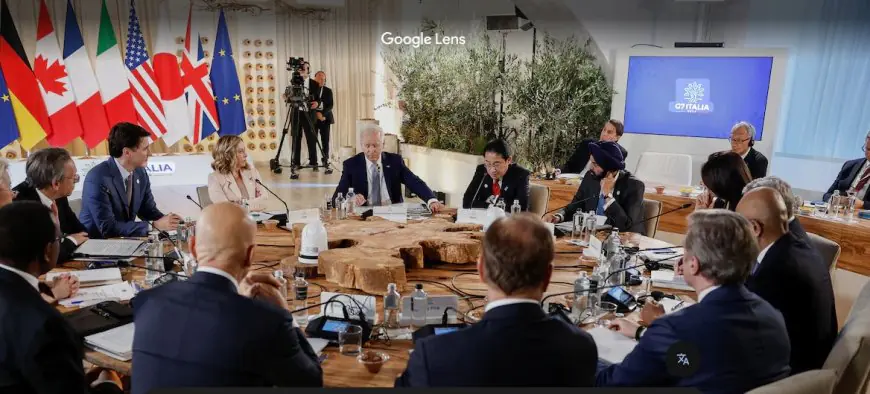
It used to be that AI CEOs were summoned to Capitol Hill or Brussels for scolding hearings. Now they are being invited to the G7 summit table—not as witnesses, but as participants. According to Reuters reporting from the summit, executives from OpenAI, Anthropic, Google, and Mistral are holding closed-door sessions with G7 leaders focused on AI safety, transparency, and online security. The message is unmistakable: AI policy is no longer a niche technical issue. It is a first-order geopolitical priority.


"We are moving from voluntary commitments to binding international frameworks. The industry has had its chance at self-governance. Now governments are taking the lead." – Senior G7 diplomat (via Reuters)
Who Is at the Table and What They Are Discussing
The summit represents the most high-level AI governance meeting to date. Here is a breakdown of the key participants and the agenda items being prioritized:
- OpenAI (Sam Altman) – Discussing frontier model transparency and pre-deployment safety evaluations
- Anthropic (Dario Amodei) – Leading conversations on constitutional AI and refusal transparency standards
- Google (Sundar Pichai) – Addressing synthetic content watermarking and deepfake detection
- Mistral (Arthur Mensch) – Representing European open-source and sovereign AI interests
- G7 Leaders (US, UK, Canada, France, Germany, Japan, Italy) – Coordinating on export controls, safety institutes, and incident reporting
The G7 AI Governance Framework summary (anchor link) outlines five initial working groups: model evaluation standards, synthetic content provenance, critical infrastructure protections, talent mobility, and compute governance. The framework aims to have binding commitments in place by the end of 2027.
G7 AI Commitments at a Glance
Unlike previous voluntary pledges, the G7 is pushing for enforceable standards with real consequences:
| Commitment Area | Proposed Standard | Enforcement Mechanism | Target Deadline | Industry Impact |
|---|---|---|---|---|
| Pre-deployment testing | Mandatory third-party audits for models above compute threshold | National AI Safety Institutes (fines for non-compliance) | Q1 2027 | High (delays releases) |
| Synthetic content labeling | Watermarking + C2PA metadata for all AI-generated media | Platform liability safe harbor contingent on labeling | Q3 2027 | Moderate (technical lift) |
| Critical infrastructure ban | No frontier AI in nuclear, water, or grid control without human-in-loop | Criminal penalties for executives | Immediate (by reference) | Moderate (already best practice) |
| Talent non-proliferation | Export controls on AI expertise to countries of concern | Visa restrictions, research funding limitations | Q4 2026 | High (limits academic collaboration) |
| Incident reporting | 48-hour disclosure of safety incidents to government | Public registry + fines for delay | Q2 2027 | High (increases compliance burden) |
The table reveals the scope of the shift. Voluntary commitments are becoming mandatory requirements. As noted in a Bloomberg analysis of the G7 framework, the most controversial proposal involves "compute governance"—tracking and potentially capping the amount of computing power available for training frontier models. Industry executives have pushed back, arguing that such caps would cede advantage to non-G7 nations like China. But European leaders, in particular, are pressing for binding limits.
What Happens After the Summit
The G7 summit is unlikely to produce a final treaty. But it will produce a roadmap with teeth. Working groups will report back within six months. National AI Safety Institutes (already established in the US, UK, Japan, and Germany) will coordinate on testing standards. And a new "G7+ AI Enforcement Coordination Cell" will share intelligence on non-compliant actors. A Wall Street Journal assessment of the geopolitical stakes notes that the real test will come when a major AI company violates these rules. Will a G7 government actually fine a homegrown champion? The answer will determine whether this is a new era of governance or just another round of photo ops. For now, one thing is certain: the era of AI companies writing their own rules is ending. Governments are taking control.