






































The Nuclear-Silicon Alliance: INL and NVIDIA Launch ‘Prometheus’ to Fast-Track Reactor Deployment
In a move that signals a paradigm shift for the global energy sector, the Idaho National Laboratory (INL) and NVIDIA have officially partnered to launch the "Prometheus Grand Challenge." Part of the White House-led Genesis Mission, this collaboration aims to leverage generative AI, agentic workflows, and digital twins to accelerate commercial nuclear reactor deployment by 2x while slashing operational costs by more than 50%.

The Dawn of the AI-Accelerated Atomic Age
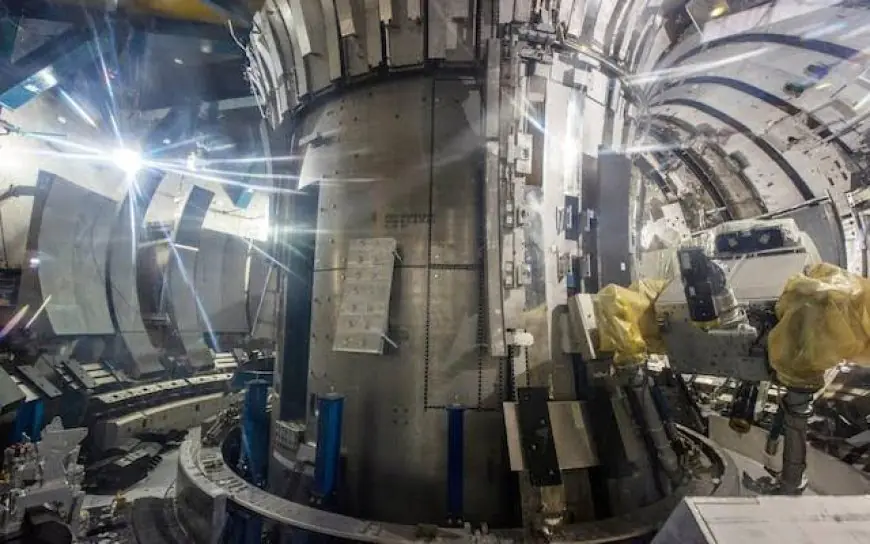
On February 17, 2026, the Idaho National Laboratory (INL) and NVIDIA announced a historic partnership that aims to solve one of the most persistent bottlenecks in modern infrastructure: the multi-decade timeline for nuclear energy deployment. Codenamed Prometheus, this initiative seeks to bring commercial-scale nuclear reactors online in "years, not decades," effectively synchronizing the slow-moving world of heavy industry with the rapid-fire pace of silicon innovation.
The collaboration is the flagship project of the Genesis Mission, a national scientific platform established by executive order to secure U.S. energy dominance and technological leadership. By integrating NVIDIA’s AI infrastructure with INL’s decades of nuclear expertise, the Department of Energy (DOE) intends to fundamentally rewire the lifecycle of advanced energy projects.
Prometheus: Beyond Incremental Improvement
Unlike previous attempts to digitize nuclear research, Prometheus is designed as an end-to-end "human-in-the-loop" workflow. The partnership focuses on five strategic pillars intended to overhaul the industry’s traditional "linear" development model:
- AI-Powered Design & Licensing: Using generative AI to automate the thousands of pages of documentation required for regulatory approval, a process that currently takes years.
- Agentic Workflows for Construction: Deploying autonomous AI agents to manage complex supply chains and site-specific manufacturing logistics in real-time.
- Code Acceleration: Porting critical nuclear simulation codes—including MOOSE, BISON, Pronghorn, and Griffin—onto NVIDIA’s GPU architectures to achieve near-instant physics-based feedback.
- Digital Twins: Creating high-fidelity virtual replicas of reactors within the NVIDIA Omniverse to test safety parameters and "what-if" scenarios without physical risk.
“This partnership represents a transformative approach to one of our nation's greatest challenges,” stated John Wagner, Director of INL. “By leveraging AI to design, license, and operate reactors, we can fundamentally change the timeline for bringing advanced nuclear energy online.”
The Virtuous Cycle: AI Powering Nuclear, Nuclear Powering AI
The most compelling aspect of the INL-NVIDIA deal is the "virtuous cycle" it creates. The burgeoning AI industry is currently facing a massive power deficit, with global data center demand projected to more than double by 2030. To sustain the growth of large-scale AI infrastructure, the industry requires carbon-free, stable baseload power—exactly what advanced nuclear provides.
Under the Prometheus roadmap, AI serves as the accelerator for nuclear deployment, while the resulting nuclear facilities provide the massive gigawatt-scale electricity needed to power the next generation of NVIDIA Blackwell-powered supercomputers. This symbiotic relationship ensures that as AI becomes more energy-intensive, it simultaneously provides the tools to build its own power source more efficiently.
Industry-Wide Impact and the Path Ahead
The implications of this partnership extend far beyond the laboratory. The DOE has indicated that the Prometheus framework will be shared with the broader ecosystem, including private reactor developers, utilities, and investors. The goal is to create a standardized "AI-Nuclear Blueprint" that can be exported to help meet global net-zero targets and secure domestic energy independence.
As 2026 progresses, the first major test of this partnership will be the integration of AI models with INL’s MARVEL microreactor and the Pele mobile reactor prototype. If Prometheus achieves its goal of a 50% reduction in operational costs, nuclear energy could transition from a high-stakes capital gamble to a competitive, factory-built commodity for the 21st-century grid.