


































Wall Street Re-Indexes for the Agentic Era: Top 5 AI Stocks Dominating the 2026 Growth Cycle
As the "Generative AI" hype matures into a pragmatic "Agentic" economy, Wall Street is undergoing a massive sector rotation. While legacy software faces a valuation reset, investors are doubling down on the "Physical AI" stack—prioritizing semiconductor memory, advanced cooling, and sovereign energy infrastructure. From NVIDIA's $4.6 trillion dominance to the meteoric rise of energy-sector dark horses, these are the key players positioned to define the 2026 fiscal year.



The 2026 Pivot: From Chatbots to Autonomous Agents
The dawn of 2026 has brought a decisive end to the era of speculative AI. The market has shifted its focus from "what AI might do" to "what AI actually costs and earns." This transition is being driven by the rise of Agentic AI—systems capable of independent reasoning and multi-step execution. As enterprises move away from simple chatbots toward autonomous workforces, the underlying investment thesis has evolved. The winners of 2026 are no longer just the ones building the models; they are the ones powering, cooling, and feeding them.
1. The Infrastructure Titan: NVIDIA (NVDA)
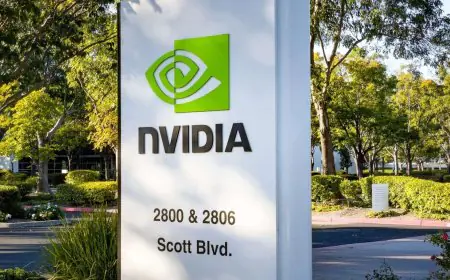
Despite persistent "bubble" talk, NVIDIA remains the undisputed gravity well of the AI market. With a market capitalization now hovering near $4.6 trillion, the company has successfully transitioned from a chip designer to a full-stack data center architect.
- The 2026 Catalyst: The full-scale deployment of the Rubin architecture and "Vera" CPUs.
- Strategic Edge: Unlike its competitors, NVIDIA’s "full-rack" solutions (integrating networking, chips, and liquid cooling) have created a high-margin ecosystem that is increasingly difficult for hyperscalers to "home-grow."
2. The High-Bandwidth Bottleneck: Micron Technology (MU)
In 2026, the primary constraint on AI performance is no longer just processing power—it is memory bandwidth. Micron has emerged as a top pick for institutional investors, with projected EPS growth exceeding 300% this year.
As AI agents become more sophisticated, they require massive amounts of High-Bandwidth Memory (HBM3E and HBM4). Micron’s pole position in the HBM market, coupled with extreme supply constraints, has given the company significant pricing power, making it a "must-own" for those betting on the physical backbone of the AI expansion.
3. The "Smokestack" Winner: GE Vernova (GEV)
The most surprising trend of 2026 is the "Great Sector Rotation" into energy. As AI data centers begin to consume upwards of 12% of the U.S. electrical grid, power has become a strategic asset. GE Vernova, a leader in grid modernization and nuclear technology, has seen its stock outperform many Silicon Valley giants this year.
"In 2026, you don't just invest in the brain; you invest in the heart. Without gigawatt-scale power, the smartest AI in the world is just a collection of cold silicon." — Wall Street Infrastructure Analyst
4. The Cooling Standard: Vertiv Holdings (VRT)
As chips get hotter, the traditional air-cooling methods of the 2010s have become obsolete. Vertiv has become the go-to provider for the high-density liquid cooling systems required for NVIDIA’s Blackwell and Rubin chips. With organic orders climbing 81% year-over-year, Vertiv represents the "picks and shovels" play of 2026. Its integration with major cloud providers ensures it remains a winner regardless of which AI model eventually dominates the software layer.
5. The Agentic Software Leader: Palantir Technologies (PLTR)
While many SaaS (Software-as-a-Service) companies are struggling with "seat compression"—where AI agents reduce the need for human software licenses—Palantir has thrived. By positioning its Artificial Intelligence Platform (AIP) as the "Operating System" for agentic workflows, Palantir has secured a dominant lead in both government and commercial sectors. With a market cap now exceeding $400 billion, it is the primary beneficiary of the shift toward "Systems of Action."
The Bottom Line for 2026
The AI investment landscape is no longer a monolith. The "SaaSpocalypse" has punished companies that failed to adapt to autonomous workflows, while rewarding those tied to the Physical AI Stack. For the remainder of 2026, investors should keep a close eye on the Energy-Compute Nexus. The companies that own the power and the cooling are just as vital as the companies that own the code.