




































Alibaba Introduces Homegrown AI Processor, Escalating Competition With Nvidia
The new artificial intelligence accelerator is seen as a direct response to US export control.
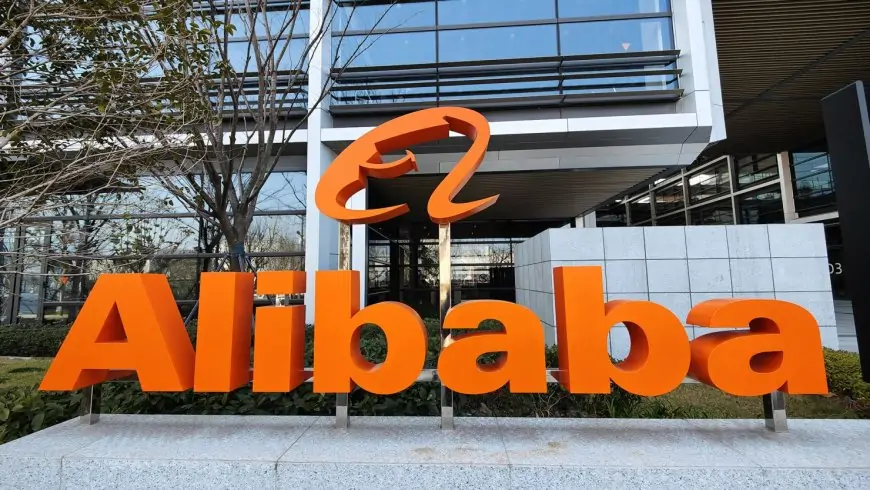
Alibaba Group has unveiled its new dedicated artificial intelligence accelerator, the T-Head Parallel Processing Unit (PPU), marking the company’s most direct and tactical response to U.S. export controls and Nvidia’s constrained market position in China.


Previously reported by The Wall Street Journal, the chip specifications finally appeared in state-media broadcasts announcing the CPU for China Unicom’s AI data center.
The processor is designed specifically for high-volume AI inference tasks—the computation required to deploy trained models for applications like chatbots and real-time recommendations.
This aggressive move is part of Alibaba’s calculated strategic shift to secure its long-term future, identifying “AI + Cloud” as one of its two primary strategic pillars for growth.
Faced with escalating restrictions that created a “severe and unpredictable bottleneck” for access to state-of-the-art accelerators, Alibaba is pivoting from being a major consumer of Western technology to a foundational producer of domestic alternatives.
With the T-Head PPU, Alibaba aims to capture market share by matching the performance profile of the most powerful Nvidia hardware currently permitted in China: the H20. Benchmarks presented in state-media broadcasts have indicated the processor delivers performance that is “on par with” Nvidia’s H20.
The PPU’s technical specifications are tailored for massive large language models. The chip features 96 GB of HBM2e memory capacity, which matches the H20’s memory capacity. The chip-to-chip interconnect bandwidth reaches 700 GB/s, a rate that significantly exceeds the older Nvidia A800’s 400 GB/s and approaches the H20’s level. The PPU is also engineered for data center efficiency, with a board power consumption (TDP) of 400 W.
Critically, the PPU represents a break from Alibaba’s past chip efforts: a domestic partner within China, likely SMIC, is manufacturing the chip, reportedly using a 7nm process technology. This localization of the entire semiconductor production process is a clear effort to “de-risk its operations from geopolitical volatility.”
The shift to domestic manufacturing provides Alibaba with a powerful competitive weapon in the cloud services arena: cost control. The specs show that the PPU’s Bill of Materials (BOM) cost per card is “40% lower… compared to the Nvidia H20.”
This operational advantage enables Alibaba Cloud to reduce public cloud inference prices by “50%,” directly translating the hardware efficiency into a market advantage.
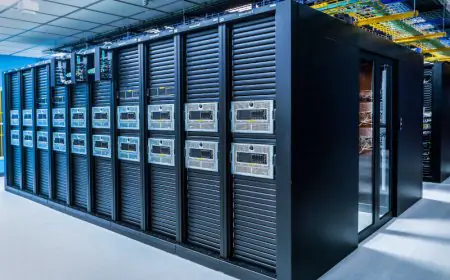
This domestic hardware strategy has already secured significant market validation. State-owned telecommunications operator China Unicom is utilizing the PPU as the primary AI chip in its new $390 million data center project in Xining.
Alibaba’s T-Head secured the largest contract for the facility, according to Reuters, providing 16,384 PPU units, approximately 72% of the total AI chips deployed for the project. This massive investment is a clear signal of government-backed confidence in Alibaba’s domestic hardware.
Despite the focus on replacing Nvidia’s chips, Alibaba has taken a pragmatic approach to the software ecosystem. The T-Head PPU features compatibility for existing Nvidia software frameworks, a clear reference to the ubiquitous CUDA platform.
The software compatibility provides customers with a transition path that requires “minimal software changes, drastically lowering the switching cost and accelerating adoption.