












































Elon Musk Is Repaying Billions In xAI Debt Early
In a bold move that has stunned financial analysts, Elon Musk’s xAI is preparing to repay $3 billion in debt years ahead of schedule. This aggressive deleveraging comes just weeks after the artificial intelligence startup was acquired by SpaceX, signaling a major balance sheet cleanup ahead of a rumored blockbuster IPO.
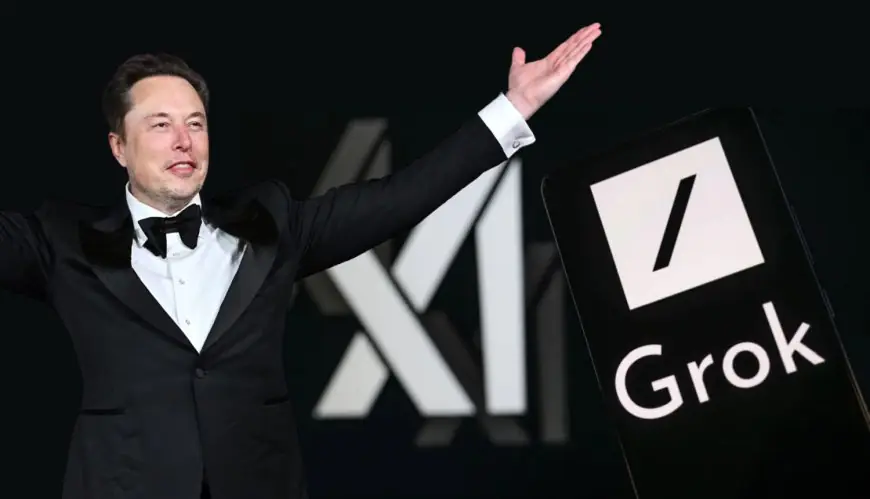


Elon Musk is no stranger to high-stakes financial maneuvers, but his latest play with xAI is turning heads even by his standards. Reports surfaced this morning that xAI, the billionaire’s rapidly growing artificial intelligence venture, is moving to repay roughly $3 billion of high-yield bonds significantly ahead of their 2027 maturity date. For a company that was burning through cash to build massive GPU clusters just months ago, the sudden pivot to debt repayment signals a newfound level of financial maturity and strategic planning.
The debt in question stems from a $5 billion financing package led by Morgan Stanley in mid-2025. At the time, the capital was essential to fuel xAI’s aggressive expansion, including the construction of its "Colossus" supercomputer in Memphis. However, since the landmark merger that saw SpaceX acquire xAI in February 2026, the combined entity—now valued at a staggering $1.25 trillion—seems intent on shedding high-interest obligations as quickly as possible.
Cleaning the Slate for SpaceX
Market observers suggest this isn't just about saving on interest payments; it’s a calculated move to "pretty up" the books for what could be the largest initial public offering in history. With SpaceX reportedly eyeing a confidential IPO filing as early as this month, removing billions in "junk bond" debt from the subsidiary level makes the parent company far more attractive to institutional investors. By redeeming these bonds at a premium—reportedly around 117 cents on the dollar—Musk is effectively telling Wall Street that his AI ambitions are now self-sustaining.
The timing is particularly notable given that xAI recently closed a massive $20 billion Series E funding round in January. While much of that capital is earmarked for the development of Grok-5 and the acquisition of millions of next-generation Nvidia chips, the surplus is clearly being used to de-risk the company's capital structure. According to financial data from Reuters, this early redemption is a rare signal of strength in an AI sector that has recently seen many startups struggle with sustainable unit economics.
The Post-Merger Synergy
Since becoming a wholly owned subsidiary of SpaceX, xAI has shifted its operational focus. The integration of AI capabilities into satellite networks and orbital data centers has created a unique value proposition that sets it apart from competitors like OpenAI or Anthropic. This vertical integration allows xAI to bypass many of the infrastructure bottlenecks that plague other labs. By leveraging SpaceX's global logistics and power management expertise, xAI has transitioned from a speculative startup into a core industrial pillar of the Musk empire.
Industry analysts at Bloomberg have highlighted that this debt repayment is part of a broader $17.5 billion deleveraging plan involving both xAI and X (formerly Twitter). By consolidating these debts under the SpaceX umbrella and then systematically eliminating them, Musk is streamlining his disparate business interests into a unified, lean tech powerhouse. This strategy not only reduces the "Musk risk" associated with high-leverage deals but also positions the company to dominate the next decade of autonomous and intelligent systems.
What This Means for the AI Race
While competitors are still navigating the treacherous waters of venture capital and high burn rates, xAI is moving into a phase of financial dominance. The ability to repay $3 billion in debt early suggests that revenue from Grok’s enterprise API and the X integration is scaling faster than initially projected. It also gives Musk more leverage to negotiate future chip allocations with Nvidia, as he can now show a balance sheet that is as resilient as any "Magnificent Seven" tech giant.
For the broader AI industry, the message is clear: the era of subsidized growth is ending, and the era of the "AI Cash Cow" has begun. If xAI can maintain its technical pace while simultaneously clearing its debts, it may soon find itself in a league of its own. As we watch the run-up to the SpaceX IPO this summer, this $3 billion repayment might just be remembered as the moment xAI proved it was built to last.