










































Why Palantir Insists NATO Maven AI Has No Kill Switch as Europe Fears US Tech Dependence
Palantir says nobody, not even Washington, can switch off the Maven AI system inside NATO headquarters. After Ukraine's Starlink scare, Germany and France are not buying the reassurance.
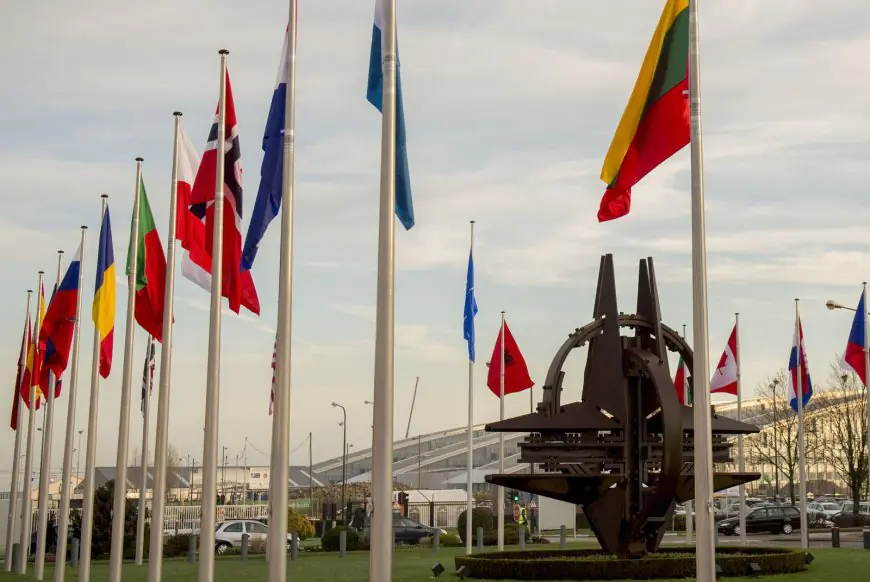
Palantir wants Europe to know one thing about the AI system running inside NATO's top military headquarters. Nobody in Washington can turn it off. At least, that is the company's claim.


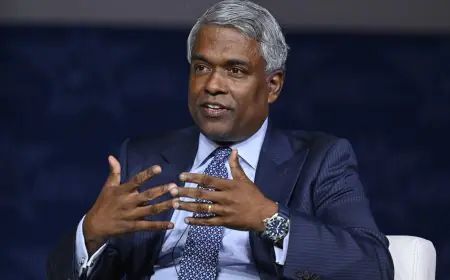
Louis Mosley, Palantir's executive vice president for the UK and Europe, told Reuters in a Brussels interview on Wednesday that neither Palantir nor the US government can switch off the Maven Smart System used by NATO's military headquarters and several European armed forces. His pitch was blunt.
"There are no kill switches. There's no ability for Palantir or the US government to reach in and switch it off." Louis Mosley, Palantir EVP for the UK and Europe
The timing is not an accident. Ukraine reported last week that its use of Starshield, the military-grade satellite service built on SpaceX's Starlink constellation, had been restricted so terminals stopped working on fast-moving platforms. According to the Reuters report, that hampered tasks such as using interceptor drones against Russian attacks. US and Ukrainian officials and Elon Musk have offered conflicting explanations. Ukrainian and European officials told Reuters they suspected a political motive, because the restriction came after President Donald Trump demanded Ukraine stop hitting Russian oil refineries.
That is the nightmare for European defence planners. You wire American technology into how you fight, and a decision made elsewhere changes what it will do for you.
From deployment to dependence
When we covered NATO's rollout of Maven in July, the story was about speed and capability. NATO's procurement agency said in April 2025 that buying the system took only six months from requirement to contract, one of the fastest acquisitions in the alliance's history. Maven fuses data from satellites, radars and other sensors into a single battlefield picture for officers at the Supreme Headquarters Allied Powers Europe. NATO declared it had reached "full technical operational capability" in June, Reuters reported.
Now the question is who ultimately controls it.
Germany and France are still saying no
Two of Europe's biggest militaries have not adopted Maven for their own forces. Germany and France cite concerns about relying on a US company amid frequent tensions between Trump and European leaders, according to Reuters.
Berlin was especially direct. In April, Vice Admiral Thomas Daum, head of the Bundeswehr's cyber and information domain, told Handelsblatt, as reported by Reuters, that a Palantir contract was not on the table.
"As much as we are interested in the functionality for our own database, it is simply inconceivable at the moment to grant industry staff access to the national database." Vice Admiral Thomas Daum, Bundeswehr
Germany instead shortlisted three European suppliers, Almato and Orcrist from Germany and ChapsVision from France, according to Anadolu Agency's account of the interview.
Mosley addressed the access question head on. He said it was "entirely at the discretion of the customer" whether Palantir employees help run the system, and that any who do would be citizens of the country concerned with the required security clearance. "It can absolutely be operated independently of us," he told Reuters.
Why a promise is not sovereignty
Here is the catch. A kill switch is only the most dramatic form of dependence. Software that sits at the center of military decision-making also needs updates, fixes, new features and support. Customers rarely control a vendor's roadmap, its pricing or its home government's export politics, whatever operational control they hold over the copy they bought.
The Starlink episode shows why. The cause of the disruption is still disputed, and that ambiguity is what makes European officials uneasy. When the explanation depends on whom you ask, a verbal guarantee from a supplier is a data point, not a safeguard.
None of this means Mosley is wrong about how Maven works. Palantir says plenty of its military and corporate customers already run its software without the company in the loop. But Europe's question is bigger than one product. It is whether the continent can build a defence AI stack it does not have to take on trust.
For Palantir, that is a sales problem. For Europe, it is a strategic one.