


























Tesla decided to build AI six chips with Samsung two nanometer tech
Tesla is officially pushing its next-generation AI6 chips toward a critical production milestone by late 2026. By partnering with Samsung Electronics to utilize cutting-edge 2nm manufacturing technology, Elon Musk’s firm is signaling that the future of artificial intelligence will be won through custom hardware, specifically designed to power autonomous vehicles and the Optimus humanoid robot.
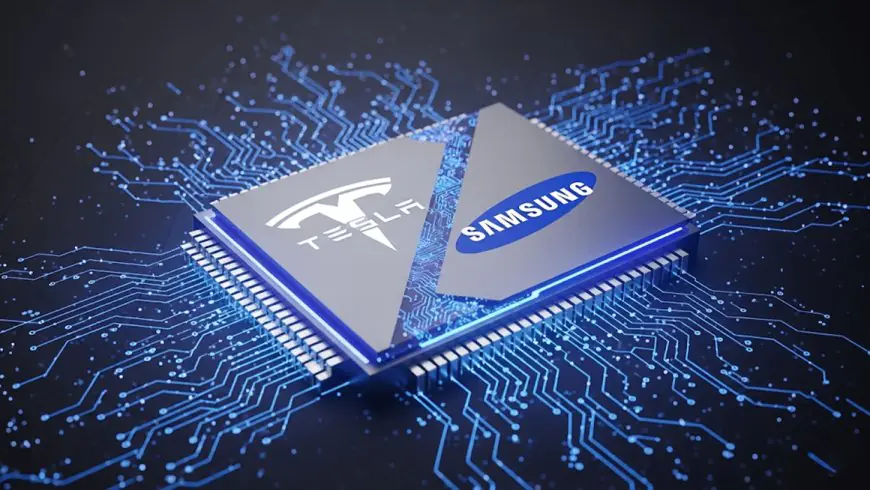


The global race for artificial intelligence supremacy has officially moved from the cloud to the silicon. While much of the world remains focused on large language models and generative chatbots, Tesla is quietly preparing a hardware revolution that could redefine the physical world. Recent industry reports indicate that Tesla is on track to finalize—or "tape out"—its highly anticipated AI6 chips by December 2026. This milestone marks the final design stage before mass production begins, signaling a massive shift in how the company intends to dominate both the automotive and robotics sectors.
For years, Tesla has been moving toward vertical integration, reducing its reliance on third-party chipmakers to gain a competitive edge. The AI6 project is the latest and most ambitious step in this journey. By designing its own silicon from the ground up, Tesla isn't just building a faster computer; it is building a specialized engine optimized for "real-world AI"—the kind of intelligence required to navigate a 4,000-pound vehicle through a crowded intersection or help a humanoid robot fold laundry in a dynamic household environment.
The Samsung Partnership and the 2nm Advantage
To bring this vision to life, Tesla has reportedly tapped Samsung Electronics to handle the manufacturing. This partnership is significant because it leverages Samsung's cutting-edge 2-nanometer (2nm) process technology. In the world of semiconductors, smaller is almost always better. A 2nm process allows for more transistors to be packed into a smaller space, which directly translates to higher processing speeds and, perhaps more importantly, dramatically lower power consumption.
Efficiency is the secret sauce for Tesla's future. For an electric vehicle running Full Self-Driving (FSD) software, every watt consumed by the onboard computer is a watt taken away from the car’s range. For the Optimus humanoid robot, battery life is the difference between a machine that can work a full shift and one that needs to recharge every hour. By utilizing Samsung Electronics advanced manufacturing, Tesla aims to achieve a level of performance-per-watt that traditional, general-purpose AI chips simply cannot match.
Powering the Next Generation of Autonomy
The AI6 chip isn't just an incremental update; it is a fundamental requirement for the next phase of Tesla’s roadmap. As the company pushes toward "Level 5" autonomy, the sheer volume of data coming from the vehicle's cameras and sensors is staggering. The AI6 is expected to handle significantly higher frame rates and more complex neural network architectures than the current Hardware 4 (HW4) suites found in today’s Model 3 and Model Y vehicles.
Furthermore, the AI6 is being designed with a dual purpose. While it will live inside the dashboard of the Cybercab and the Model S, it will also serve as the "brain" for the Optimus robot. This cross-platform utility allows Tesla to scale its hardware production rapidly, lowering costs across its entire ecosystem. As noted in the latest Tesla AI updates, the goal is to create a generalized platform where the intelligence developed for the road can be seamlessly applied to humanoid movement and task management.
Hardware as the New AI Battleground
This move by Tesla highlights a growing trend in the tech industry: AI hardware is becoming the real battleground. Companies like Apple, Amazon, and Google have all started designing their own chips because off-the-shelf solutions are no longer sufficient for their specific AI needs. For Tesla, custom silicon is a defensive moat. If the AI6 delivers the promised gains in efficiency and power, it will be incredibly difficult for traditional automakers to catch up, as they remain tethered to the development cycles of external chip suppliers.
As we head toward the December 2026 tape-out date, the industry will be watching closely. The success of the AI6 could determine whether Tesla remains a car company that uses AI, or officially transitions into the world’s leading robotics and AI infrastructure powerhouse. One thing is certain: the era of "good enough" hardware is over, and the era of specialized, custom-built AI silicon has truly begun.