





























Google Says Gemini 4 Neon Does Carbon Work for Less, but Until November 30 It Costs More
Google launched Gemini 4 Neon on November 18 as a faster, cheaper route to frontier-level work. The catch is that its $3 and $15 token prices only undercut Carbon after Carbon's promotional discount ends on November 30.
Google is selling Gemini 4 Neon as Carbon-class work, faster and for less money. For one more week, the price sheet says otherwise. Neon lists at $3 per million input tokens and $15 per million output tokens. Carbon, the flagship it is supposed to undercut, still sells at a promotional $2 and $10 until November 30, according to both 9to5Google and Artificial Analysis. By Artificial Analysis's math, that makes Neon 50% more expensive per token than Carbon right now, and 25% cheaper only once Carbon goes back to its standard $4 and $20.


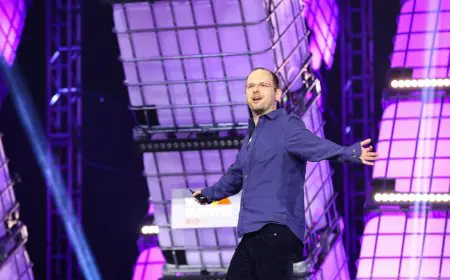
Google DeepMind introduced Neon on November 18 in a blog post by Koray Kavukcuoglu, SVP at Google DeepMind and Chief AI Architect at Google, who promised "frontier-level intelligence with fast end-to-end task completion across complex software engineering, knowledge work, and science workflows." Google says cached input costs $0.15 per million tokens, a 95% discount, and the model carries a 1 million-token context window. It rolled out that day in the Gemini API in Google AI Studio, in Gemini for business, in Google Antigravity for paid Google AI Pro and Ultra subscribers, and in the Gemini app for Pro and Ultra subscribers. Free users are not invited. Google's developer pricing page lists Neon as paid tier only.
Neon is the fourth member of the Gemini 4 family, after Hydrogen, Argon and Carbon, and Artificial Analysis counts it as Google's fourth model in just seven weeks. Google places it in the middle of the range.
"While Carbon tackles your hardest, long-horizon projects and Hydrogen handles fast everyday execution, Neon balances depth and efficiency." Koray Kavukcuoglu, Google DeepMind
9to5Google reports that Neon replaces both Argon and the old 3.1 Pro in the Gemini app, where the picker now reads Auto, then Hydrogen for everyday help, Neon for deeper analysis and Carbon for code and complex work. The same outlet notes Neon's list price is twice Hydrogen's. Even its readers are losing the thread. "Argon, Hydrogen, Carbon, or Neon????" one commenter asked under the story.
The savings depend on whose math you use
Google's own scoreboard is generous. The company says Neon ranks #3 overall with a score of 61 on the Artificial Analysis Intelligence Index at its xhigh thinking level, #2 on the Vals Index at 70.9%, and #1 on the Artificial Analysis Coding Agent Index at 58.6. On cost, Google says Neon at its default high thinking level runs at a 32% lower cost per task than Carbon.
Artificial Analysis, which runs the index Google keeps citing, tells a more modest story. It confirms the 61 score, but describes it as "a small Intelligence gain" of one point over Carbon at high effort, with Neon placing behind GPT-6.2 Astra and Claude Fable 5.2 at their maximum settings. The firm measured Neon at xhigh costing $6.44 per task against $7.76 for Carbon, about 17% less, while finishing in roughly 21 minutes instead of 36. It also found Neon uses about 15% more output tokens per task, so the saving "comes purely from its 25% lower token prices." At high effort, it says Neon matches Carbon at less than half the cost per task.
Read the fine print on those figures. Artificial Analysis says its comparisons use Carbon's standard, non-discounted pricing. A team that compares live bills before November 30 is comparing Neon against a Carbon that costs less per token.
Coding is where Neon looks strongest on outside numbers. Artificial Analysis says Neon at xhigh scored 59 on its Coding Agent Index through the Antigravity CLI, three points ahead of Carbon and in line with Claude Fable 5.2 and Claude Opus 5.5 at 58. Its average cost per task in Antigravity was $6.86, the firm says, against $12.61 for Opus 5.5 and $15.47 for Fable 5.2. That gap holds regardless of Carbon's promo.
So the pitch is half true on the calendar. Against Anthropic's top coding models, Artificial Analysis's numbers back Google's cost story now. Against Google's own flagship, Neon's price advantage does not show up on the token rate card until Carbon's discount runs out on November 30.