









































Nvidia CEO Warns Governments Against Regulating AI Based on "Science Fiction" Fears
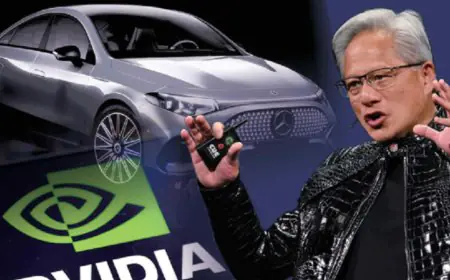
Nvidia CEO Jensen Huang called on U.S. policymakers to avoid making AI policy based on hypothetical existential risks. Speaking in an interview published today, Huang argued that excessive regulation could weaken America's competitiveness in the global AI race and advocated broader industry participation in shaping AI governance
Nvidia CEO Jensen Huang has pushed back against what he views as exaggerated fears driving AI policy, urging policymakers to ground regulations in reality rather than science fiction.


In remarks that come as the AI industry faces increasing regulatory scrutiny, Huang argued that overly restrictive rules could undermine America's competitive position in the global AI race.
"The reason to regulate AI is not because the technology is out of control, but because human imagination is out of proportion," Huang said, echoing concerns that the public debate around AI has become distorted by extreme narratives.
Huang's comments directly address the rising tide of AI regulation proposals in Washington, including efforts to subject frontier models to pre-release government reviews.
He has warned that a heavy-handed approach could cede technological leadership to China and other competitors, especially at a time when American firms are already facing intensifying global competition.
The US is home to 51% of notable AI models and accounts for 59% of the world's top firms by market capitalization, but maintaining that edge requires continued investment and innovation rather than regulatory brakes.
"The reason to regulate AI is not because the technology is out of control, but because human imagination is out of proportion." – Jensen Huang, CEO of Nvidia
Huang's stance reflects a broader industry pushback against what some tech leaders view as alarmist narratives that focus on hypothetical risks like existential threats rather than tangible harms such as bias, misinformation, and algorithmic discrimination.
While acknowledging the need for some oversight, Huang has signaled that the primary focus of policy should be enabling the US to remain the world's AI leader, arguing that American companies are best positioned to build safe, reliable AI systems when they are allowed to innovate freely.
The debate over AI regulation has intensified as the industry prepares for what Goldman Sachs projects to be $765 billion in AI capital expenditure in 2026, and as policymakers consider frameworks ranging from voluntary safety testing to mandatory pre-release government reviews.
Huang's intervention aligns with the position taken by DeepMind CEO Demis Hassabis, who has proposed a FINRA-model regulatory framework that would be industry-funded and technically focused, without imposing top-down limits on development.
As the debate over AI governance continues to evolve, Huang's call for a balanced approach suggests that the industry's most influential voices are pushing back against what they see as a regulatory overreaction driven by science fiction fears rather than evidence-based policy.
The outcome of this debate will shape not only the future of AI development but also America's competitive position in the global technology landscape for decades to come.