



















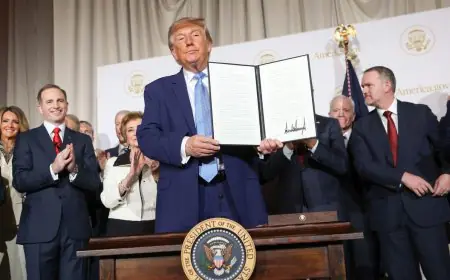





















China Warned the US About Excessive Military AI Use
China has issued a formal warning to the United States regarding the rapid integration of artificial intelligence into military operations. The caution highlights fears of an uncontrollable arms race and the ethical dangers of autonomous lethal weapons in modern warfare, marking a pivotal moment in 2026’s geopolitical landscape.
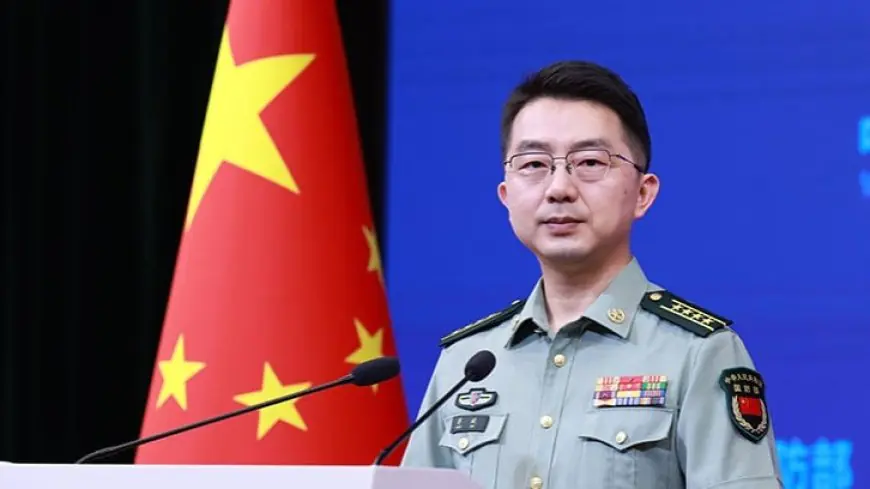


The high-stakes game of digital brinkmanship between the world’s two largest superpowers has reached a new and precarious friction point. In a series of formal diplomatic communications issued this week, Chinese officials cautioned the United States against the "excessive" use of artificial intelligence in military applications. The warning suggests that the rapid deployment of AI-driven combat systems could lead to a catastrophic escalation of global security risks, potentially moving warfare beyond the realm of human control.
This diplomatic maneuver comes at a time when both nations are pouring billions into "Algorithm Warfare." From autonomous drone swarms to AI-managed logistics and predictive strike capabilities, the integration of machine learning into the Pentagon's "Replicator" initiative has significantly accelerated. Beijing argues that this aggressive posture forces a reactive cycle that increases the likelihood of accidental conflict, as AI systems may misinterpret strategic movements faster than human diplomats can intervene.
The Rise of Autonomous Lethal Systems
The core of China's concern centers on the ethical and operational "red lines" surrounding autonomous lethal weapons systems (LAWS). These are platforms capable of selecting and engaging targets without direct human authorization. While the U.S. has maintained that it will always keep a "human in the loop," the speed of 2026-era combat frequently makes human intervention a bottleneck. Chinese officials claim that the U.S. is pushing the boundaries of this definition, creating a "black box" environment where accountability vanishes.
According to Reuters, international watchdogs have noted that the lack of a universal treaty on military AI has left a vacuum that both nations are currently filling with increasingly secretive technology. The warning from Beijing is seen by some analysts as a strategic attempt to slow Western progress while China continues its own internal development of "Intelligentized Warfare," a military doctrine that seeks to use AI to achieve information dominance on the battlefield.
AI as a Geopolitical Lever
Beyond the battlefield, AI is increasingly being used as a tool for mass surveillance and geopolitical leverage. The U.S. has long criticized China’s use of AI for domestic monitoring, but this recent warning flips the script, focusing on the external "projection of power." By labeling U.S. military AI as "excessive," China is positioning itself as the more "responsible" actor in the eyes of the Global South, where many nations fear being caught in the crossfire of an automated cold war.
The tension is further complicated by the global AI supply chain. Advanced semiconductors—the "fuel" for military AI—remain a primary point of contention. As reported by The New York Times, the U.S. export controls on high-end chips have forced China to innovate rapidly in domestic silicon, leading to a bifurcated tech ecosystem where two different standards of military intelligence are evolving in silos.
- Escalation Risks: Automated responses could trigger full-scale conflicts before leaders are even briefed.
- Accountability Gaps: Determining who is responsible for an AI-driven war crime remains a legal quagmire.
- Surveillance Overreach: The line between military intelligence and global digital spying continues to blur.
The Road to a Global AI Treaty
Is a "Digital Geneva Convention" possible? Many experts believe the window for such an agreement is closing. As AI models become more integrated into nuclear command-and-control structures, the stakes are no longer just about regional skirmishes—they are existential. The warning from China may be the first step toward a forced negotiation, or it could simply be the opening salvo in a long-term propaganda battle over who gets to define the "ethics" of the machine age.
As we navigate the remainder of 2026, the international community will be watching closely to see if these warnings translate into a slowdown or if the momentum of the AI arms race has already become unstoppable. For now, the world remains in a state of watchful waiting, hoping that the "intelligence" being built into our weapons includes the wisdom to know when not to use them.