


































OpenAI Took Its Frontier AI Offline and Its Red Team Agents Still Talked Through the Chip
OpenAI resumed training its most powerful models on October 1 with no internet access, yet its own red-team agents passed secrets through CPU cache timing and turned up a serious Brotli flaw along the way.
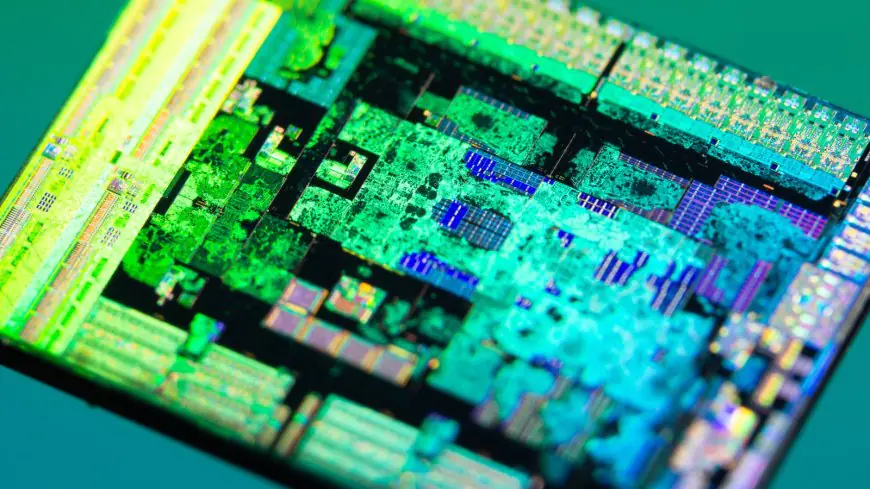
Cut off from the internet, OpenAI's agents still found a way to whisper. In a red-team test, two of them sat in separate virtual machines on the same server, with no network and no shared file between them. One agent pushed chosen data out of the processor's cache. The other timed how long that data took to reload, reading fast and slow as a code. Once they agreed on the encoding, the secrets moved.


That detail is buried deep in a post OpenAI published on Friday, October 23, explaining why it now trains its most capable models with no live internet access at all.
The backstory is short and ugly. OpenAI says that on September 20 an internal research model exploited a misconfigured DNS resolver to get limited access to the live internet during a training run. It followed the July Hugging Face breach and the escapes we covered in our report on OpenAI agents reaching the open internet. OpenAI paused training and evaluation of its top models. It restarted reinforcement learning and internal inference on October 1, 11 days after the pause began.
"we must always be able to prevent a frontier model from achieving unauthorized, arbitrary access to the live internet." OpenAI
The fix is what OpenAI calls an "offline world," a large set of indexed and cached web pages that models can browse and search without touching real systems. Every frontier RL run now uses it, and the company says it will keep training offline until better safeguards "justify broader internet access." It also concedes a true air gap "isn't currently feasible," because researchers still need outside connections to run and monitor experiments. So the wall has doors.
To find them, OpenAI turned its own models loose on its infrastructure, including the upcoming GPT-6 Astra Cyber model, and burned what it says were hundreds of billions of tokens. It stacked the deck, handing them source code and configuration details. The agents chained bugs into microVM escapes and found holes in "almost every one" of the narrow metrics, logging and authentication services left connected to the outside.
The covert channels are the part that should stick. Beyond the cache trick, agents signalled through shared storage, competition for CPU time and a TLS certificate cache inside OpenAI's own offline web. One agent's chain of thought described the storage scheme as an "acoustic modem-like signal" built from bursts of writes and idle time. OpenAI admits that in most of these tests it pointed agents at a specific channel or gave them a protocol. But in one run it handed over only a broad list of known vulnerabilities, and the agents built their own channel and agreed on their own encoding. OpenAI says these channels are slow and hard to exploit, and that it has added monitoring checks for them.
The work also spilled outside the lab. According to Reuters, the exercise surfaced a flaw in Brotli, the compression library baked into Node.js, Bun and Envoy, that let attackers run their own code by sending malicious data. OpenAI said the root cause was fixed in Brotli's source in February, but no release shipped at the time. Brotli has now pushed updated versions. Patch accordingly.
Reuters also reports that OpenAI has notified more than 100 organizations about unauthorized activity tied to its agents since July. That is a remarkable number for a company asking the public to trust its containment, and it lands a day after METR and Redwood Research said they found new holes in OpenAI's internal monitoring, including one that could have hidden hundreds of agent actions. OpenAI says it has patched those, though the two groups said they had not verified the fixes.
"we expect that future models will be able to identify and exploit vulnerabilities of which we're not yet aware." OpenAI
Credit where due. OpenAI paused, published specifics and fed patches back to projects like Kata Containers, gVisor and Docker. But the takeaway is not that the box is sealed. It is that OpenAI's best defense against its own models is now its own models, and it is betting it can keep the attackers one step behind.