






































Goldman Sachs Says AI Could Push 1 in 11 Workers Out of Their Jobs, and a Recession May Pull the Trigger
Goldman Sachs forecasts that AI could temporarily displace up to 9% of workers over the coming decade, and its economist warns the cuts are likely to hit hardest when the economy slows. Pantheon Macroeconomics says AI is already costing the US more than 10,000 jobs a month.
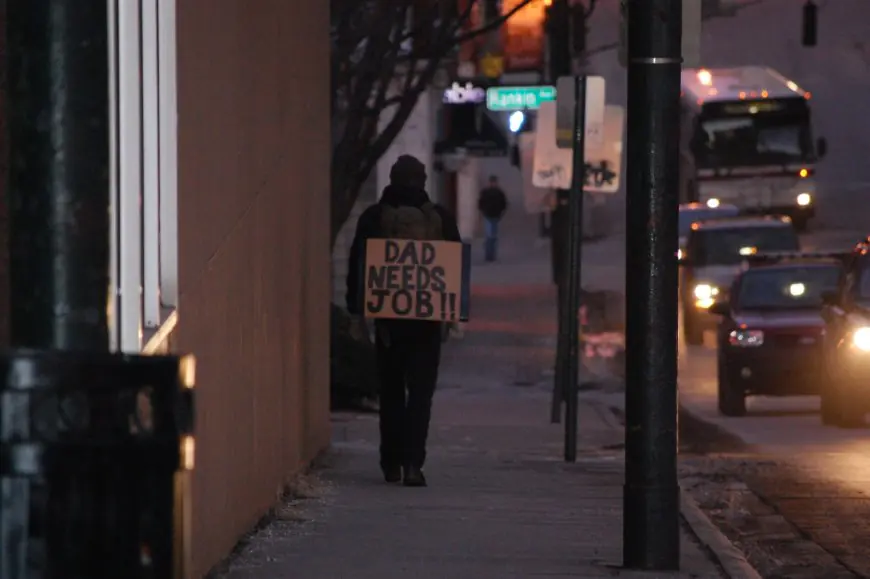
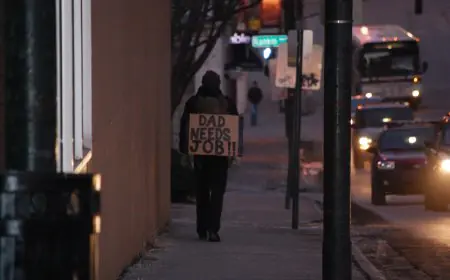
Remember the AI layoff panic? It peaked this spring, filled the headlines, and then went strangely quiet. Goldman Sachs now thinks that silence is not relief. It is a pause, and the thing it is waiting for is a recession.


In a note to clients published Thursday, Goldman economist Joseph Briggs estimated that up to 9% of workers could be "displaced during the AI transition" under the bank's baseline forecast that AI eventually lifts productivity by 15% in the US and other developed economies. That is roughly 1 in 11 workers. Slower hiring could weigh on employment by another 3%, according to Fortune's reporting on the note.
Read that number carefully. It is a forecast, and a specific kind. Briggs is counting gross job losses spread over the transition, not a jump in the unemployment rate. He has framed it as about 15 million workers over a decade, and on Goldman's Exchanges podcast in June he said that even with 9% displaced, the bank would expect the unemployment rate to rise by less than one percentage point in any given year. Some people find new work quickly. Others leave the labor force, which is why the jobless rate can look calm while careers quietly end.
The recession is the trigger
The sharper finding is about timing. Briggs went back through decades of data on technology replacing workers and found that companies mostly automate when times get tough, not when they are good.
"Historically automation-related labor disruption is quite cyclical, with companies tending to automate work and shed labor costs when the economy starts to slow." Joseph Briggs, Goldman Sachs
The evidence is a staircase. The share of Americans in routine jobs such as clerks, secretaries, machine operators and mechanics held steady through expansions and then dropped in steps during the recessions of the early 1980s, 2001, 2008 and 2020. It never climbed back. Across 25 occupations upended by past technology, employment fell an extra 4% over five years for every point the national unemployment rate rose. Briggs' conclusion is blunt: a slowdown "would likely accelerate AI-related automation and job losses, thereby amplifying the broader business cycle."
That is the uncomfortable part. Goldman's research suggests AI could make the next downturn hit harder, because CFOs facing falling revenue would have a ready excuse and a ready tool. Banks are already rehearsing that script. Barclays recently called AI the icing on the cake of its 5,000 job cuts.
Goldman has also been ratcheting its estimate up. In August 2025, Briggs and colleague Sarah Dong put potential displacement at 6% to 7% of the US workforce, within a range of 3% to 14%, using the same 15% productivity assumption. Last October, Goldman's US economists David Mericle and Pierfrancesco Mei warned that AI's full labor market consequences "might not become apparent until a recession hits."
Briggs even argues 9% could be too low, since displacement ran higher during the late 1990s productivity boom, the period most often compared with today. In the 25 hardest-hit occupations he studied, from bank tellers and file clerks to proofreaders and photo processors, employment fell 25% on average in five years. He calls those "likely upper bounds" for AI.
So why does it feel quiet? Briggs' answer is that it is early. Only 23% of US establishments have built AI into regular workflows, and a resilient 2026 economy has given companies little reason to slash labor costs aggressively. Still, job growth in the most AI-exposed industries has run about 10,000 below trend over the past three months, offset by hiring to build AI infrastructure.
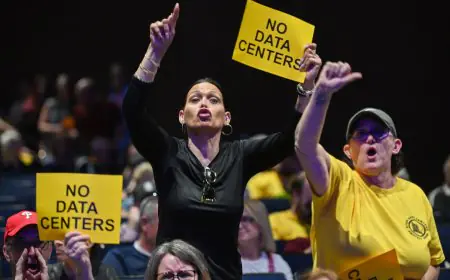
Others see the damage already arriving. Pantheon Macroeconomics economists Samuel Tombs and Oliver Allen estimate AI is costing the US more than 10,000 jobs a month, Fortune reported Friday. Construction jobs are rising as tech giants race to build data centers, they found, while roles in accounting, advertising, office administration and legal services are slowly disappearing.
Put the two together and the picture is not a cliff today. It is a slow leak now, with a forecast flood once the economy turns. Read Goldman's note as a weather report, not a guarantee, and pack an umbrella anyway.