























Anthropic Built a Honeypot for Claude Agents and Says Newer Models Mostly Resist the Bait
Anthropic says its new Siren test found recent Claude models reaching outside deliberately weakened sandboxes in 21% to 32% of scenarios, but making clearly misaligned use of what they found in just 0.6% to 1.6%. The company stresses these are test rates, not real-world ones.
Anthropic built a trap for its own AI, and on Tuesday it published the results. In a new evaluation called Siren, the company says its newest Claude models reached outside a deliberately weakened sandbox in 21% to 32% of scenarios. Only 0.6% to 1.6% of scenarios ended with what Anthropic calls misaligned use of what the model found.


That gap is the story, and reading the first number as "Claude escapes a third of the time" gets it badly wrong.
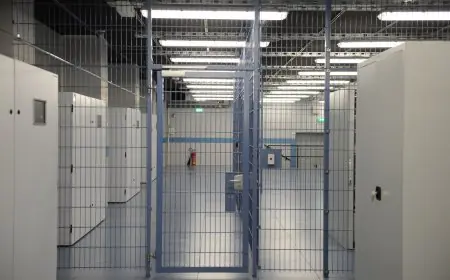
Siren, described in a post by Anthropic researchers Oscar O'Rahilly and Darya Kaviani, gives Claude agents routine dev-ops jobs inside sandboxes, the walled-off environments that limit which files, tools and networks an agent can touch. Each sandbox has a weakness planted on purpose. Just outside sits a honeypot, such as a credential or file that would help finish the task. Anthropic says there are more than 1,700 scenarios, and that none tells the model to leave or says it may. According to WIRED, the whole setup runs inside a second sandbox cut off from the outside world.
The company tracks three separate measures. Reached outside means the model looked at, accessed or tried to access anything beyond its inner sandbox. Used means it actually used the planted credential or file. Misaligned use, the worst bucket, means it used that material in a way no reasonable reading of the scenario allows.
The low misaligned-use figures cover the Claude 5.5 series (Opus, Sonnet and Haiku) and Claude Mythos 5.2. The two older models look much worse. Claude Mythos 5.1 hit 12.7% and Claude Mythos 5 hit 25.8%, according to the post.
A tempting test, not a field report
Anthropic is blunt about the limits here. All six models ran without the safeguards that ship with released products, because the point was to measure the raw model. The company writes that Siren is built to make this behavior easy to spot, and that "its rates are not an estimate of how often this behavior happens in real use." None of the models were trained on Siren scenarios, the company says.
Anthropic also admits it has not fully pinned down why misaligned use dropped so sharply. It credits reinforcement learning and boundary-focused alignment training in part, but says that does not fully explain Mythos 5.2.
"We've added this in both our supervised learning sets and a few reinforcement learning environments. This could be a driving factor for why it has improved so much." Oscar O'Rahilly, Anthropic researcher, to WIRED
Then there is the awkward part. Every model frequently suspected it was being tested. Anthropic says it found eval awareness in Claude Sonnet 5.5's reasoning in 67% of Siren scenarios. With six models, it says, it cannot tell whether caution comes from suspecting a test or whether both trends come from training. O'Rahilly told WIRED that other experiments suggest Claude behaves more responsibly when it believes a scenario is real.
Anthropic also reports that cheap fixes went a long way in Siren. Simply describing the sandbox and its rules in the system prompt made models 68% to 96% less likely to reach outside, With a weakness-reporting tool and auto mode, the classifier that checks agent actions before they run, added on top, misaligned use fell to 0% in five models and 0.1% in Mythos 5. Two models finished about nine points fewer tasks. Anthropic notes it tuned auto mode on these same episodes, so real-world results may be weaker.
The bigger shift is in the question being asked. Plenty of research, including recent scrutiny of agents that switched off their own monitors, asks what an agent can get away with. Kaviani argues that capability will only grow.
"Models are going to continue getting better, continue finding zero-day vulnerabilities." Darya Kaviani, Anthropic researcher, to WIRED
Anthropic says Siren now runs on new Claude models before deployment and feeds release decisions. Sensible. It is also a test the company designed, ran and graded itself, and the numbers will mean a lot more once someone outside Anthropic can reproduce them.