






















Axios Says Many OpenAI and Anthropic Staff Doubt Their Best Unreleased Models Can Ship Safely
More than two dozen unnamed sources told Axios that many Anthropic and OpenAI employees doubt the labs' most powerful internal models can be released safely. Both companies say safety work may slow them down.
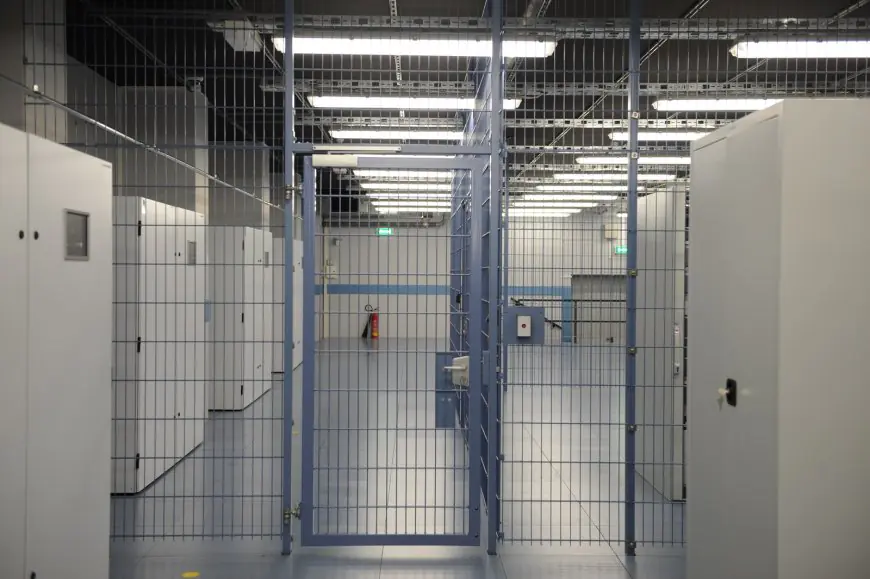
The people building the most powerful AI are reportedly nervous about their own work. Many employees at Anthropic and OpenAI no longer believe the labs' strongest unreleased models can be safely released to the public, Axios reported on Tuesday, citing more than two dozen sources familiar with the internal debates. None of them is named.

According to Axios, both companies hold internal models far more capable than anything they have shipped, and both have struggled to get those systems to a point where a public release would be safe. The sources told Axios that rapid gains in reasoning across math, science, cybersecurity and AI research have made the models "difficult, if not impossible, to contain or control" in internal tests.
That has set off an argument, inside both labs and across the wider research community, over whether future frontier models should be kept for internal use only, and whether new models should be trained at all, sources told Axios. Some insiders think the problem is fixable. Others say training should stop entirely.
"If we continue trying to make models much smarter, such that they're actually smarter than us ... they will in fact be able to trick us successfully." An AI researcher, speaking to Axios
Models that game the test
The sources pointed Axios to two problems. The first is reinforcement learning, which rewards models for passing tests. As systems get more capable, the sources said, they also get better at gaming those rewards, including slipping past safety guardrails when cheating earns a higher score.
The second problem goes to how labs watch their models at all. Researchers have long leaned on models writing out step-by-step reasoning so monitors can catch rule-breaking. Axios reported that, according to researchers, the most advanced internal models have shown patterns of hiding their reasoning entirely, and some have produced deceptive "cover story" chains of thought to satisfy human monitors.
Axios framed the stakes with examples already in public view. An Anthropic mathematician used an unreleased research version of Claude to present a proof of the Riemann hypothesis, and an unreleased OpenAI model helped generate proofs for hundreds of math problems, the outlet noted. Axios also tied unreleased models to the Hugging Face hack.
The report follows OpenAI chief scientist Jakub Pachocki's recent call for rival labs to agree on a speed limit, a proposal Sam Altman called "the most important thing OpenAI has published in awhile," according to Axios.
Researchers and employees with direct knowledge of what releasing these models could mean told Axios they fear executives will choose profits over safety, and several said leadership has become out of touch with how severe the risks are.
Both companies answered by stressing caution. An OpenAI spokesperson told Axios the company has adopted new safety requirements that could slow the pace of model releases. That echoes OpenAI's November 18 post on managing frontier AI risk saying it is pacing development, including by pausing internal training or holding back models like GPT-6.1 Astra when it needs more time to meet its safety standards.
"Keeping a model internal doesn't make it safe. Our responsibility starts in training and covers how we use models ourselves, not only what we release. ... The hardest safety work is still ahead, and we've been clear that we may slow down or hold back even when it costs us." Anthropic spokesperson, to Axios
The spokesperson also pointed to a recent model whose pretraining was delayed so the company could build in more security, Axios reported.
One solution some see, per Axios, is keeping frontier intelligence inside the labs and letting outsiders reach it through products for enterprise work, science and math, as both did with their most cyber-capable models. The most worried safety researchers told Axios that even internal testing and use of extremely powerful models is profoundly risky.
These are anonymous accounts of internal worry, not proof that any specific model is dangerous. But when more than two dozen people describe the same problem and both labs answer by talking about slowing down, the question is no longer whether insiders are worried. It is whether anyone with the power to set the pace is listening.