






















Washington Wants to Ban American Money From Any Chinese Company Building AI
Treasury has proposed banning U.S. investment in any Chinese company that develops AI, with no compute threshold and no notify only option. Public comments close December 7 before a final rule.
Washington wants to make one bet illegal for Americans. Putting money into a Chinese company that builds AI. Not frontier AI. Not military AI. Any AI.


That is the headline buried in a proposed rule the Treasury Department issued on October 22 to implement the Comprehensive Outbound Investment National Security (COINS) Act, which Congress passed in December 2025 inside the annual defense bill. Under the current program, many AI deals with Chinese companies only had to be reported to Treasury. The draft deletes that middle ground. According to Treasury's fact sheet, it would restrict U.S. investment into country of concern entities "that develop any SI system," which "would eliminate the existing notification requirement for these transactions."
SI stands for super intelligence. That is not a typo. A September 29 executive order, titled "Inaugurating the Era of Super Intelligence," told federal agencies to swap "Super Intelligence" for "Artificial Intelligence" in certain documents, so the rule now polices "SI systems." On paper, every chatbot startup in Shenzhen is now a super intelligence company.
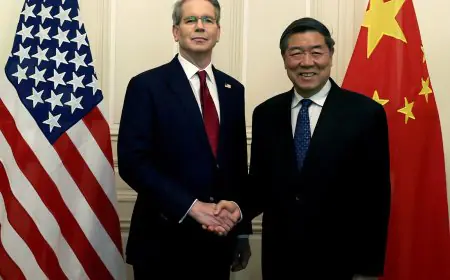
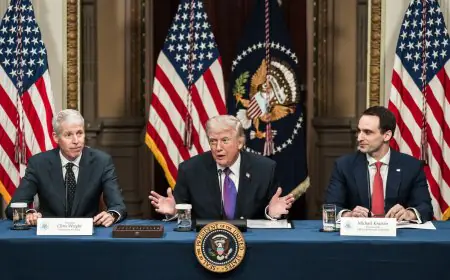
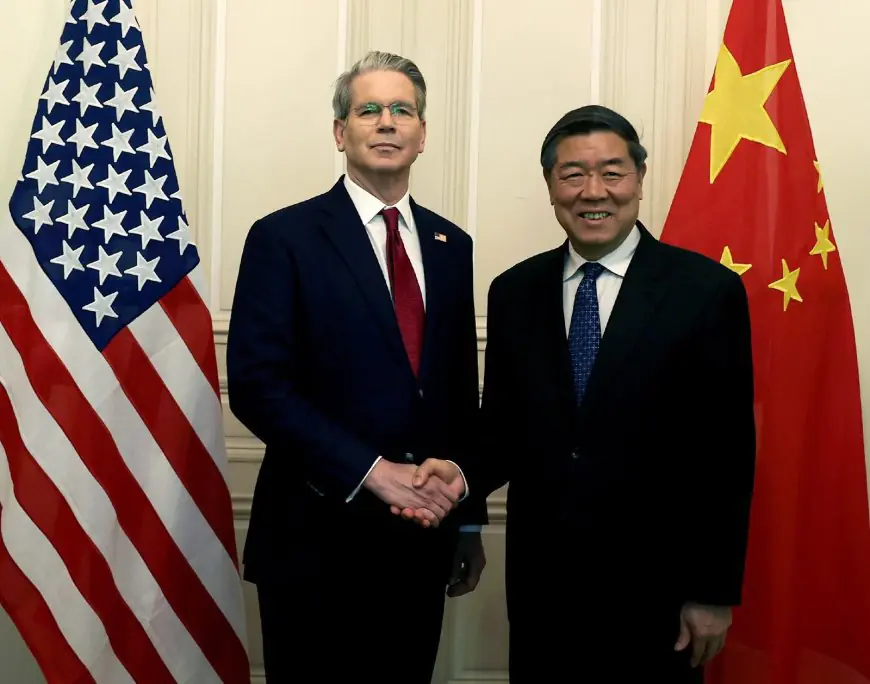
"The proposed regulations would strengthen the existing Outbound Investment Security Program to prevent our adversaries from using U.S. investment to develop critical technologies that threaten U.S. national security." Treasury Secretary Scott Bessent
The branding is silly. The reasoning behind the blanket ban is not. The old rules sorted AI companies by how much computing power trained their models and what the models were built for. In the proposal, Treasury concedes that approach has broken down, because models now gain ground through synthetic data, better architectures and new post-training techniques, not just raw compute.
"No single measure, benchmark, or threshold is currently sufficient to distinguish advanced models." Treasury's proposed rule
So Treasury proposes to stop drawing lines at all. The definition covers generative systems that create text, images or code, plus robots and other autonomous machines that run on AI. It even reaches the agent layer. The draft says a company that builds "an agentic harness layer" on top of someone else's model is developing an AI system too. Only fine-tuning a third-party model strictly for internal, non-commercial use gets a pass.
Ordinary investors can breathe. The draft exempts publicly traded securities and funds such as index funds, mutual funds and ETFs, so the Alibaba shares sitting in a retirement account are not the target. Limited partners committing up to $2 million to a non-U.S. fund are carved out, and a new $50,000 de minimis exception covers only reporting, not the ban. A U.S. investor who thinks a deal serves America can ask for a national interest exemption. The real target is venture and private equity money flowing straight into Chinese AI startups.
There is real muscle behind it. Treasury says violations would draw civil penalties up to the maximum allowed under the International Emergency Economic Powers Act, and the Secretary could force a divestment. The current rules already bite. In July, the Associated Press reported, Treasury fined a U.S. company $200,000 for failing to report a $92,500 investment by one of its subsidiaries in a Chinese AI and robotics firm.
The net widens too. China, Hong Kong and Macau are joined by Cuba, Iran, North Korea, Russia and Venezuela "under the regime of Nicolás Maduro Moros." In a slightly absurd twist, Treasury's own FAQ says that regime "no longer exists," since the U.S. recognized Delcy Rodríguez as head of state in March, so Venezuela does not currently meet the definition. Hypersonics, supercomputing and biotechnology also join chips and quantum on the list.
Whether this dents China's AI push is another question. DeepSeek's reported $15 billion round is being led by CATL and Tencent, a sign the country's top labs can raise serious money at home. A ban on American checks may hurt U.S. funds more than Hangzhou.
None of this is law yet. Treasury wants public comment, especially on the "any SI system" approach, until December 7, 2026. A final rule will come later and will set the date the program actually takes effect. Until then, the current rules, in force since January 2, 2025, still apply. Investors who want a line short of "everything" have about six weeks to say so.