






































How tools like Clawdbot are shifting AI interaction from browsers to chat platforms
The era of the "AI browser tab" is fading as agents like Clawdbot integrate directly into WhatsApp, Telegram, and Discord. This shift from passive web interfaces to proactive chat-based assistants is redefining how we interact with technology in 2026.

The Death of the AI Browser Tab
For the past three years, our relationship with artificial intelligence has been largely defined by the browser. Whether it was ChatGPT, Claude, or Gemini, "using AI" meant opening a new tab, typing a prompt, and waiting for a response. But as we move deeper into 2026, a significant shift is occurring. New tools, led by the open-source sensation Clawdbot, are pulling AI out of the browser and dropping it directly into the messaging apps we use every single day.
This isn't just a change of scenery; it is a fundamental evolution in human-computer interaction. By moving the interface to platforms like WhatsApp, Telegram, and Signal, AI is transforming from a destination we visit into a companion that lives alongside our social and professional circles. The "chat-first" revolution is here, and it’s making the web browser look increasingly like a relic of a slower era.
What is Clawdbot and Why is it Trending?
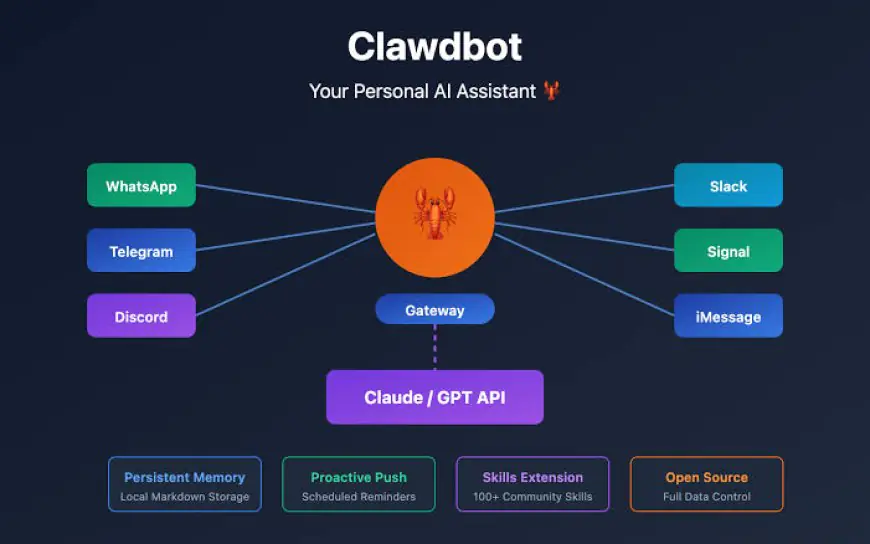
Clawdbot has quickly become the poster child for this movement. Unlike traditional chatbots that sit passively on a server, Clawdbot is a self-hosted "agent gateway." It connects powerful large language models (LLMs) directly to your local files, your calendar, and your preferred messaging apps. Instead of navigating to a website to ask a question, you simply text your personal bot as if you were messaging a friend.
The real magic of Clawdbot lies in its proactive autonomy. According to recent coverage by India Today, Clawdbot doesn't always wait for you to speak first. Because it runs 24/7 on your own hardware—often a Mac Mini or a small cloud server—it can monitor your emails, track your schedule, and send you a morning briefing on Telegram before you even wake up. It shifts the AI experience from reactive to anticipatory.
The Advantages of Chat-Based AI Interactions
Why are users ditching the sleek web interfaces of Big Tech for simple text bubbles? The reasons are rooted in convenience, context, and control:
- Zero Friction: You are already in your chat apps 50 times a day. Removing the need to switch apps or open a browser makes AI usage feel invisible and seamless.
- Persistent Memory: Unlike a browser session that resets, chat-based agents maintain a continuous, long-term history of your preferences and past tasks, often stored in simple, searchable Markdown files.
- Local Execution: Tools like Clawdbot have "skills" that allow them to execute shell commands, manage local files, and even control smart home devices—actions that are traditionally sandboxed and restricted within a web browser.
This shift is also driving a massive surge in "Agentic AI." As noted by AIxploria, we are moving from "using AI" to "living with AI." When your assistant can check you in for a flight via WhatsApp or summarize a 20-page PDF and text you the bullet points while you're at the gym, the browser starts to feel like an unnecessary middleman.
Privacy and the Rise of the Self-Hosted Assistant
One of the strongest drivers behind tools like Clawdbot is the growing demand for data sovereignty. In the browser-based model, every prompt you type is sent to a corporate server. With the self-hosted chat model, the "brain" of the AI can run on your own machine. Users can choose to connect to cloud models like Claude 3.5 or run entirely local models via Ollama, ensuring that sensitive personal data never leaves their private network.
This privacy-first approach is particularly appealing to power users and developers who want the convenience of a digital butler without the "walled garden" restrictions of major tech platforms. By using a messaging app as the interface, they get the world-class UX of Telegram or Discord paired with the ironclad security of their own hardware.
Looking Toward a Browserless Future
As we look ahead to the rest of 2026, the trend of moving AI interaction to chat platforms is expected to accelerate. We are already seeing the integration of secure payments within these chat threads, allowing users to not only plan a trip but pay for it through a single text to their agent. The browser will likely remain the home for heavy-duty content creation and deep research, but for the "operating system of our lives," the chat bubble is winning.
The success of Clawdbot proves that the next generation of AI isn't a better website—it's a smarter contact in your phone book.