

















South Korea Education Minister Quits Over Rushed Anti-AI Cheating Rules That Rattled Suneung Takers
Education Minister Choi Kyo-jin resigned Sunday, saying last-minute rules meant to stop AI-assisted cheating at the Suneung college entrance exam caused confusion for test takers. The ministry counted 111 suspected device cases, none reported as proven AI cheating.
South Korea just lost an education minister to the fear of AI cheating. Not to a cheating scandal at its biggest exam, but to the scramble to prevent one. Choi Kyo-jin stepped down Sunday after President Lee Jae Myung accepted his offer to resign over confusion caused by last-minute rule changes aimed at stopping AI-assisted cheating ahead of Thursday's national college entrance exam, Yonhap reported.


Lee accepted the offer about an hour after Choi announced it, Cheong Wa Dae spokesperson Kang Yu-jung said, and formally approved the resignation later Sunday. According to Kang, Lee told Prime Minister Han Seong-sook to take full responsibility for follow-up measures, including steps to be taken after the exam. No successor has been named. Kang said the nomination process will follow due procedures.
"As the minister in charge, I believe I cannot escape criticism that we failed to prepare in advance. Now that the exam has concluded, I feel a deep sense of responsibility and am offering my resignation." Choi Kyo-jin, in a statement released by the education ministry
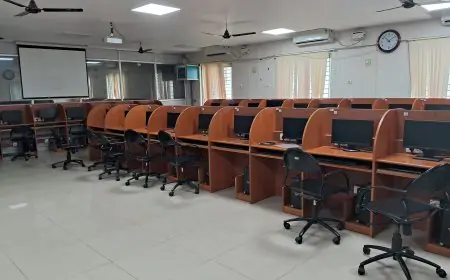
The exam is the College Scholastic Ability Test, known as the Suneung. The BBC says it takes up to nine hours and was sat this year by about 500,000 students. Yonhap describes it as a major life event in a country where university admission can heavily shape a career.
A tax exam confession set off the panic
The trigger came from a different test entirely. Yonhap reports that the top scorer on this year's certified tax accountant exam admitted to cheating with a miniature camera, a smartphone and generative AI. The BBC names him as Han Won-seok, 34, and says his April score raised eyebrows because he got just one of 160 questions wrong. He described the method in a video message.
"I used a microcamera to photograph the test questions and sent them to an AI, then checked my answers on my smartphone to commit the cheating." Han Won-seok, in a video message quoted by the BBC
That confession, the BBC says, landed only days before the Suneung. What followed, by Yonhap's account, was a run of new anti-AI rules announced right up to the eve of the exam:
- Test takers could bring only pencils into exam rooms.
- Buttons on clothing had to be covered with stickers to block miniature cameras.
- Authorities sent three emergency disaster alerts to phones nationwide during the exam to flush out candidates who had not handed in their devices.
The BBC adds that the three alerts went out between 08:00 and 15:00 local time, that phones blared even on silent mode and even for tourists on data roaming, and that it was the first time South Korea had used its national disaster alert system to catch exam cheaters. Officials also inspected eyewear, according to the BBC.
Using a civil defense alarm as an exam proctor is quite a move. It also tells you how little faith officials had in their ability to spot a camera the size of a button.
The education ministry said Friday that 111 suspected cheating cases involving electronic devices were detected during the exam, according to Yonhap. Read that carefully. These are suspected device cases, not 111 confirmed cases of students feeding questions to a chatbot. Neither Yonhap nor the BBC reports that any of them has been proven to involve generative AI.
Yonhap says test takers and teachers complained that the late changes piled extra anxiety onto an already brutal day. Choi did not help himself in parliament before the exam. Asked by a lawmaker whether he was 100 percent confident that AI-assisted cheating could be detected, the 72-year-old minister answered, Yonhap reported, "I don't think I could, because of my age."
The awkward truth is that Choi quit over the cure, not the disease. The BBC notes that Lee has been calling for an overhaul of the exam system, but neither outlet describes a concrete replacement plan yet. Britain is wrestling with a similar problem, where an English regulator wants far more AI-free exams. South Korea has just shown what happens when a government tries to build one in a week.