




































UN Talks on Killer Robots End With Two More Years of Talk and No Binding Treaty
A week of UN talks in Geneva on lethal autonomous weapons ended with a two-year mandate to work out rules that may never be binding, far short of the one-year treaty push backed by the Red Cross and more than 100 states.
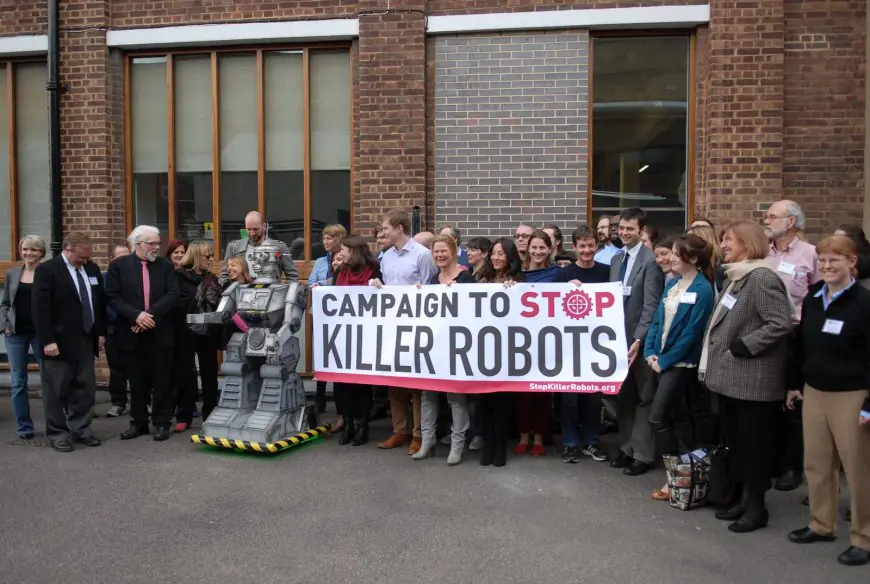
Diplomats walked out of a negotiating room in Geneva at 4:30 on Saturday morning with a deal on "killer robots." It just was not the one most of the room wanted. After a week of talks at the UN Convention on Certain Conventional Weapons, countries agreed to spend two years working out possible rules for lethal autonomous weapons, rules that NPR reports "could be legally binding, but could also be optional."


Before the talks, the International Committee of the Red Cross said it was urgent to draft legally binding rules within a year, a call NPR says was backed by the UN secretary-general and Pope Leo. What came out instead was a mandate that, according to The Guardian, asks countries "to elaborate by consensus" an instrument that may not carry any legal obligations. CBC describes it as a softened agreement to "elaborate" a possible accord by 2028.
So no treaty, no ban, and no promise that whatever emerges will bind anyone. There is a text. There is a process. Whether it has teeth is a question for 2028.
Who slowed it down
The CCW runs on consensus, which The Guardian notes means all 128 parties have to agree. One holdout can sink the room, and the paper says the forum has not passed a new weapons law in 30 years.
NPR reports that Russia delayed proceedings on day one by objecting to the agenda, and that the United States then proposed a five-year window to discuss nonbinding, optional guidelines. NPR also names Israel, alongside the US and Russia, among the powerful countries that had signaled reluctance to accept binding rules before talks began.
The Guardian puts Russia at the front of the objections, saying diplomats inside the talks accused its delegation of deliberate filibustering and not working in good faith. It adds that the US was reluctant to commit to a binding protocol, and that South Korea, Japan, Turkey, the UK, France and Germany were among the defence tech powers that also resisted being bound, preferring a nonbinding agreement. On the other side, according to the paper, more than 100 states wanted a new law, and a bloc of seven, Austria, Belgium, Brazil, Ireland, Mexico, New Zealand and Panama, had pushed for a binding treaty negotiated within one year.
"There was no political will to really regulate these weapons. No will commensurate to the urgency and need." A European diplomat, to The Guardian
The UN's own disarmament chief is choosing to see progress. CBC reports that Izumi Nakamitsu, the UN high representative for disarmament affairs, called the result a "significant achievement" while conceding it was a "glass half full or half empty" situation. NPR says negotiators insisted the deal beat nothing.
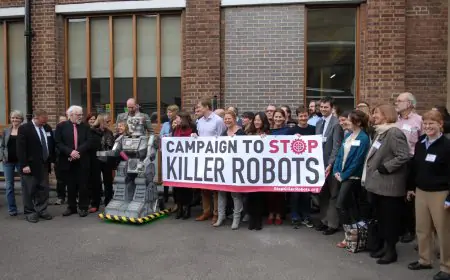
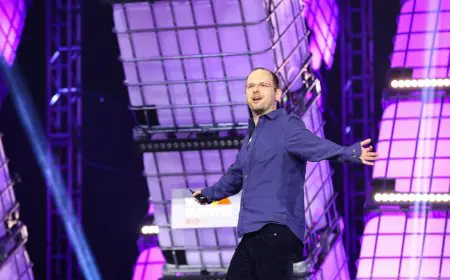
Campaigners are not buying it. NPR says the ICRC immediately said it regretted the outcome and renewed its appeal for a binding treaty, while other campaigners called the deal "a real disappointment" and a "nothing burger." Max Tegmark of the Future of Life Institute told The Guardian that "slaughterbots are already here" and that states had agreed it was sufficient "to just talk about this for the 14th year."
The stakes are not hypothetical. NPR reports that civilians are being killed by semi-autonomous drones in Ukraine, Sudan and Gaza, and cites UN figures that drones caused 80% of civilian deaths in Sudan this year. Humans still control those weapons, if very remotely, NPR notes. The fear is software making the kill decision on its own. Militaries are not waiting for Geneva either, as the Pentagon's new autonomous warfare command shows.
"The commander remains responsible for making sure that the use of force is lawful. The commander remains accountable. You cannot hold a machine accountable for a violation of the law." Georgia Hinds, ICRC legal adviser, to NPR
Anna Hehir of the Future of Life Institute warned NPR that these systems are likely to proliferate because, unlike nuclear weapons, they are easy to buy or build for individuals, nonstate actors and criminal groups. That is the real problem with a two-year clock. The diplomats get two years to talk. The engineers get two years to ship.