












































How AI Is Transforming Surgery And Patient Recovery In Modern Healthcare
Artificial intelligence is rapidly reshaping surgery and post-operative care, enabling real-time recovery tracking and predictive risk analysis while improving patient outcomes worldwide.


Artificial intelligence is quietly redefining what happens before, during, and after surgery. What was once a field dominated purely by human expertise is now increasingly guided by intelligent systems capable of predicting complications and tracking recovery with remarkable precision. Hospitals around the world are adopting AI-driven tools to improve surgical outcomes, reduce risks, and personalize patient care in ways that were nearly impossible just a decade ago.
One of the most significant breakthroughs lies in predictive analytics. AI systems are now able to assess a patient’s medical history, current condition, and even subtle physiological signals to estimate surgical risks before a procedure begins. This allows surgeons to make more informed decisions and prepare for potential complications in advance. According to insights from Nature, machine learning models are increasingly being used to identify high-risk patients, helping medical teams intervene earlier and improve survival rates.
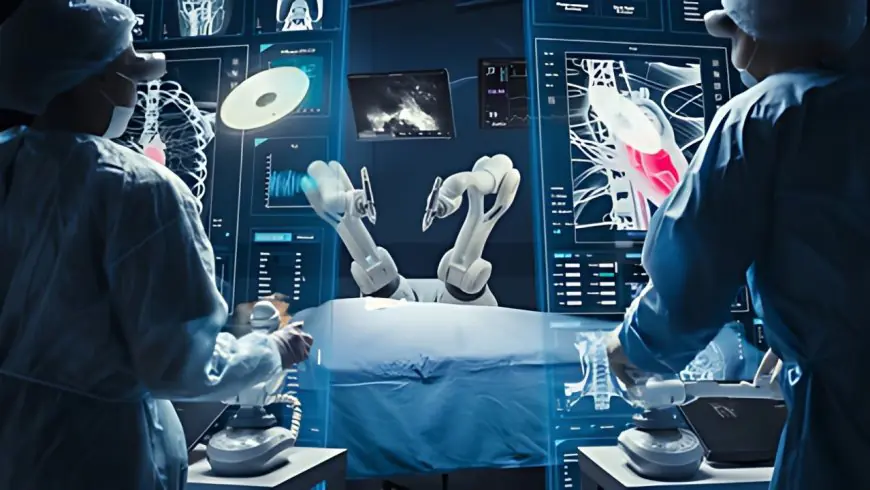
During surgery itself, robotic-assisted systems are enhancing precision and control. These technologies do not replace surgeons but rather augment their capabilities, allowing for minimally invasive procedures with smaller incisions and faster recovery times. It is estimated that over two million robotic-assisted surgeries are now performed globally, a number that continues to grow as hospitals invest in advanced surgical platforms and training.
However, the real transformation is happening after the operation. AI-powered monitoring systems are changing how recovery is tracked, moving beyond occasional hospital visits to continuous, real-time insights. Wearable devices and smart sensors can now monitor a patient’s mobility, including walking speed and movement patterns, which are key indicators of recovery progress. Subtle changes in these metrics can alert healthcare providers to complications long before they become critical.
This shift toward continuous monitoring is helping to reduce hospital readmissions and improve overall patient outcomes. Instead of relying on patients to report symptoms, doctors receive data-driven updates that allow for timely interventions. Research highlighted by World Health Organization initiatives suggests that digital health technologies, including AI, are playing a crucial role in strengthening healthcare systems and improving long-term recovery outcomes.
Beyond individual patient care, AI is also contributing to broader healthcare efficiency. Hospitals are using aggregated data from surgical procedures to refine best practices, optimize resource allocation, and train future surgeons. This creates a feedback loop where every procedure contributes to improving the next, accelerating innovation across the entire medical field.
Despite these advancements, challenges remain. Issues such as data privacy, regulatory approval, and the need for human oversight continue to shape how quickly AI can be fully integrated into surgical care. There is also an ongoing debate about ensuring that these technologies remain accessible and do not widen the gap between well-funded hospitals and those with limited resources.
Still, the direction is clear. Artificial intelligence is not just enhancing surgery—it is reshaping the entire patient journey. From predicting risks before the first incision to monitoring recovery long after discharge, AI is enabling a more proactive, personalized, and effective approach to healthcare. As adoption continues to expand, the impact of these technologies will only deepen, setting new standards for what patients and providers can expect in modern medicine.