




































Why Elon Musk Testimony Could Reshape The Future Of OpenAI And AI Governance
Elon Musk’s courtroom testimony against OpenAI has intensified a landmark legal battle over the company’s shift from nonprofit roots to a commercial AI powerhouse, raising critical questions about governance, ethics, and the future of artificial intelligence.
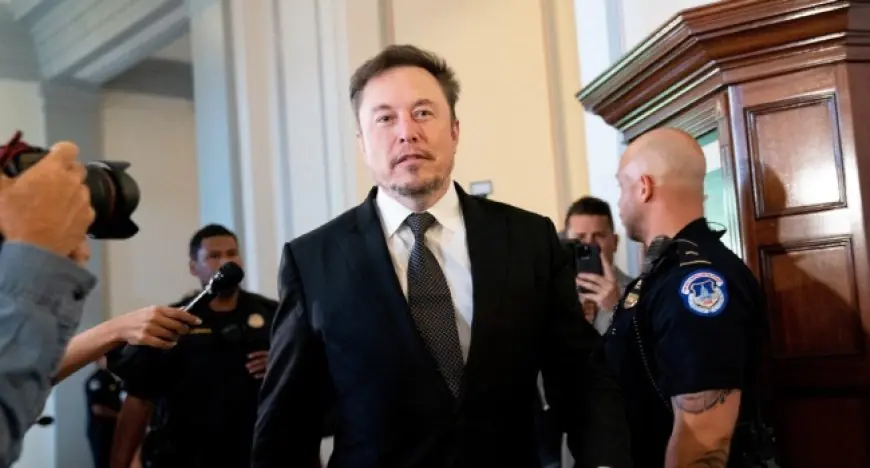


The global artificial intelligence industry is watching closely as Elon Musk takes the stand in a legal battle that could redefine how AI companies are structured and governed. The case centers on OpenAI’s transformation from a nonprofit research organization into a multi-billion-dollar commercial entity, a shift that Musk argues represents a fundamental departure from its original mission.
During his testimony, Musk did not hold back. He accused OpenAI’s leadership of effectively turning a public-interest initiative into a profit-driven enterprise, framing the transition as a breach of trust. His remarks have quickly captured global attention, not just because of his influence, but because they touch on a deeper concern shared across the tech world: who should control powerful AI systems, and for whose benefit?
At the heart of the case is a complex question about intent versus execution. OpenAI was initially founded to ensure that artificial intelligence would benefit humanity broadly, rather than serve narrow corporate interests. Over time, however, the organization introduced a capped-profit model and secured major commercial partnerships, fundamentally altering its operational structure. More details about OpenAI’s mission and evolution can be found on OpenAI, which outlines its dual commitment to innovation and responsibility.
This legal confrontation is not happening in isolation. It reflects a broader shift in the AI landscape, where the cost of developing cutting-edge systems has skyrocketed, pushing even mission-driven organizations toward commercialization. Industry analysis from Brookings Institution highlights how funding pressures and competitive dynamics are reshaping the structure of AI companies worldwide.
For policymakers and regulators, the stakes are high. A ruling in favor of Musk’s arguments could lead to stricter oversight of AI organizations that claim public-interest missions. It may also set new legal standards for how nonprofits transition into hybrid or for-profit models. On the other hand, if OpenAI’s approach is upheld, it could legitimize a new model where ethical commitments and commercial ambitions coexist under one framework.
The implications extend beyond the courtroom. Investors, startups, and established tech companies are all paying attention, as the outcome could influence how future AI ventures are funded and governed. It also raises important questions about transparency and accountability—issues that are becoming increasingly central as AI systems grow more powerful and more deeply embedded in everyday life.
For the broader public, this case serves as a reminder that artificial intelligence is not just a technological issue but a societal one. Decisions made today about ownership, governance, and purpose will shape how AI impacts economies, institutions, and individuals in the years ahead. The tension between innovation and responsibility is no longer theoretical—it is being tested in real time.
As the trial continues, one thing is clear: this is more than a dispute between a founder and an organization. It is a defining moment for the AI industry, one that could establish the rules for how the most transformative technology of our time is developed, controlled, and ultimately trusted.