







































Tech Giants Are Facing A Massive Reality Check On AI Infrastructure Spending
As the Q1 2026 earnings season kicks off, Wall Street is shifting its focus from AI hype to hard numbers, demanding proof that the billions spent on data centers and specialized hardware are finally delivering a return on investment for companies like HPE and Dell.
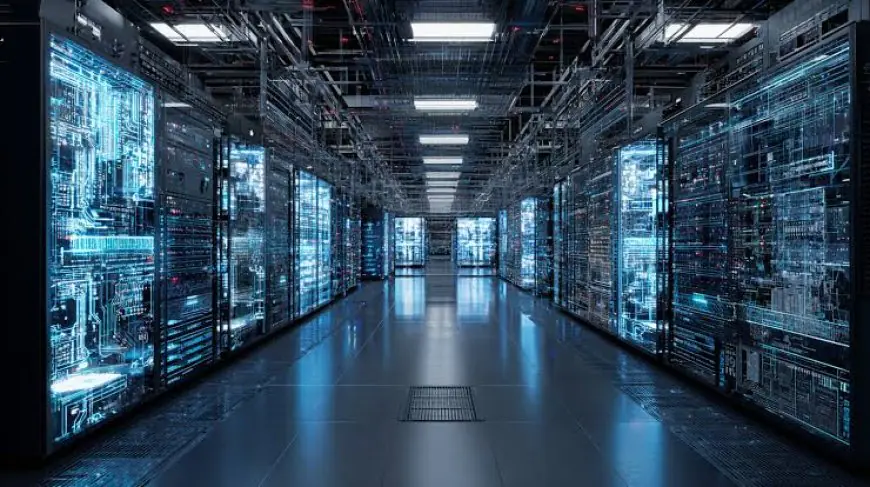


The honeymoon phase of the artificial intelligence revolution has officially come to an end. For the past two years, tech companies could see their stock prices soar simply by mentioning "generative AI" in an earnings call. But as we move through the first quarter of 2026, the narrative in boardrooms across Silicon Valley is shifting. Investors are no longer satisfied with promises of a digital utopia; they are looking at the balance sheets of infrastructure giants like Hewlett Packard Enterprise (HPE), Dell, and Arista Networks with a newfound level of scrutiny.
The central question of this earnings cycle is simple yet daunting: when will the staggering capital expenditure on AI infrastructure translate into sustained, bottom-line profits? As companies continue to pour billions into high-density servers and liquid-cooled data centers, the market is beginning to weigh the cost of this "arms race" against the actual revenue being generated by AI software and services.
The Infrastructure Bottleneck and HPE's Strategic Pivot
HPE has found itself at the epicenter of this debate. The company has bet its future on becoming the premier provider of the physical "foundry" for AI, leveraging its acquisition of Juniper Networks to provide an end-to-end stack of compute, storage, and networking. While their order backlogs for AI-optimized servers are at record highs, the margins on this hardware are under intense pressure. Unlike software, which can be scaled with minimal incremental cost, the physical hardware required for AI is expensive to build, power, and maintain.
According to a recent market analysis by Bloomberg, the lead times for specialized AI components have shortened, but the energy costs associated with running these systems have skyrocketed. This has led to a "margin squeeze" where companies are selling more units than ever, but keeping less of each dollar as profit. Investors are watching to see if HPE can successfully transition its customers into its "GreenLake" consumption model—effectively turning hardware sales into a recurring, software-like revenue stream.
From Training to Inference: A Change in Demand
The market is also gauging a critical shift in the type of hardware being purchased. We are moving away from the "training" phase—where massive models like GPT-5 were first built—and into the "inference" phase, where these models are actually put to work in the real world. This requires a different kind of infrastructure, one that is more distributed and focused on low-latency response times rather than just raw brute-force power.
This shift is a double-edged sword for infrastructure providers. On one hand, it opens up a massive new market for "edge AI" hardware. On the other hand, it forces a rapid turnover in technology, making existing data center assets obsolete faster than previously expected. Industry data from IDC suggests that data center spending is expected to remain high through 2027, but the composition of that spending is becoming much more fragmented and specialized.
Is the AI Bubble Losing Air or Finding Its Level?
The skepticism currently seen on Wall Street isn't necessarily a sign that the AI bubble is bursting. Rather, it is a sign of a maturing market. Analysts are looking for "efficiency gains"—proof that companies using this infrastructure are actually seeing a boost in productivity that justifies the cost. If a corporation spends $100 million on a new AI cluster, they need to show that it saved them $150 million in operational costs or generated $150 million in new business.
For the hardware makers, the challenge is to prove that they aren't just selling "shovels in a gold mine" that has already been tapped out. They must demonstrate that the demand for AI compute is a permanent feature of the modern economy, not just a temporary surge driven by fear of missing out (FOMO). The companies that can show a clear path to high-margin, sustainable services will be the ones that survive the 2026 "reality check."
As the week progresses and more tech leaders report their figures, the spotlight will remain fixed on the hardware. In the world of AI, the software might get the headlines, but the infrastructure pays the bills. For now, the market is holding its breath, waiting to see if the "big spend" was a brilliant bet on the future or an expensive overreach.