









































Why Orbital Data Centers Could Transform AI Infrastructure
Starcloud is seeking $200 million in funding at a $2.2 billion valuation to build AI-powered data centers in orbit, signaling a bold new direction for global computing and data infrastructure.
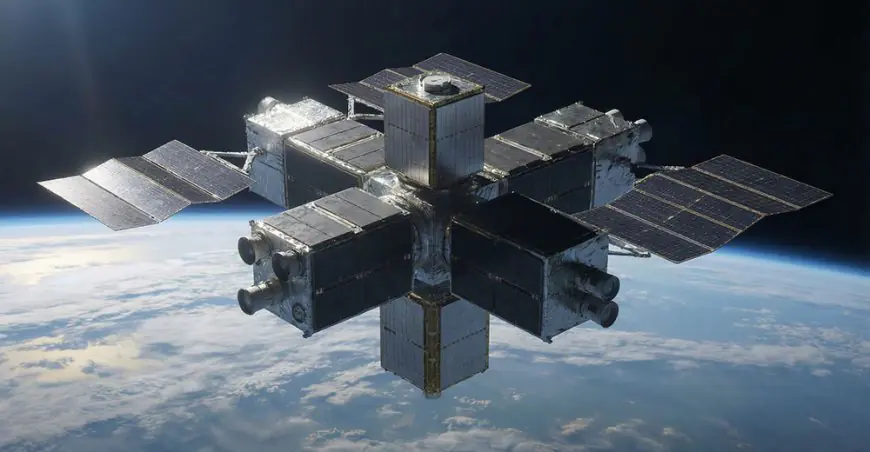


The race to redefine artificial intelligence infrastructure is no longer confined to Earth. Starcloud, an ambitious startup focused on building orbital data centers, is reportedly in talks to raise $200 million at a $2.2 billion valuation. The move is drawing intense interest from investors and industry observers alike, as the concept of space-based AI computing shifts from science fiction to a plausible next frontier.
At its core, Starcloud’s vision is both simple and radical: take data processing off the planet. By deploying AI-capable data centers in orbit, the company aims to tackle some of the most persistent challenges in cloud computing, including latency, energy constraints, and geopolitical concerns around data sovereignty. With satellites already forming the backbone of global communications, the leap to processing data in space is a natural, if bold, progression.
The timing appears strategic. With companies like SpaceX rapidly expanding satellite networks, the infrastructure required to support orbital computing is becoming more accessible. These satellite constellations can provide near-global coverage, allowing space-based data centers to process and relay information with minimal delay. For AI systems that rely on real-time data—such as autonomous systems, financial trading platforms, and global monitoring tools—this could be a game changer.
One of the most compelling advantages of orbital data centers is their potential to reduce latency on a global scale. Traditional data centers, even when distributed, are still limited by geography. Signals must travel long distances through physical infrastructure, introducing delays that can be critical in time-sensitive applications. By contrast, space-based systems can route data more directly, potentially shaving milliseconds off response times in ways that matter for high-performance AI tasks.
Another factor driving interest is the issue of data sovereignty. As governments around the world tighten regulations on where and how data can be stored, companies are increasingly looking for neutral solutions. Orbital data centers could offer a unique workaround, existing outside traditional national boundaries while still providing secure and compliant processing environments. This aspect alone could make them attractive to multinational corporations and governments alike.
Of course, the challenges are significant. Building and maintaining data centers in space involves complex engineering, high costs, and ongoing logistical hurdles. Issues such as hardware durability, energy supply, and system maintenance in orbit must be carefully addressed. Yet, the level of investor interest suggests that many believe these challenges are not only solvable but worth the effort.
Starcloud’s fundraising efforts highlight a broader trend in the AI industry: the search for new infrastructure models that can keep up with growing computational demands. As AI systems become more powerful and data-intensive, traditional approaches may struggle to scale efficiently. Innovations like orbital data centers represent a willingness to rethink the fundamentals of how and where computing happens.
For those tracking the evolution of space-based technologies, resources like NASA Technology and SpaceX Updates provide valuable insights into the building blocks enabling this shift. Whether Starcloud succeeds or not, one thing is clear: the future of AI infrastructure may extend far beyond the confines of Earth.