









































AI Stocks Slide as Wall Street Grapples With Valuation Fears
A fresh sell-off in artificial intelligence stocks has dragged major U.S. indices lower as investors reassess sky-high valuations and question whether the sector's explosive rally can continue. The pullback signals a sobering reality check for the AI trade.


The Party Just Hit a Wall
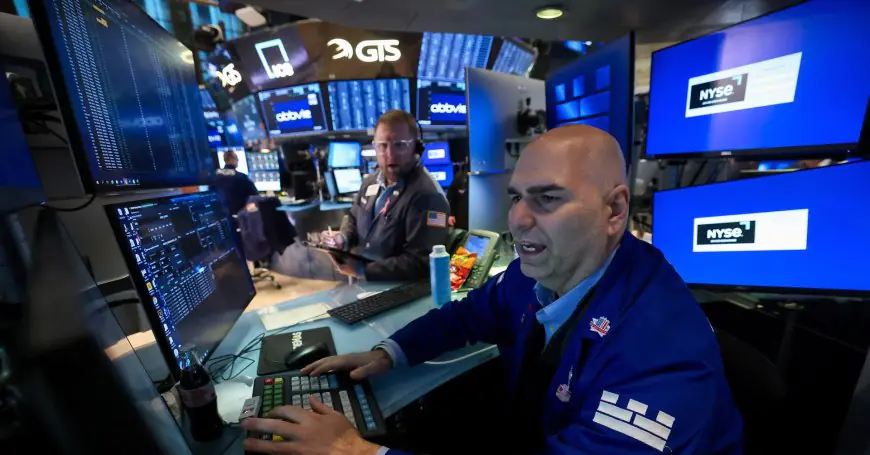
For eighteen glorious months, artificial intelligence stocks felt like the only game in town. Buy anything with "AI" in the prospectus, and watch your portfolio climb. But this week, the music stopped—or at least, it slowed to a nervous tempo. A fresh sell-off in AI-related equities dragged the Nasdaq lower for the third consecutive session, wiping out billions in market capitalization from names like Nvidia, Palantir, and C3.ai. Investors are asking a question that would have seemed ridiculous six months ago: Have we gotten ahead of ourselves?
The Numbers That Spooked the Market
The sell-off did not come from a single disastrous earnings report. That is what makes it unsettling. Instead, it was a slow accumulation of warning signs that finally tipped sentiment over the edge. According to Reuters coverage of the market downturn, the Nasdaq Composite fell 2.3 percent in a single session, with the Global X Artificial Intelligence & Technology ETF (AIQ) dropping nearly 4 percent. Here is a breakdown of how the biggest names fared:
- Nvidia – Down 5.8 percent, erasing roughly $120 billion in market capitalization
- Palantir – Down 7.2 percent, extending its monthly losses to nearly 15 percent
- Advanced Micro Devices (AMD) – Down 4.5 percent as analysts trimmed price targets
- C3.ai – Down 9.1 percent, the steepest decline among major AI software names
- Microsoft – Down 1.8 percent, relatively resilient but still in the red
What makes these declines particularly striking is that no single company reported bad news. There were no catastrophic earnings misses, no product failures, no regulatory bombshells. Instead, the sell-off appears to be driven by a collective reassessment of valuation—investors looking at the same numbers they have been looking at for months and suddenly deciding that the prices no longer make sense.
Why Now What Changed
The trigger appears to be a confluence of three factors. First, the Federal Reserve signaled that interest rate cuts may come later than expected. Higher rates for longer disproportionately hurt growth stocks, and AI stocks are the growthiest of the growth stocks. Second, insider selling has picked up across the sector. When executives at AI companies start cashing out options, retail investors take notice. Third, and perhaps most importantly, there is a growing sense that the "easy money" has already been made.
"Valuations in parts of the AI sector have become disconnected from fundamentals. The technology is real. The adoption is real. But the pricing assumes perfection, and perfection is a dangerous assumption." – Dan Ives, Wedbush Securities
That quote from a prominent tech analyst captures the prevailing mood. No one is saying AI is a bubble. But many are saying that AI stocks—as opposed to AI technology—have run too far, too fast. The distinction matters. A company can be fundamentally sound and still be a bad investment if you pay too much for it.
Comparing Valuations to Historical Peaks
To understand why investors are nervous, it helps to see how AI valuations stack up against previous tech booms. The numbers are frankly astonishing:
| Metric | Current AI Leaders | Dot-Com Peak (2000) | Cloud Peak (2015) |
|---|---|---|---|
| Average P/E ratio | 42x forward earnings | ~60x | ~35x |
| Revenue growth (median) | 28% year-over-year | 35% | 22% |
| Price-to-sales ratio | 9.2x | ~12x | ~6x |
| Market concentration (top 5) | 24% of Nasdaq | 18% | 15% |
The table shows that AI stocks are not yet at dot-com bubble extremes—but they are uncomfortably close. The price-to-sales ratio for the average AI software company now exceeds where cloud companies traded at their 2015 peak. And the concentration risk is even more striking. Just five AI-related names now account for nearly a quarter of the entire Nasdaq's market capitalization. That is a lot of eggs in a very small basket.
As noted in a detailed Bloomberg analysis of the valuation fears, hedge funds have been quietly reducing their AI exposure for six weeks. The selling only became visible to retail investors this week as volumes spiked. That pattern—smart money leaving first, retail catching up later—is a classic sign of a sentiment top. It does not guarantee a crash. But it does suggest that the easy double-digit returns are probably behind us.
The Anchor What Are Analysts Saying Now
In times of market stress, everyone looks to the sell-side analysts for guidance. And the guidance right now is genuinely mixed. Some firms are using the pullback as a buying opportunity. Others are downgrading names they once loved. The Goldman Sachs equity research team's latest AI sector note captures the divide perfectly. The anchor link above connects to their full analysis, but here is the summary: Goldman is "neutral" on AI stocks as a whole but "overweight" on AI infrastructure names (Nvidia, Broadcom) and "underweight" on pure-play AI software companies with limited revenue diversification.
That kind of sector rotation within the sector is exactly what you would expect at this stage of the cycle. Investors are not abandoning AI. They are becoming more discriminating. They want to see profits, not just promises. They want to see moats, not just momentum. The companies that can deliver those will recover quickly. The ones that were riding the hype alone? They may not.
Is This a Buying Opportunity or the Beginning of Something Worse
The million-dollar question on every investor's mind is whether this pullback is a healthy correction or the first domino of a deeper unwind. History offers conflicting answers. The 2023 AI rally saw several sharp pullbacks of 5-10 percent, each of which proved to be buying opportunities. But the 2024-2025 rally had fewer and shallower pullbacks, which actually made the market more fragile. When selling finally started, there was no accumulated skepticism to cushion the fall.
A Morgan Stanley research note published this morning argues that the current pullback is likely "healthy and contained." The firm points to continuing strong demand for AI infrastructure, growing enterprise adoption, and reasonable (if elevated) valuations compared to historical tech booms. But the note also includes a warning: the next six months will separate the real AI winners from the pretenders. Companies that cannot show AI actually boosting their bottom line will be punished mercilessly.
What Retail Investors Should Do Right Now
If you are an individual investor watching your AI-heavy portfolio turn red, the urge to panic-sell is real. But financial advisors suggest a calmer approach. First, check your time horizon. If you need this money in the next two years, you should not have been in volatile AI stocks anyway. Second, look at your concentration. If AI is more than 30 percent of your portfolio, consider trimming into any rebound. Third, focus on quality. Companies with strong balance sheets, positive free cash flow, and diversified customer bases will weather the storm better than speculative names.
The worst thing you can do right now is make a emotional decision based on a single week of trading. The best thing you can do is reassess your assumptions. Are you investing in AI because you believe the technology will change the world? That is still true. Are you investing in AI because you thought stocks would go up forever? That was never true. The difference between those two motivations will determine whether you see this pullback as a problem or an opportunity.
What We Are Watching In Real Time
The next major catalyst for AI stocks will be earnings season, roughly six weeks away. Investors will be watching for three things: cloud growth rates (especially from Microsoft Azure and Amazon AWS), capital expenditure guidance (to gauge future AI infrastructure demand), and commentary on AI monetization. Any sign that the AI trade is translating into real, durable revenue growth could spark a rapid recovery. Any sign that the hype has outpaced the reality could extend the sell-off.
For now, the message is simple. AI is not a bubble. But AI stocks had become a crowded trade. Crowded trades unwind. That is what we are watching in real time. The technology will continue to transform industries. The companies that lead that transformation will create enormous value over the long term. But the path from here to there will not be a straight line. It never is. And after eighteen months of only green candles, a little red might be exactly what this market needed to stay healthy.